


This article was automatically translated from the original Turkish version.
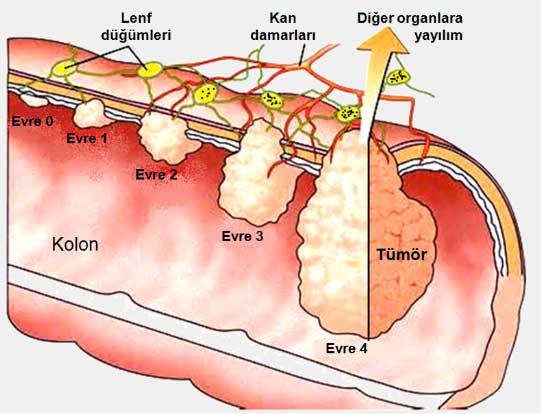
Colon Malign Neoplasms
Definition(s) | Malignant tumors in colonial tissue | ||||||||
|---|---|---|---|---|---|---|---|---|---|
Colorectal malignancies are malignant tumors arising from the epithelial cells of the colon and most commonly present as adenocarcinomas. Colorectal cancers are among the most frequent cancer types worldwide and represent a leading cause of morbidity and mortality in both men and women. Colon cancer typically develops from polyps and is a treatable disease when diagnosed at an early stage. Risk factors include age, family history, inflammatory bowel diseases, obesity and dietary factors place. Screening programs carry significant importance for early diagnosis and treatment.
Colon cancer is one of the leading causes of cancer-related deaths globally. Incidence is higher in developed countries. It is slightly more common in men than in women and is typically diagnosed in individuals over the age of 50. In recent years, the rate of early-stage diagnosis has increased due to the widespread adoption of screening programs.
The main risk factors contributing to the development of colorectal malignancies are as follows:
The risk of colon cancer increases with age. The majority of cases occur in individuals over 50 years of age.
Familial adenomatous polyposis (FAP): This syndrome leads to the development of hundreds of polyp in the colon and a marked increase in cancer risk.
Lynch syndrome (Hereditary nonpolyposis colorectal cancer): Another genetic condition that significantly elevates the risk of colon cancer.
Ulcerative colitis and Crohn’s disease: Chronic inflammation can trigger dysplasia and cancer development in the colonic epithelium.
High-fat, low-fiber diet: Increases the risk of colon cancer.
The majority of colorectal malignancies are of the adenocarcinoma type. These tumors originate from the glandular epithelial cells of the colonic mucosa. Histologically, there are two main subtypes:
Composed of well-differentiated cells and typically arises from polyps.
Composed of mucus-producing cells and has a more aggressive course.
Colorectal malignancies may be asymptomatic or cause only mild symptoms in early stages. In advanced stages, the following signs may appear:
Diagnosis is established through Definition, colonoscopy and biopsy. During colonoscopy, the colonic mucosa is examined and biopsies are taken from suspicious lesions. Imaging modalities such as CT, MRI and PET-CT may also be used to assess tumor spread.
The treatment of colorectal malignancies is planned according to the tumor stage, location and the patient’s overall health status. The main treatment methods are as follows:
In early-stage tumors, surgical removal of the tumor-bearing tissue is the common treatment option. Segmental resection or hemicolectomy may be performed. If lymph node involvement is present, lymph node dissection is carried out.
Chemotherapy may be used as adjuvant therapy after surgery or in advanced-stage tumors. Commonly used drugs include 5-fluorouracil (5-FU), capecitabine and oxaliplatin like.
Radiotherapy may be administered before (neoadjuvant) or after (adjuvant) surgery for rectal cancers. Its role in colon cancer is limited.
Anti-EGFR therapies (cetuximab, panitumumab) may be used in tumors without KRAS mutations. Angiogenesis inhibitors (bevacizumab) are also among the treatment options.
Immunotherapy (PD-1 inhibitors) is an effective treatment option for tumors with high microsatellite instability (MSI).
The prognosis of colorectal malignancies depends on tumor stage, histological type and response to treatment. Five-year survival rates exceed 90% in early-stage tumors but drop to 10–20% in advanced-stage disease. Regular follow-up after treatment is essential for early detection of recurrences.
American Cancer Society. "Colorectal Cancer." 2023. National Cancer Institute. "Colon Cancer Treatment." 2023. World Health Organization. "Classification of Digestive System Tumours." 2022.

Colon Malign Neoplasms
Definition(s) | Malignant tumors in colonial tissue | ||||||||
|---|---|---|---|---|---|---|---|---|---|
No Discussion Added Yet
Start discussion for "Colon Malignant Neoplasms" article
Epidemiology of Colorectal Malignancies
Risk Factors
Age
Family History and Genetic Factors
Inflammatory Bowel Diseases
Diet and Lifestyle
Pathological Features
Intestinal Type
Mucinous Type
Clinical Features and Diagnosis
Treatment Approaches
Surgical Treatment
Chemotherapy
Radiotherapy
Targeted Therapies
Immunotherapy
Prognosis and Follow-up