

This article was automatically translated from the original Turkish version.
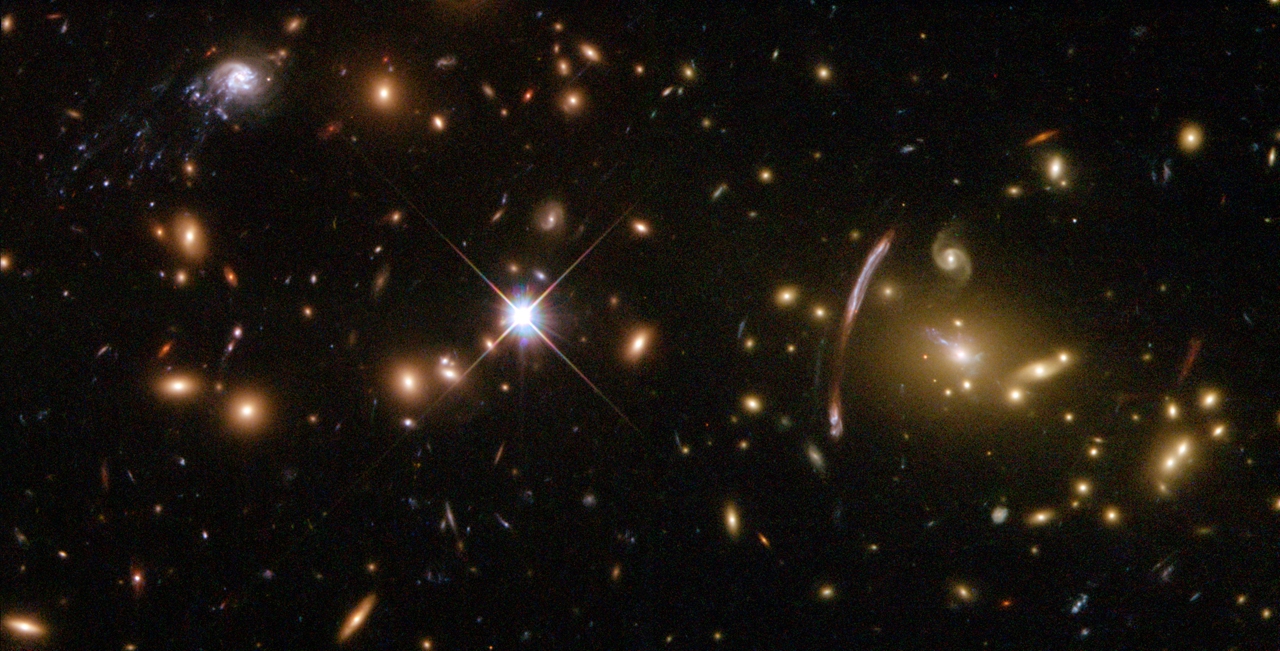
Galaxy interactions are considered a highly significant area of research within the context of cosmic evolution. The Comet Galaxy, due to its observation during the collision phase of two large spiral galaxies in close proximity, is frequently studied to reveal the structural and dynamic consequences of such events. This galaxy pair has been examined in detail using high-resolution data obtained from the Hubble Space Telescope (HST) and ground-based observatories.

Comet Galaxy (NASA)
The two-component structure designated NGC 4676A and NGC 4676B consists of two spiral galaxies in an early stage of collision. These galaxies are forming long stellar tidal tails due to the gravitational forces they exert on each other. These structures arise from clusters of stars and gas flung outward by the collision. Observations reveal that intense star formation is occurring in the central regions of both galaxies, with star-forming regions triggered by the interaction process.
Galaxy collisions are generally complex events lasting several hundred million years. The collision in NGC 4676 is estimated to have begun approximately 170 million years ago and is expected to culminate in a full merger within a few hundred million years. Numerical simulations show that such collisions cause gas to accumulate in the galactic centers, thereby triggering the formation of active starburst regions.
The NGC 4676 pair has been cataloged as part of the “Toomre Sequence,” a system used to study the morphological diversity of interacting galaxies. In particular, the shape of the extended tidal arms and the relative positions of the galactic nuclei are critical for determining the orbital characteristics of this collision.
High-resolution images from Hubble have revealed young star clusters, ionized gas clouds, and numerous H II regions in the central areas of both galaxies. The images also demonstrate that dust lanes in the interstellar medium have been reshaped by the collision and are clearly visible at optical wavelengths.
Spectroscopic observations indicate significant metallicity variations across different regions of the galaxies, with gas compression in the central regions due to gravitational interaction leading to elevated metal abundances. A noticeable increase in gas density at the centers has also been detected.
Radio wavelength observations reveal the presence of gas bridges between the galaxies, showing that gas is being transferred between them as a result of the collision. X-ray data uncover regions of hot gas formed by the impact, confirming the existence of plasma regions with temperatures of 10⁶–10⁷ K in the intergalactic medium.
Numerical simulations predict that the NGC 4676 galaxies will ultimately merge into a single large elliptical galaxy. During this process, substantial star formation will occur and gas dynamics will be reorganized. Such mergers are common in galactic evolution, and many large elliptical galaxies are thought to have formed through similar processes in the past.
The Comet Galaxy (NGC 4676) serves as an important example for astronomical research due to its visibility during the early stages of galaxy collisions. This interacting galaxy pair provides abundant data on both morphological distortions and star formation, enabling the testing of theories developed to explain galaxy mergers. Observations demonstrate that such collisions not only cause structural changes but also lead to dramatic increases in star formation rates.

Morphological and Structural Properties
Interaction Process
Observational Findings
Hubble Space Telescope Images
Spectroscopic Findings
Radio and X-ray Observations
Evolutionary Future