


This article was automatically translated from the original Turkish version.
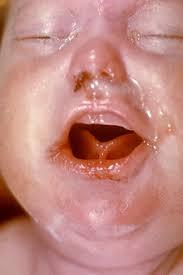
Congenital syphilis is a serious infection disease caused by the transplacental transmission of the bacterium Treponema pallidum from mother to fetus via the placenta. This situation occurs in infants born to mothers with syphilis who were either untreated or inadequately treated during pregnancy. Congenital syphilis is classified into early and late stages and, if left untreated, can lead to severe physical neurological and developmental abnormalities. Disease Despite being preventable it remains a significant important public health problem particularly in developing countries people.
The causative agent of congenital syphilis Treponema pallidum crosses from the mother’s blood bloodstream to the fetus through the placenta. This transmission typically occurs during the primary secondary or early latent stages of maternal syphilis. The duration of the mother’s infection and her treatment status determine the risk of fetal infection. The risk of transmission is particularly high during the second half of pregnancy.
Congenital syphilis is prevalent worldwide especially in low and middle income countries. Inadequate prenatal care lack of syphilis screening programs and limited access to treatment are key factors contributing to its high incidence. The World Health Organization (WHO) recognizes congenital syphilis as a preventable disease and emphasizes the importance of early screening and treatment during pregnancy.
Congenital syphilis is divided into early and late stages each characterized by distinct clinical manifestations.
Early congenital syphilis manifests within the first two years after birth. Findings during this stage include:
Late congenital syphilis appears after the age of two and represents the continuation of untreated early congenital syphilis. Findings during this stage include:
The diagnosis of congenital syphilis is based on clinical findings laboratory tests and the mother’s history of syphilis. The following methods are used for diagnosis:
Parenteral penicillin (crystalline penicillin or procaine penicillin) is the first-line step treatment for congenital syphilis. The duration and dosage of treatment are determined based on disease severity and clinical findings. In patients with penicillin allergy alternative treatments such as cephalosporins or macrolides may be considered but their efficacy is limited.
During treatment side effects such as the Jarisch-Herxheimer reaction (fire fever and hypotension like symptoms) may occur. Therefore close monitoring of the patient during treatment is essential. Additionally follow-up of both mother and infant is critical to ensure infection control and prevention of complications.
Braunwald, Eugene, et al. Harrison's Principles of Internal Medicine. 20th ed., McGraw-Hill, 2018.
Holmes, King K., et al. Sexually Transmitted Diseases. 4th ed., McGraw-Hill, 2008.
Kliegman, Robert M., et al. Nelson Textbook of Pediatrics. 21st ed., Elsevier, 2019.

No Discussion Added Yet
Start discussion for "Congenital syphilis" article
Etiology and Epidemiology of Congenital Syphilis
Clinical Findings and Symptoms
Early Congenital Syphilis
Late Congenital Syphilis
Diagnostic Methods
Treatment Approaches