
This article was automatically translated from the original Turkish version.
+1 More
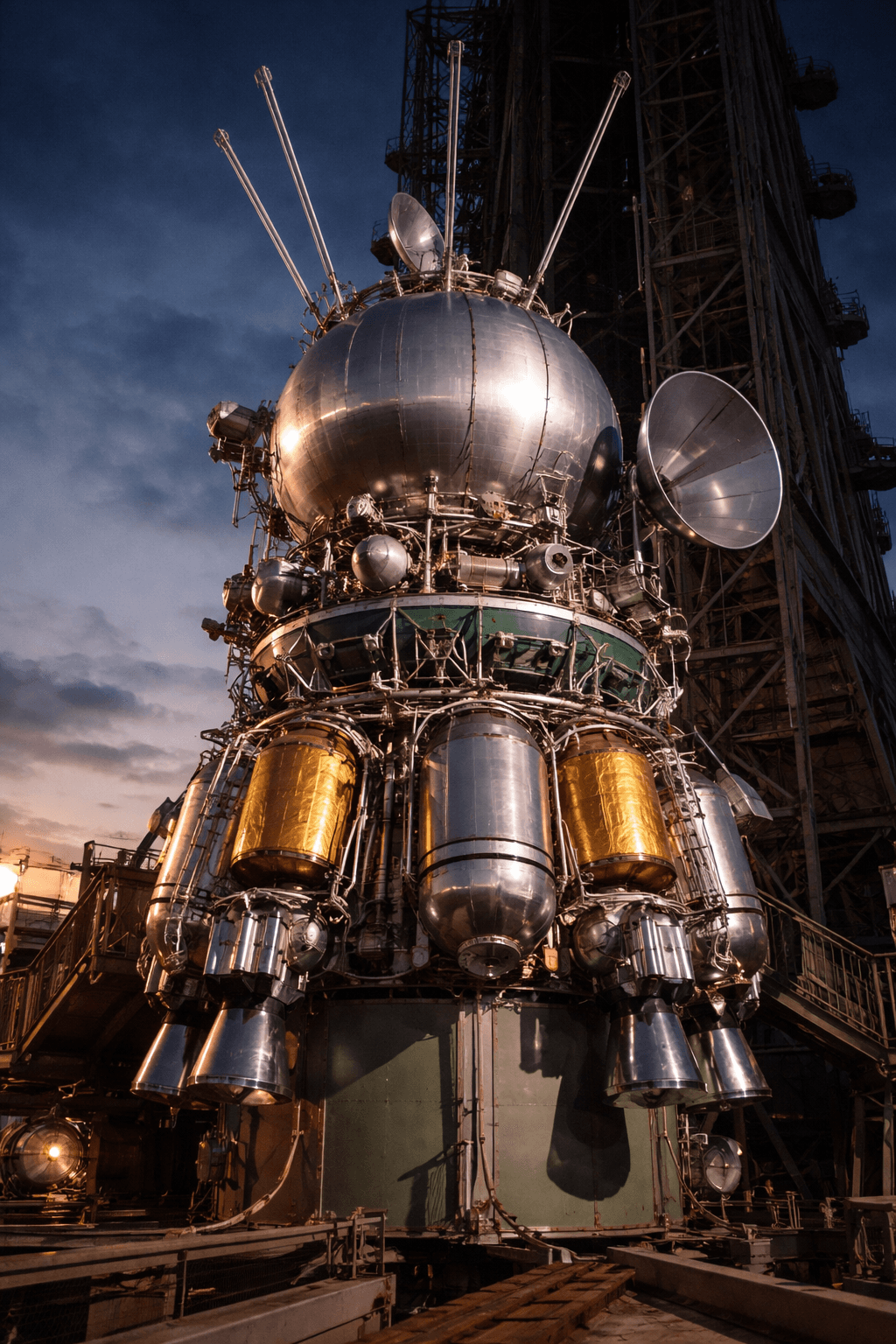
Cosmos 482 (generated by artificial intelligence.)
Historical Period | Cold War space programs | ||||||||
|---|---|---|---|---|---|---|---|---|---|
Notable Feature | Venus-atmosphere-resistant landing module | ||||||||
Impact Location | Indian Ocean | ||||||||
Atmospheric Reentry | 2025 | ||||||||
Orbital Duration | Approximately 53 years | ||||||||
Target Planet | Venus | ||||||||
Launch Site | Baikonur Cosmodrome | ||||||||
Launch Date | March 31, 1972 | ||||||||
Mission Type | Venus exploration mission (unsuccessful) | ||||||||
Country / Institution | Soviet Union | ||||||||
Mission Name | Cosmos 482 | ||||||||
Kosmos 482 is a spacecraft developed by the Soviet Union for a mission to Venus but which failed to complete its objective. Launched during the Cold War, the spacecraft encountered technical problems during its mission and never reached its target planet, instead remaining in Earth orbit. After approximately half a century in orbit, its re-entry into Earth’s atmosphere was closely monitored by scientists and space agencies.
Kosmos 482 was one of the spacecraft developed under the Soviet Union’s Venus exploration program. It was designed to gather scientific data about Venus’s atmosphere and surface. However, due to a malfunction after launch, the spacecraft was unable to enter Venus orbit and remained in an elliptical orbit around Earth. As a result, it failed to achieve its scientific objectives.

Kosmos 482 (Bilim Genç)
Despite its failed mission, the spacecraft remained in Earth orbit for approximately 53 years. This prolonged presence in orbit has served as an important case study in assessments of space debris and the atmospheric re-entry processes of defunct spacecraft. Experts have studied how the spacecraft’s structure, particularly components designed to withstand Venusian conditions, would behave during re-entry.
As of 2025, Kosmos 482 was predicted to re-enter Earth’s atmosphere, and this event was closely tracked by the international scientific community. According to expert analyses, some parts of the spacecraft may not have completely burned up during re-entry. This possibility, combined with the uncontrolled nature of the re-entry, sparked discussions about potential risks.
According to media reports, after its half-century-long orbital journey, Kosmos 482 re-entered Earth’s atmosphere and fell into the Indian Ocean. No casualties or property damage were reported in connection with the event. This incident is regarded as a current example demonstrating that spacecraft from the Cold War era can remain in Earth orbit for decades before eventually returning to the atmosphere.
The re-entry of Kosmos 482 holds importance in understanding the long-term effects of past space missions and the potential risks posed by abandoned spacecraft in orbit. It also provides a notable example for examining the historical legacy of the Soviet space program and early efforts to explore Venus.
Accessed November 26, 2025.
Anadolu Ajansı. "Cold War-Era Spacecraft of Former USSR to Reenter Earth's Atmosphere After 53 Years in Orbit." Accessed February 6, 2026.
Anadolu Ajansı. "Sovyet Uzay Aracı Yarım Asırlık Yolculuğunun Ardından Hint Okyanusu'na Düştü." Accessed February 6, 2026.
Rice University News. "Kosmos 482's Return Being Watched Closely by Rice Experts." Accessed February 6, 2026.
Universe Today. "Soviet-Era Venus Mission to Reenter in May." Accessed February 6, 2026.

Cosmos 482 (generated by artificial intelligence.)
Historical Period | Cold War space programs | ||||||||
|---|---|---|---|---|---|---|---|---|---|
Notable Feature | Venus-atmosphere-resistant landing module | ||||||||
Impact Location | Indian Ocean | ||||||||
Atmospheric Reentry | 2025 | ||||||||
Orbital Duration | Approximately 53 years | ||||||||
Target Planet | Venus | ||||||||
Launch Site | Baikonur Cosmodrome | ||||||||
Launch Date | March 31, 1972 | ||||||||
Mission Type | Venus exploration mission (unsuccessful) | ||||||||
Country / Institution | Soviet Union | ||||||||
Mission Name | Cosmos 482 | ||||||||
Origin and Purpose of the Mission
Duration in Orbit
Atmospheric Re-entry Process
Impact in the Indian Ocean
Scientific and Historical Significance