
This article was automatically translated from the original Turkish version.
+2 More
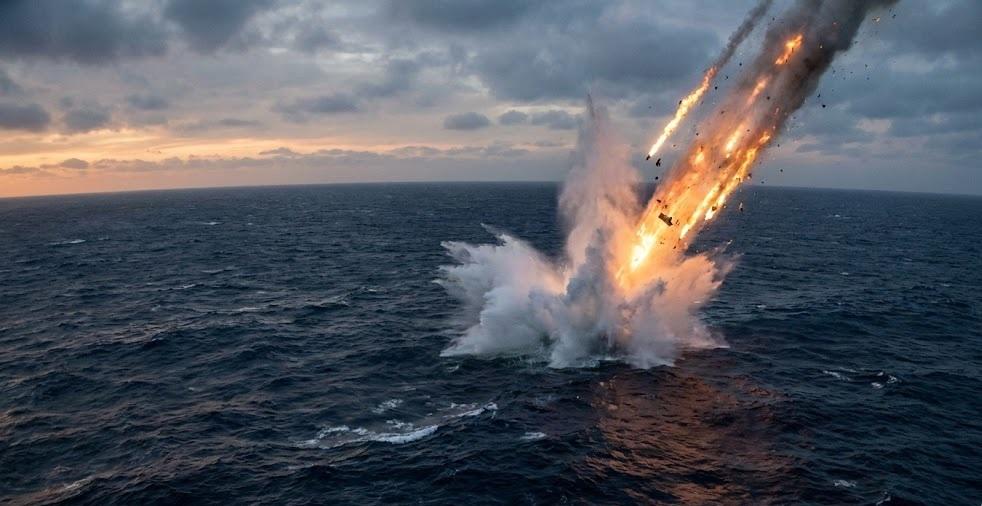
Generated by Artificial Intelligence.
Point Nemo (Pole of Inaccessibility)
Purpose(s) | Spacecraft Cemetery | ||||||||
|---|---|---|---|---|---|---|---|---|---|
Definition(s) | The farthest point from land in the ocean | ||||||||
Distance(s) | 688 kilometers away from the nearest landmass 2 | ||||||||
Usage | Due to its remoteness from human and ship traffic, it is the safest re-entry zone, and hundreds of satellites have been deorbited here | ||||||||
Technical Name | South Pacific Ocean Uninhabited Area (SPOUA) | ||||||||
Full Name | Oceanic Pole of Inaccessibility (Point Nemo) | ||||||||
Point Nemo (Pole of Inaccessibility) is a geographical region defined in technical literature as the "Oceanic Pole of Inaccessibility" or the "South Pacific Ocean Uninhabited Area" (SPOUA). This area, located at the center of the South Pacific Ocean, is the point on Earth farthest from any landmass. Due to its location and isolation, it is used by international space agencies as a controlled re-entry zone for decommissioned spacecraft, known as the spacecraft cemetery.
Point Nemo is located in the South Pacific Ocean at coordinates 48°52.6′ South latitude and 123°23.6′ West longitude.【1】 This point is approximately 2,688 kilometers from the nearest landmasses (or over 1,600 miles according to some sources).【2】 The closest land formations to Point Nemo are Ducie Island, part of the Pitcairn Islands to the north, Motu Nui, part of Easter Island to the northeast, and Maher Island off the coast of Antarctica to the south.【3】
In geographical literature, the region is described as the "middle of nowhere" and is recognized as the location farthest from any human activity or settlement.【4】

Point Nemo (Generated by Artificial Intelligence)
Due to its isolation caused by ocean currents and wind patterns and the absence of human population, Point Nemo has been designated by the global space industry as a spacecraft cemetery.【5】 The primary purpose of this use is to minimize the risk of decommissioned spacecraft and satellites falling uncontrollably to Earth and potentially endangering populated areas or air and maritime traffic.【6】
History and Statistics: Since 1971, more than 263 spacecraft have been deliberately deorbited into the Point Nemo region.【7】 The majority of these controlled re-entry (splashdown) vehicles belong to Russia (and the former Soviet Union), the United States, Europe, and Japan.【8】
Important spacecraft and stations buried in this region include:
Additionally, the International Space Station (ISS) is planned to be deorbited into this region upon completion of its mission in 2031.【14】
Process: When spacecraft are directed toward Point Nemo, they enter a process of atmospheric disintegration. During this process, fuel tanks and other combustible components burn up, while non-combustible metal parts and heavy fragments sink to the ocean floor.【15】
The South Pacific Gyre (SPG), where Point Nemo is located, is an oceanographically extremely low-nutrient (oligotrophic) region.【16】
Microbial Life: Scientific studies of seafloor sediments in the region have revealed the presence of microbial life despite extremely low energy and nutrient levels. Aerobic microorganisms have been found to remain viable in deep-sea sediments of the South Pacific Gyre, even within layers dating back approximately 101.5 million years from the surface to the volcanic basement.【17】 Although the metabolic activity of these microorganisms is extremely slow, observations in laboratory settings show they rapidly multiply when provided with nutrient supplements.【18】
Macroscopic Life: Due to ocean currents that prevent nutrient delivery, the region is described as a "biological desert." However, it is not entirely devoid of life; for example, in 2005, previously unknown species such as the Yeti crab (Kiwa hirsuta) were discovered near a point in this region, along the Pacific-Antarctic Ridge.【19】
Point Nemo (The Ocean Race)
Point Nemo and its surrounding area fall under the status of "Areas Beyond National Jurisdiction" (ABNJ), meaning they are not under the sovereignty of any state.【20】 This status requires that activities in the region be evaluated under international law, particularly the United Nations Convention on the Law of the Sea (UNCLOS) and the Outer Space Treaty.【21】
Environmental Impacts: While the deorbiting of spacecraft into the ocean (splashdown) is considered a necessary practice for space safety, its environmental effects remain a subject of debate. It has been noted that debris from re-entering spacecraft may contain toxic fuel residues (such as hydrazine), heavy metals, and other hazardous substances capable of harming marine ecosystems.【22】 Current international legal frameworks impose on states the obligation to protect the marine environment, but the absence of specific and binding norms addressing marine pollution caused by space activities creates a "legal gap."【23】
In legal doctrine, it is argued that these activities should be subject to environmental impact assessment (EIA) processes and that states bear a duty of "due diligence" under international law to protect marine life.【24】
Dariol, Chiara and Marco Giusti. "Il Punto Nemo e la gestione dei detriti spaziali: un approccio ambientale." *EUSPIL Research Paper*. Pisa: University of Pisa, December 2024. Accessed January 28, 2026. https://euspil.sp.unipi.it/wp-content/uploads/2024/12/Il-Punto-Nemo-e-la-gestione-dei-detriti-spaziali-un-approccio-ambientale-Dariol-Chiara-Giusti-Marco.pdf
De Lucia, Vito, and Viviana Iavicoli. "From Outer Space to Ocean Depths: The 'Spacecraft Cemetery' and the Protection of the Marine Environment in Areas Beyond National Jurisdiction." *California Western International Law Journal* 49, no. 2 (2019): 346-378. Accessed January 28, 2026. https://papers.ssrn.com/sol3/papers.cfm?abstract_id=3153458
Levchenko, Igor, Shuyan Xu, Oleg Baranov, and Kateryna Bazaka. "How to Survive at Point Nemo? Fischer-Tropsch, Artificial Photosynthesis, and Plasma Catalysis for Sustainable Energy at Isolated Habitats." *Global Challenges* 7, no. 4 (2023). Accessed January 28, 2026. https://onlinelibrary.wiley.com/doi/full/10.1002/gch2.202300086
Morono, Yuki, Motoo Ito, Tatsuhiko Hoshino, Takeshi Terada, Tomoyuki Hori, Minoru Ikehara, Steven D’Hondt, and Fumio Inagaki. "Aerobic microbial life persists in oxic marine sediment as old as 101.5 million years." *Nature Communications* 11, no. 1 (2020): 3626. Accessed January 28, 2026. https://pubmed.ncbi.nlm.nih.gov/32724059/
[1]
Igor Levchenko vd., "How to Survive at Point Nemo? Fischer-Tropsch, Artificial Photosynthesis, and Plasma Catalysis for Sustainable Energy at Isolated Habitats," Global Challenges 7, sy. 1 (2023): 2. https://onlinelibrary.wiley.com/doi/full/10.1002/gch2.202300086
[2]
Chiara Dariol ve Marco Giusti, "Il Punto Nemo e la gestione dei detriti spaziali: un approccio ambientale" (Academic Paper, University of Pisa, Department of Political Science, 2024), 4. https://euspil.sp.unipi.it/wp-content/uploads/2024/12/Il-Punto-Nemo-e-la-gestione-dei-detriti-spaziali-un-approccio-ambientale-Dariol-Chiara-Giusti-Marco.pdf
[3]
Chiara Dariol ve Marco Giusti, "The Point Nemo and Space Debris Management: an Environmental Approach" (Academic Paper, University of Pisa, Department of Political Science, 2024), 4. https://euspil.sp.unipi.it/wp-content/uploads/2024/12/Il-Punto-Nemo-e-la-gestione-dei-detriti-spaziali-un-approccio-ambientale-Dariol-Chiara-Giusti-Marco.pdf
[4]
Chiara Dariol ve Marco Giusti, "The Point Nemo and Space Debris Management: an Environmental Approach" (Academic Paper, University of Pisa, Department of Political Science, 2024), 4. https://euspil.sp.unipi.it/wp-content/uploads/2024/12/Il-Punto-Nemo-e-la-gestione-dei-detriti-spaziali-un-approccio-ambientale-Dariol-Chiara-Giusti-Marco.pdf
Igor Levchenko vd., "How to Survive at Point Nemo? Fischer-Tropsch, Artificial Photosynthesis, and Plasma Catalysis for Sustainable Energy at Isolated Habitats," Global Challenges 7, sy. 1 (2023): 1. https://onlinelibrary.wiley.com/doi/full/10.1002/gch2.202300086
[5]
Chiara Dariol ve Marco Giusti, "The Point Nemo and Space Debris Management: an Environmental Approach" (Academic Paper, University of Pisa, Department of Political Science, 2024), 5. https://euspil.sp.unipi.it/wp-content/uploads/2024/12/Il-Punto-Nemo-e-la-gestione-dei-detriti-spaziali-un-approccio-ambientale-Dariol-Chiara-Giusti-Marco.pdf
[6]
Vito De Lucia ve Viviana Iavicoli, "From Outer Space to Ocean Depths: The 'Spacecraft Cemetery' and the Protection of the Marine Environment," California Western International Law Journal 49, sy. 2 (2019): 21. https://papers.ssrn.com/sol3/papers.cfm?abstract_id=3153458
[7]
Vito De Lucia ve Viviana Iavicoli, "From Outer Space to Ocean Depths: The 'Spacecraft Cemetery' and the Protection of the Marine Environment in Areas Beyond National Jurisdiction," California Western International Law Journal 49, sy. 2 (2019): 21. https://papers.ssrn.com/sol3/papers.cfm?abstract_id=3153458
[8]
Vito De Lucia ve Viviana Iavicoli, "From Outer Space to Ocean Depths: The 'Spacecraft Cemetery' and the Protection of the Marine Environment in Areas Beyond National Jurisdiction," California Western International Law Journal 49, sy. 2 (2019): 22. https://papers.ssrn.com/sol3/papers.cfm?abstract_id=3153458
[9]
Chiara Dariol ve Marco Giusti, "The Point Nemo and Space Debris Management: an Environmental Approach" (Academic Paper, University of Pisa, Department of Political Science, 2024), 5. https://euspil.sp.unipi.it/wp-content/uploads/2024/12/Il-Punto-Nemo-e-la-gestione-dei-detriti-spaziali-un-approccio-ambientale-Dariol-Chiara-Giusti-Marco.pdf
[10]
Chiara Dariol ve Marco Giusti, "The Point Nemo and Space Debris Management: an Environmental Approach" (Academic Paper, University of Pisa, Department of Political Science, 2024), 5. https://euspil.sp.unipi.it/wp-content/uploads/2024/12/Il-Punto-Nemo-e-la-gestione-dei-detriti-spaziali-un-approccio-ambientale-Dariol-Chiara-Giusti-Marco.pdf
[11]
Vito De Lucia ve Viviana Iavicoli, "From Outer Space to Ocean Depths: The 'Spacecraft Cemetery' and the Protection of the Marine Environment in Areas Beyond National Jurisdiction," California Western International Law Journal 49, sy. 2 (2019): 22. https://papers.ssrn.com/sol3/papers.cfm?abstract_id=3153458
[12]
Chiara Dariol ve Marco Giusti, "The Point Nemo and Space Debris Management: an Environmental Approach" (Academic Paper, University of Pisa, Department of Political Science, 2024), 5. https://euspil.sp.unipi.it/wp-content/uploads/2024/12/Il-Punto-Nemo-e-la-gestione-dei-detriti-spaziali-un-approccio-ambientale-Dariol-Chiara-Giusti-Marco.pdf
[13]
Chiara Dariol ve Marco Giusti, "The Point Nemo and Space Debris Management: an Environmental Approach" (Academic Paper, University of Pisa, Department of Political Science, 2024), 5. https://euspil.sp.unipi.it/wp-content/uploads/2024/12/Il-Punto-Nemo-e-la-gestione-dei-detriti-spaziali-un-approccio-ambientale-Dariol-Chiara-Giusti-Marco.pdf
[14]
Chiara Dariol ve Marco Giusti, "The Point Nemo and Space Debris Management: an Environmental Approach" (Academic Paper, University of Pisa, Department of Political Science, 2024), 5. https://euspil.sp.unipi.it/wp-content/uploads/2024/12/Il-Punto-Nemo-e-la-gestione-dei-detriti-spaziali-un-approccio-ambientale-Dariol-Chiara-Giusti-Marco.pdf
[15]
Chiara Dariol ve Marco Giusti, "The Point Nemo and Space Debris Management: an Environmental Approach" (Academic Paper, University of Pisa, Department of Political Science, 2024), 5. https://euspil.sp.unipi.it/wp-content/uploads/2024/12/Il-Punto-Nemo-e-la-gestione-dei-detriti-spaziali-un-approccio-ambientale-Dariol-Chiara-Giusti-Marco.pdf
[16]
Yuki Morono vd., "Aerobic microbial life persists in oxic marine sediment as old as 101.5 million years," Nature Communications 11, sy. 3626 (2020): 1. https://pubmed.ncbi.nlm.nih.gov/32724059/
[17]
Yuki Morono vd., "Aerobic microbial life persists in oxic marine sediment as old as 101.5 million years," Nature Communications 11, sy. 3626 (2020): 1. https://pubmed.ncbi.nlm.nih.gov/32724059/
[18]
Yuki Morono vd., "Aerobic microbial life persists in oxic marine sediment as old as 101.5 million years," Nature Communications 11, sy. 3626 (2020): 3. https://pubmed.ncbi.nlm.nih.gov/32724059/
[19]
Chiara Dariol ve Marco Giusti, "The Point Nemo and Space Debris Management: an Environmental Approach" (Academic Paper, University of Pisa, Department of Political Science, 2024), 4. https://euspil.sp.unipi.it/wp-content/uploads/2024/12/Il-Punto-Nemo-e-la-gestione-dei-detriti-spaziali-un-approccio-ambientale-Dariol-Chiara-Giusti-Marco.pdf
[20]
Vito De Lucia ve Viviana Iavicoli, "From Outer Space to Ocean Depths: The 'Spacecraft Cemetery' and the Protection of the Marine Environment in Areas Beyond National Jurisdiction," California Western International Law Journal 49, sy. 2 (2019): 2. https://papers.ssrn.com/sol3/papers.cfm?abstract_id=3153458
[21]
Vito De Lucia ve Viviana Iavicoli, "From Outer Space to Ocean Depths: The 'Spacecraft Cemetery' and the Protection of the Marine Environment in Areas Beyond National Jurisdiction," California Western International Law Journal 49, sy. 2 (2019): 4. https://papers.ssrn.com/sol3/papers.cfm?abstract_id=3153458
[22]
Vito De Lucia ve Viviana Iavicoli, "From Outer Space to Ocean Depths: The 'Spacecraft Cemetery' and the Protection of the Marine Environment in Areas Beyond National Jurisdiction," California Western International Law Journal 49, sy. 2 (2019): 23. https://papers.ssrn.com/sol3/papers.cfm?abstract_id=3153458
[23]
Vito De Lucia ve Viviana Iavicoli, "From Outer Space to Ocean Depths: The 'Spacecraft Cemetery' and the Protection of the Marine Environment in Areas Beyond National Jurisdiction," California Western International Law Journal 49, sy. 2 (2019): 30. https://papers.ssrn.com/sol3/papers.cfm?abstract_id=3153458
[24]
Vito De Lucia ve Viviana Iavicoli, "From Outer Space to Ocean Depths: The 'Spacecraft Cemetery' and the Protection of the Marine Environment in Areas Beyond National Jurisdiction," California Western International Law Journal 49, sy. 2 (2019): 35. https://papers.ssrn.com/sol3/papers.cfm?abstract_id=3153458

Generated by Artificial Intelligence.
Point Nemo (Pole of Inaccessibility)
Purpose(s) | Spacecraft Cemetery | ||||||||
|---|---|---|---|---|---|---|---|---|---|
Definition(s) | The farthest point from land in the ocean | ||||||||
Distance(s) | 688 kilometers away from the nearest landmass 2 | ||||||||
Usage | Due to its remoteness from human and ship traffic, it is the safest re-entry zone, and hundreds of satellites have been deorbited here | ||||||||
Technical Name | South Pacific Ocean Uninhabited Area (SPOUA) | ||||||||
Full Name | Oceanic Pole of Inaccessibility (Point Nemo) | ||||||||
No Discussion Added Yet
Start discussion for "Point Nemo (Pole of Inaccessibility)" article
Geographical Location and Characteristics
Spacecraft Cemetery
Environmental Characteristics and Biological Life
Legal Status and Environmental Debates