


This article was automatically translated from the original Turkish version.
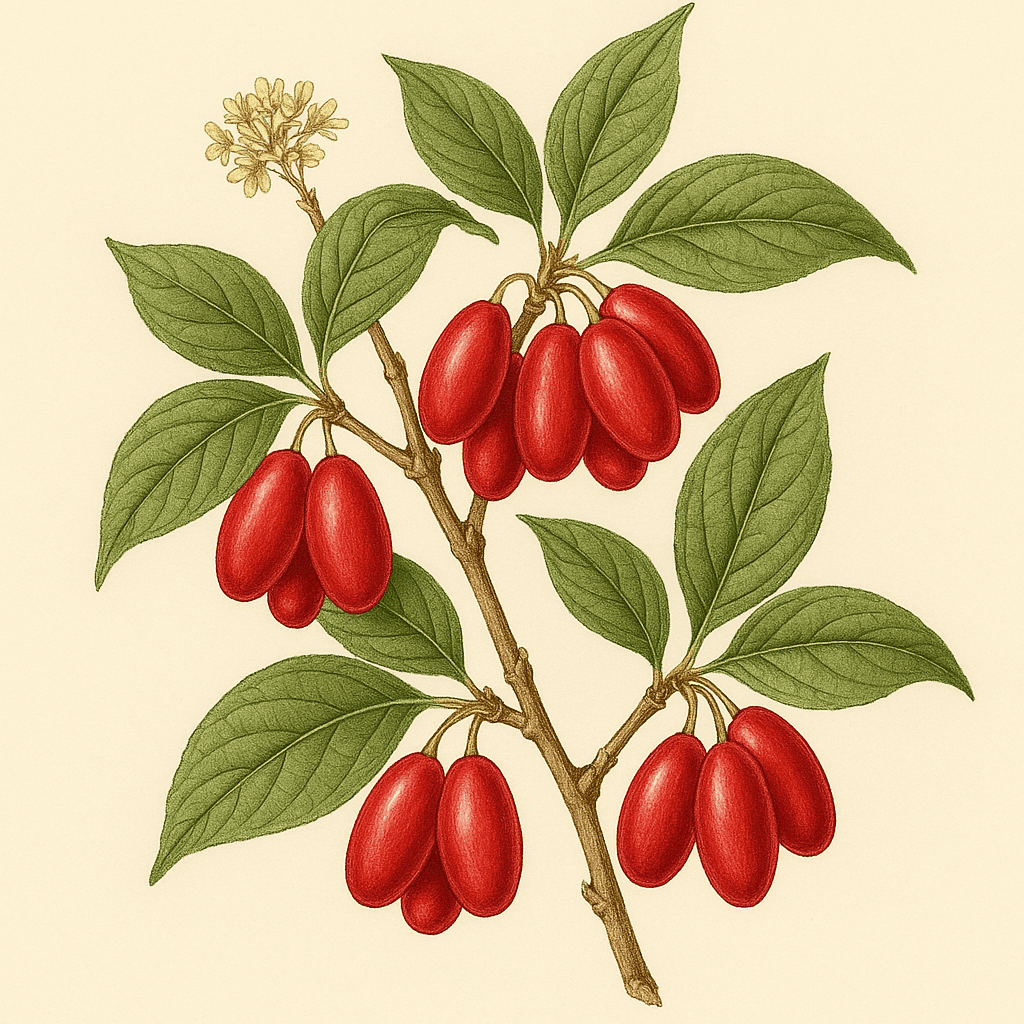
Cranberry Fruit
Scientific Name(s) | Cornus mas | ||||||||
|---|---|---|---|---|---|---|---|---|---|
Family | Cornaceae | ||||||||
Plant Type | Shrub/small tree | ||||||||
Flower Color | Yellow | ||||||||
Fruit Type | Single-seeded | ||||||||
Taste | Sour-sweet | ||||||||
Regions Where It Grows | Black Sea, Central Anatolia | ||||||||
Cornelian cherry (Cornus mas L.) is a plant species native to the temperate zones of the Northern Hemisphere, known locally as “kızılcık,” “erğen,” or “kiren.” It is widely distributed in Türkiye, particularly in the Black Sea, Inner Anatolia, and Marmara regions, where both wild and cultivated varieties are found.
The cornelian cherry grows as a shrub or small tree reaching heights of 3 to 6 meters. Its leaves are opposite, petiolate, and oval-shaped. The upper leaf surface is glabrous, while the lower surface is slightly pubescent. The flowers are arranged in umbel-like clusters and are yellow in color; they bloom before the leaves emerge and serve as an important nectar source for bees. This early flowering provides a significant advantage for pollination.
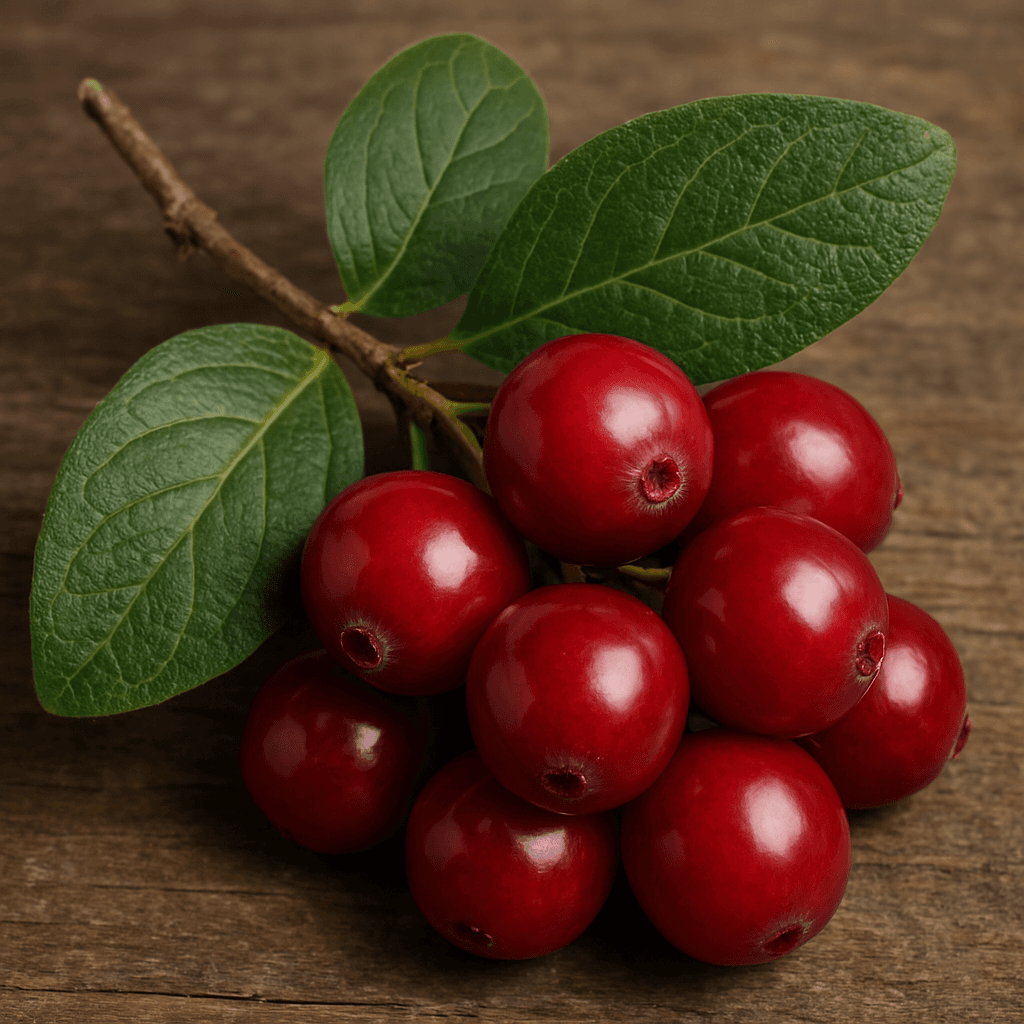
Cornelian Cherry Fruit (Generated by Artificial Intelligence)
The fruit is oval, bright red, single-seeded, and approximately 1–2 cm in length. It is notable for its fleshy texture and thin skin. When ripe, it has a tart flavor. Due to its high tannin content, it can taste astringent when consumed before full ripeness.
The cornelian cherry fruit contains a high concentration of numerous bioactive compounds beneficial to human health. One hundred grams of fresh cornelian cherry fruit contains approximately 21.7 g carbohydrates, 0.4 g protein, 0.1–0.3 g fat, and 1.8 g dietary fiber. It is also rich in vitamin C, with levels ranging from 35 to 70 mg per 100 g.
The antioxidant capacity is very high. Total phenolic content can reach 200–650 mg GAE/100g, while flavonoids, anthocyanins, and tannins act as antioxidants that neutralize free radicals. Additionally, the fruit contains substantial amounts of organic acids such as malic acid, citric acid, and ellagic acid.
The cornelian cherry fruit is particularly recognized for its protective effect against urinary tract infections. This is due to its proanthocyanidins (PAC), which inhibit bacterial adhesion to the urinary tract lining. This protective effect against Escherichia coli has been confirmed in scientific studies.
Its high antioxidant content has also been observed to contribute to the prevention of cardiovascular diseases, reduction of age-related oxidative damage, and enhancement of immune system function.
The tannin content helps protect the mucosal lining and exhibits a balancing effect on gastric acid. Combined with its dietary fiber content, it supports digestive health and helps prevent constipation. Due to its low glycemic index, it is recommended as a fruit that can be safely consumed by diabetic patients.
In Anatolia, the cornelian cherry is traditionally consumed fresh as a fruit and is also used in the preparation of jams, syrups, molasses, liqueurs, fruit juices, compotes, vinegar, and wines. Particularly in the Black Sea region, it is known as “kızılcık tarhanası,” a traditional food product.
In the food industry, cornelian cherry extract can be used as a natural flavoring agent. The dried form is popular as a healthy snack. It also shows potential as a natural additive in meat products. Studies have demonstrated that cornelian cherry powder exhibits preservative properties in meat products, including extending shelf life, suppressing microbial growth, and improving color stability.
Filiz Altay and Güzin Koç, “Kızılcık Meyvesi ve Kullanılma Potansiyeli,” DÜ Sağlık Bilimleri Enstitüsü Dergisi 9, no. 1 (2020): 14–24, https://dergipark.org.tr/en/pub/dustad/issue/52635/693179.
Hasan Yıldız, “Kızılcık Meyvesinin Morfolojik ve Kimyasal Özellikleri ile Kullanım Potansiyeli.” ResearchGate, Accessed April 14, 2025. https://www.researchgate.net/publication/387558159_KIZILCIK_MEYVESININ_MORFOLOJIK_VE_KIMYASAL_OZELLIKLERI_ILE_KULLANIM_POTANSIYELI.
Medical Park. "Kızılcık Faydaları Nelerdir? Nasıl Tüketilir?" Accessed April 14, 2025. https://www.medicalpark.com.tr/kizilcik-faydalari/hg-3242.
“Kızılcık Faydaları: Sağlık İçin Mucizevi Etkileri Keşfedin,” Acıbadem, Accessed April 14, 2025, https://www.acibadem.com.tr/hayat/kizilcik-faydalari/.

Cranberry Fruit
Scientific Name(s) | Cornus mas | ||||||||
|---|---|---|---|---|---|---|---|---|---|
Family | Cornaceae | ||||||||
Plant Type | Shrub/small tree | ||||||||
Flower Color | Yellow | ||||||||
Fruit Type | Single-seeded | ||||||||
Taste | Sour-sweet | ||||||||
Regions Where It Grows | Black Sea, Central Anatolia | ||||||||
Botanical Characteristics and Morphology
Phytochemical Composition and Nutritional Profile
Health Effects
Traditional and Industrial Uses