


This article was automatically translated from the original Turkish version.
+2 More
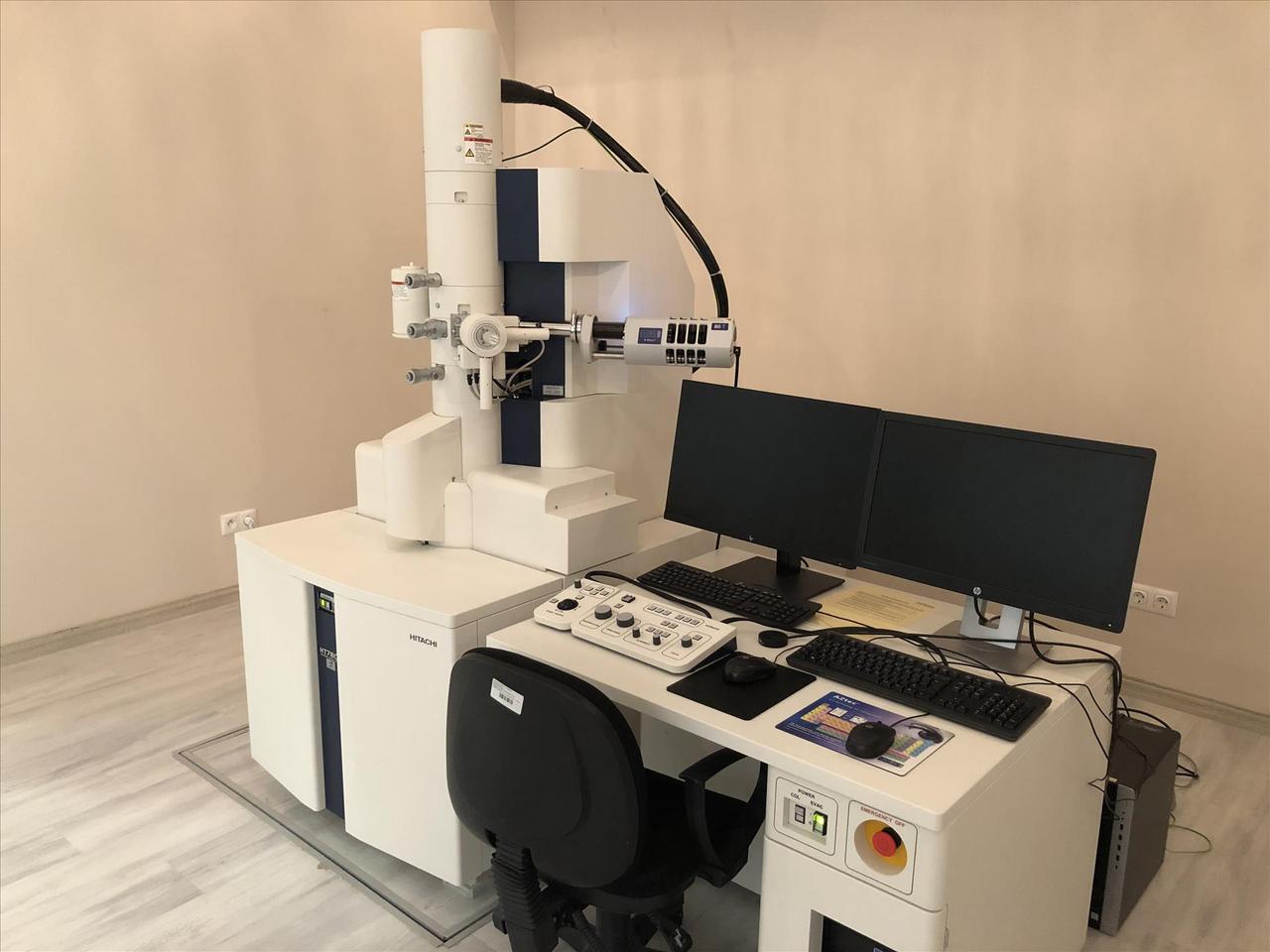
https://arum.ogu.edu.tr/Sayfa/Index/81/kriyojenik-gecirimli-elektron-mikroskobu-kriyo-tem
Cryo-TEM
Imaging Methods | Single particle analysis (SPA), cryo-electron tomography (Cryo-ET), electron diffraction | ||||||||
|---|---|---|---|---|---|---|---|---|---|
Advantage(s) | Achieving high resolution at the atomic level no requirement for staining or chemical fixation examination of the sample in its natural state | ||||||||
Applications | Structural analysis of protein complexes, morphological examination of virus particles, structural characterization of nanomaterials | ||||||||
Definitions | Vitrification, Single Particle Analysis (SPA), Cryo-Electron Tomography (Cryo-ET) | ||||||||
Cryo-transmission Electron Microscopy (cryo-TEM) is an advanced imaging technique that enables high-resolution (2–3 Ångström) visualization of biological and soft materials in their native state without disrupting their structure. Unlike conventional transmission electron microscopy, cryo-TEM preserves samples by rapid freezing (vitrification), preventing the formation of crystalline ice, and analyzes them at approximately -180 °C. This method has enabled structural biologists to resolve proteins and large biomolecules with approximately tenfold greater clarity, resulting in a 40 percent increase in their use for protein structure determination.

Cryo-TEM (1)
The foundation of cryo-TEM technology was established in the 1980s by Jacques Dubochet and his colleagues with the development of vitrification. This technique rapidly freezes biological samples in liquid ethane at a rate of one-thousandth of a second, producing amorphous ice. This breakthrough allowed samples to retain their natural state and was recognized with the 2017 Nobel Prize in Chemistry. In the 2010s, the widespread adoption of direct electron detectors led to significant improvements in resolution and data quality.
After sample preparation, imaging is performed under a high-voltage electron beam (typically 200–300 kV) at cryogenic temperatures (-180 °C). As electrons pass through the sample, interactions with the material generate structural details. High voltage enhances electron penetration, while low temperature prevents sample degradation. Vitrification ensures that no ice crystals form, preserving the atomic structure of the specimen.
Samples are prepared in volumes of 3–5 µL and applied onto carbon-coated copper grids. Excess liquid is blotted away using a thin carbon film (~10–20 nm thick). The grid is rapidly plunged into a liquid ethane bath at -183 °C to achieve vitrification. Key technical challenges in this stage include maintaining the correct temperature and ensuring rapid freezing rates. The frozen grid is then transferred into the microscope vacuum using specialized cryo-transfer systems.

Preparation of semi-thin and ultra-thin sections of various biological and industrial samples.(2)

Preparation of industrial samples in biological or aqueous/inorganic solvents using plunge-freezing techniques.(3)
Cryo-TEM offers a broad range of applications including biological structures (protein complexes, viruses, intracellular organelles), polymers, nanomaterials, and liquid crystals. It has been notably used in the structural analysis of the SARS-CoV-2 spike protein. In Türkiye, research centers such as ARUM at Osmangazi University actively employ cryo-TEM technology for biomolecule imaging.
Modern instruments feature accelerator voltages of 200–300 kV, direct electron detectors with sensitivity of 10⁴ electrons per pixel, automated data collection systems, and advanced artificial intelligence-assisted analysis software (e.g. RELION). The most common imaging methods include:
Cryo-TEM encompasses three primary imaging methods:
1) Single Particle Analysis (SPA): Used to determine average structures of heterogeneous proteins or complexes.
2) Cryo-electron Tomography (Cryo-ET): Enables three-dimensional visualization of intracellular structures.
3) Electron Diffraction: Applied to samples with crystalline structures.
The native state of the sample is preserved without the need for staining or drying.
Provides high resolution at the atomic level.
Wide range of applications and detailed analysis of molecular structures.
Requires high-cost and complex infrastructure.
Sample preparation is technically challenging.
The data collection and analysis process can be lengthy; however, automated data collection systems are reducing this time.
ACS Publications. “Cryogenic Techniques in Electron Microscopy of Polymers.” *Macromolecules* 33, no. 9 (2000). https://pubs.acs.org/doi/10.1021/ma00130a016
ARUM. "Biyomolekül Görüntüleme Çalışmaları." Osmangazi Üniversitesi, 2023. https://arum.ogu.edu.tr/
ARUM. "Kriyo-TEM Numune Hazırlık." Osmangazi Üniversitesi, 2023. https://arum.ogu.edu.tr/Sayfa/Index/82/kriyo-tem-numune-hazirlik
ARUM. "Kriyojenik Geçirimli Elektron Mikroskobu (Kriyo-TEM)." Osmangazi Üniversitesi, 2023. https://arum.ogu.edu.tr/Sayfa/Index/81/kriyojenik-gecirimli-elektron-mikroskobu-kriyo-tem
Glaeser, R. M. “How Good Can Single-Particle Cryo-EM Become?” *IUCrJ* 8, no. 6 (2021). https://journals.iucr.org/m/issues/2021/06/00/rq5007/index.html
Illinois MRL. “ThermoFisher Glacios Cryo-TEM.” Materials Research Laboratory, 2024. https://mrl.illinois.edu/facilities/equipment/thermofisher-glacios-cryo-tem
Monash University. “Cryo-EM.” *Monash Research Infrastructure*, 2024. https://www.monash.edu/researchinfrastructure/cryo-em
ORNL. “Thermo Fisher Scientific Krios G4 Cryo-TEM.” Oak Ridge National Laboratory, 2024. https://www.ornl.gov/content/thermo-fisher-scientific-krios-g4-cryo-tem
Osmangazi University ARUM. "Kriyo-TEM Numune Hazırlık." Osmangazi Üniversitesi, 2023. https://arum.ogu.edu.tr/Sayfa/Index/82/kriyo-tem-numune-hazirlik
Osmangazi University ARUM. “Kriyojenik Geçirimli Elektron Mikroskobu (Kriyo-TEM).” Osmangazi Üniversitesi, 2023. https://arum.ogu.edu.tr/Sayfa/Index/81/kriyojenik-gecirimli-elektron-mikroskobu-kriyo-tem
PMC. Leginon and Appion Automated Workflow. "Cryo-EM Data Collection and Processing." PMC, 2022. https://www.ncbi.nlm.nih.gov/pmc/articles/PMC9106016/
PubMed. Scheres, Sjors H.W. “RELION: Implementation of a Bayesian Approach to Cryo-EM Structure Determination.” PubMed, 2017. https://pubmed.ncbi.nlm.nih.gov/29039095/
TemD. “Cryo-TEM ile Yaşamı Atomik Düzeyde Görmek.” TEMD Haberler, 2023. https://temd.org/4/haberler/56/cryo-tem-ile-yasami-atomik-duzeyde-gormek

https://arum.ogu.edu.tr/Sayfa/Index/81/kriyojenik-gecirimli-elektron-mikroskobu-kriyo-tem
Cryo-TEM
Imaging Methods | Single particle analysis (SPA), cryo-electron tomography (Cryo-ET), electron diffraction | ||||||||
|---|---|---|---|---|---|---|---|---|---|
Advantage(s) | Achieving high resolution at the atomic level no requirement for staining or chemical fixation examination of the sample in its natural state | ||||||||
Applications | Structural analysis of protein complexes, morphological examination of virus particles, structural characterization of nanomaterials | ||||||||
Definitions | Vitrification, Single Particle Analysis (SPA), Cryo-Electron Tomography (Cryo-ET) | ||||||||
No Discussion Added Yet
Start discussion for "Cryogenic Transmission Electron Microscopy (Cryo-TEM)" article
Historical Development
Working Principle
Sample Preparation
Applications
System Features
Imaging Methods
Advantages and Limitations
Advantages
Limitations