

This article was automatically translated from the original Turkish version.
Type of Geographical İndication | Place of Origin | ||||||||
|---|---|---|---|---|---|---|---|---|---|
Application Date | 26.04.2017 | ||||||||
Registration Number | 260 | ||||||||
Registration Date | 06.12.2017 | ||||||||
Product / Product Group(s) | Other products | ||||||||
Province(s) | Ankara | ||||||||
Applicant/Registrant(s) | Çubuk Municipality | ||||||||
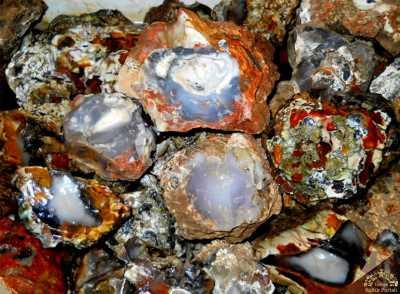
Çubuk Agate Stone is a natural ornamental stone unique to the Çubuk district of Ankara, consisting of a variety of chalcedony of volcanic origin. Formed within andesitic and rhyolitic units of Miocene-age volcanic sequences, this stone is distinguished by its characteristic rod-like crystal structures and layered banding. Under Law No. 6769 on Industrial Property, the stone was registered on 6 December 2017 as a “Geographical Indication” following an application submitted by the Çubuk Municipality on 26 April 2017. This registration aims to preserve the uniqueness and geographical identity of the stone produced within the boundaries of Çubuk district.

Çubuk Agate Stone (Turkish Patent)
Çubuk Agate Stone is a silicate mineral composed of silicon dioxide (SiO₂). It forms within volcanic rocks such as andesite and rhyolite through hydrothermal processes occurring in fractures and pore spaces. The stone develops under low-pressure and low-temperature conditions, in environments with high colloidal silica concentration and a pH range of 7 to 9. Its most distinctive feature is its rod-like and linear crystal patterns. These patterns arise when microcrystals formed from silica gel encase pre-existing fine elongated crystals. These rod-like structures constitute a visually unique characteristic of the stone and represent a rare phenomenon worldwide.
The stone exhibits concentric and horizontal parallel banding. Concentric bands originate from spherical fiber bundles resulting from the transformation of silica gel. Horizontal bands form due to the gravitational settling of coarse silica particles. Çubuk Agate Stone typically occurs in shades of blue, yellow, brownish-red, dark yellowish-green (5GY 5/2), and grayish-blue (5PB 5/2). It also contains moss-like, dendritic, or radiating rod-like inclusions, which enhance its aesthetic value.
Çubuk Agate Stone forms through the precipitation of hydrothermal siliceous solutions under alkaline conditions (pH 9) at temperatures of 100–200 °C and pressures near surface conditions. Its composition, dominated by silicon and oxygen, is enriched with minor amounts of iron, magnesium, manganese, calcium, and aluminum minerals. The rod-like crystals appear as rectangular prismatic silicified structures and contain pseudomorphic replacements that preserve the original crystal form. This feature enhances the stone’s gemological value and contributes to its widespread use as an ornamental stone.
The production process of Çubuk Agate Stone follows a meticulous procedure from extraction to processing. Initially, the stone is cleaned using pressurized water and steel brushes. Large fragments are sliced using fully enclosed cutting machines, aligned parallel to the stone’s natural motifs. After cleaning and rounding the outer edges, the slices are scored and separated using a cutting machine. The separated pieces undergo rough grinding on a cabochon machine, followed by surface smoothing using finer abrasive discs. Polishing begins with 240/280 mesh silicon carbide abrasives and progresses through 400, 600, 800, and 1000 mesh abrasives. Finally, the stones are polished with cerium oxide or aluminum oxide on felt pads using abundant water. After this process, the stones are prepared as semi-finished or finished products for use in the silverware and jewelry industries. The stone may also be used in its natural band form.
The production of Çubuk Agate Stone is monitored by a three-member oversight body coordinated by the Çubuk Municipality, comprising representatives from Ankara Yıldırım Beyazıt University Faculty of Engineering and Natural Sciences, Çubuk District Governorship, and Çubuk Municipality. Inspections are conducted at least once annually, with additional inspections carried out upon complaint or need. During inspection, the stone’s layered structure and rod-like, linear, star-like, or needle-like crystal patterns are examined with the naked eye. Cutting techniques, labeling, and marketing as “Çubuk Agate Stone” are evaluated for compliance with its physical and chemical properties. The oversight body may seek support from expert individuals or institutions when necessary and may initiate legal proceedings to protect the rights associated with the geographical indication.
Çubuk Agate Stone is extracted and processed exclusively within the boundaries of Çubuk district, Ankara. The inscription “Çubuk Agate Stone” and its geographical indication emblem must appear on the stone or its packaging. If this is not feasible, the logo and emblem must be visibly displayed at the processing facility. The stone is widely used in the production of ornamental items and jewelry, valued for its aesthetic patterns and durability.
Ministry of Culture and Tourism. "Çubuk Agat Taşı." Türkiye Kültür Portalı. Accessed August 16, 2025. https://www.kulturportali.gov.tr/portal/cubukagattasi.
Turk Patent and Trademark Office. "Çubuk Agat Taşı." December 6, 2017. Accessed August 16, 2025. https://ci.turkpatent.gov.tr/cografi-isaretler/detay/38265.
Turk Patent and Trademark Office. "Çubuk Agat Taşı." Türkiye Geographical Indications Bulletin. December 6, 2017. Accessed August 16, 2025. https://ci.turkpatent.gov.tr/Files/GeographicalSigns/91f104fe-5c0a-4867-9602-769f3673f761.pdf

Type of Geographical İndication | Place of Origin | ||||||||
|---|---|---|---|---|---|---|---|---|---|
Application Date | 26.04.2017 | ||||||||
Registration Number | 260 | ||||||||
Registration Date | 06.12.2017 | ||||||||
Product / Product Group(s) | Other products | ||||||||
Province(s) | Ankara | ||||||||
Applicant/Registrant(s) | Çubuk Municipality | ||||||||
Definition and Distinguishing Characteristics
Physical and Chemical Properties
Gemological Properties
Production Process
Monitoring and Quality Control
Usage and Geographical Boundary