

This article was automatically translated from the original Turkish version.
Type of Geographical İndication | Origin Name | ||||||||
|---|---|---|---|---|---|---|---|---|---|
Application Date | 28.05.2021 | ||||||||
Registration Number | 1087 | ||||||||
Registration Date | 18.04.2022 | ||||||||
Product / Product Group(s) | Processed and unprocessed fruits vegetables and mushrooms | ||||||||
Province(s) | Ankara | ||||||||
Applicant/Registrant(s) | Çubuk Municipality | ||||||||
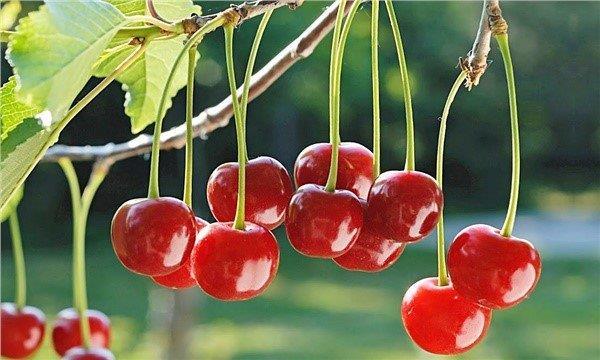
Çubuk cherry is the fruit of Prunus cerasus L. cherry trees native to the Çubuk district of Ankara, belonging to the Rosaceae family. Shaped by the unique climate and geographical conditions of the region, this cherry was registered as a “Geographical Indication” on 18 April 2022, following an application submitted on 28 May 2021 under Law No. 6769 on Industrial Property. The registration was carried out by the Çubuk Municipality, and the geographical boundary of the product is limited to the Çubuk district of Ankara Province.
Çubuk cherry is produced by grafting cherry or sweet cherry trees that have adapted to local conditions onto the Idris rootstock. The fruits are roundish, heart-shaped, with a blunt tip. The skin is dark red, glossy, and thick, a feature that prevents cracking. The flesh is dark red, and the stone is semi-adherent to the pulp. The juice is dark red, with a juice yield of approximately 79–80%.
These characteristics make Çubuk cherry a rich fruit in both flavor and nutritional value. Its taste offers a balanced blend of sour and sweet notes, with sweetness resembling that of sweet cherry.
The mountainous terrain of Çubuk district and its cold winters shape the distinctive qualities of Çubuk cherry. Cold winters extend the dormancy period of cherry trees, delaying flowering and protecting them from spring frosts. This extends the harvest period from July to the end of October. During harvest, nighttime temperatures of 10–16°C and daytime temperatures of 25–35°C promote skin hardening and enhance the fruit’s durability. This temperature variation contributes to prolonged freshness.
Çubuk cherry seedlings are produced either by grafting cherry or sweet cherry scions onto Idris rootstock or by growing trees from seeds of local cherry trees. Rootstocks planted in autumn develop over two years, after which grafting is performed using branches adapted to local conditions, via either bud or leaf grafting. Approximately two years after grafting, the trees begin to bear fruit. Regular pruning is carried out in spring.
Orchard spacing varies according to land type:
During orchard establishment, 2–3 tons of composted farmyard manure per hectare are applied. If cattle manure is used, fertilization is repeated every two years; if sheep manure is used, it is repeated every 3–5 years.
Çubuk cherry is hand-harvested between July and October. For fresh consumption, the fruits can be stored in cold storage at 2–4°C for 7–10 days. For freezing, cherries are detached from their stems, washed, and frozen at -18°C in food-safe packaging. Frozen cherries can be stored for 6–9 months at temperatures between -4°C and -10°C. It is recommended to thaw them at 2–4°C before consumption.
The history of Çubuk cherry dates back to the Ottoman period. This fruit, cultivated in the region for centuries, is an integral part of Çubuk district’s cultural heritage. The annual Çubuk Cherry Festival celebrates this heritage and raises awareness of the region’s cherry production.
The maintenance of quality and standards for Çubuk cherry is overseen by a monitoring body coordinated by the Çubuk Municipality. This body consists of four experts: two from the Çubuk Municipality, one from the Çubuk Chamber of Agriculture, and one from the Food Technologies Department of Ankara Yıldırım Beyazıt University. Inspections are conducted annually; additional inspections are carried out as needed or in response to complaints. Inspection criteria include taste, juiciness, color, size, chemical values, production method, land selection, fertilization, packaging, and proper use of the geographical indication mark.
Çubuk cherry is marketed with the label “Çubuk Cherry,” its logo, and the geographical indication emblem on its packaging. When labeling on packaging is not feasible, these marks must be visibly displayed at the production facility. This emphasizes the product’s authenticity and geographical origin.
Turk Patent and Trademark Office. "Çubuk Vişnesi." Turk Patent and Trademark Office. Accessed August 16, 2025. https://ci.turkpatent.gov.tr/Files/GeographicalSigns/2d73eea5-351f-46eb-955f-fc41c9b0bfc3.pdf
Turk Patent and Trademark Office. "Çubuk Vişnesi." Turk Patent and Trademark Office. Accessed August 16, 2025. https://ci.turkpatent.gov.tr/cografi-isaretler/detay/4383

Type of Geographical İndication | Origin Name | ||||||||
|---|---|---|---|---|---|---|---|---|---|
Application Date | 28.05.2021 | ||||||||
Registration Number | 1087 | ||||||||
Registration Date | 18.04.2022 | ||||||||
Product / Product Group(s) | Processed and unprocessed fruits vegetables and mushrooms | ||||||||
Province(s) | Ankara | ||||||||
Applicant/Registrant(s) | Çubuk Municipality | ||||||||
Characteristics
Dimensions
Chemical Properties
Geographical and Climatic Factors
Production Process
Harvest and Storage
Cultural and Historical Significance
Monitoring Process
Usage and Promotion