This article was automatically translated from the original Turkish version.
Type of Geographical İndication | Mahreç Sign | ||||||||
|---|---|---|---|---|---|---|---|---|---|
Application Date | 16 June 2021 | ||||||||
Registration Number | 1118 | ||||||||
Registration Date | 23 May 2022 | ||||||||
Product / Product Group(s) | Meals and soups | ||||||||
Province(s) | Ankara | ||||||||
Applicant/Registrant(s) | Çubuk Municipality | ||||||||
Çubuk Homaçası is a traditional Turkish stew from the Çubuk district of Ankara, prepared using beef and marrow-rich thigh bones. The dish is frequently chosen for weddings and special occasions, giving it a strong association with its geographical origin. An application for geographical indication status under Law No. 6769 on Industrial Property was submitted on 16 June 2021, and it was officially registered on 23 May 2022 by the Çubuk Municipality.

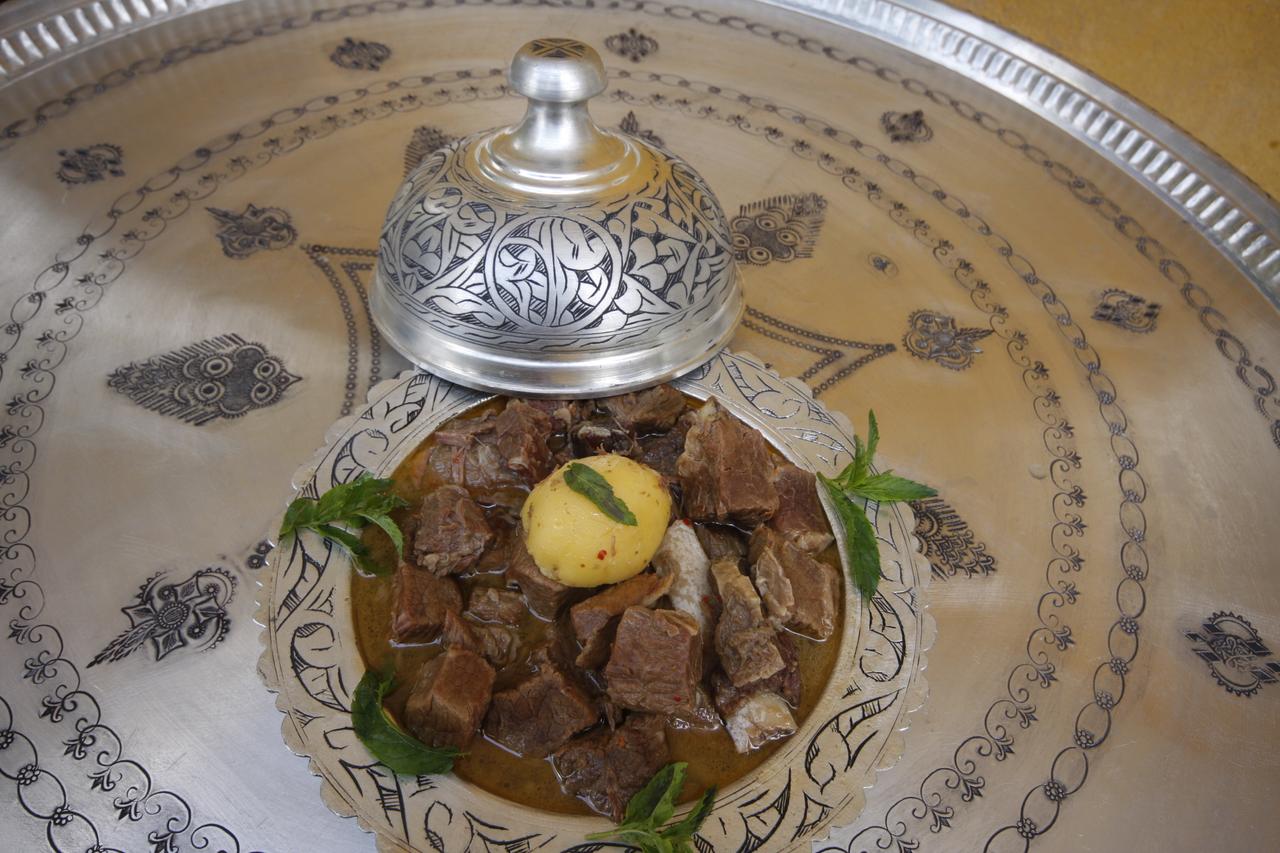
Çubuk Homaçası (Çubuk Municipality)
Çubuk Homaçası is a dish made with beef, marrow-rich thigh bones, water, salt, butter, and optionally red pepper flakes. Its distinguishing feature lies in the selection of beef from the rump and shin cuts, which are slow-cooked for 7 to 8 hours over low heat together with the marrow bones. Before cooking, the meat is seared in butter to seal in its juices and aroma. This method enhances both the texture and flavor profile of the dish.
The beef used in Çubuk Homaçası is sourced from cattle raised in the Çubuk district, underscoring its connection to local production and geographical identity. The dish is typically served with its rich marrow broth, and butter may optionally be drizzled on top before serving.
The preparation of Çubuk Homaçası follows traditional methods and requires meticulous attention. The ingredients required for a portion serving 6 to 8 people are as follows:
The beef is cut into pieces measuring 10–15 cm. Each piece is seared on both sides in butter for 1–2 minutes. This searing process preserves the meat’s moisture and flavor. After searing, the meat is placed on a clean cotton cloth or cheesecloth to drain excess fat and blood.
The marrow-rich thigh bones are arranged at the bottom of a pot. The seared meat pieces are layered on top, and boiling water is added until it reaches the level of the meat. The pot is then sealed tightly to prevent air from entering, and salt and red pepper flakes are added. The dish is cooked over low heat for 7 to 8 hours. During this time, the marrow from the bones dissolves into the broth, enriching its flavor.
Çubuk Homaçası is served on a plate with the meat pieces and its marrow-rich broth. Butter may optionally be drizzled on top before serving.
All stages of Çubuk Homaçası production take place within the boundaries of the Çubuk district of Ankara. Its geographical link stems from both the use of local ingredients and the region’s culinary traditions. This connection played a crucial role in its registration as a geographical indication.
The maintenance of production standards for Çubuk Homaçası is ensured through inspections coordinated by the Çubuk Municipality. The inspection body consists of four members: two representatives from the Çubuk Municipality, one from the Çubuk Chamber of Agriculture, and one from the Department of Food Technologies at Ankara Yıldırım Beyazıt University, Vocational School of Technical Sciences.
Inspections are conducted annually; however, additional inspections may be carried out in response to complaints or specific needs. During inspections, the suitability of ingredients, adherence to the approved production method, and correct use of the Çubuk Homaçası name and logo are verified. The Çubuk Municipality, as the registering authority, manages legal proceedings to protect these rights.
Çubuk Homaçası is an essential component of Çubuk’s culinary heritage. Served at communal events such as weddings and special gatherings, the dish reflects the social and cultural fabric of the region. Its lengthy cooking process and use of marrow bones elevate it beyond a mere culinary delight, transforming it into a symbol of local traditions and the communal rituals that bring people together.
Turk Patent and Trademark Office. "Çubuk Homaçası." *Geographical Indications Portal.* Accessed August 16, 2025. https://ci.turkpatent.gov.tr/cografi-isaretler/detay/4463
Türk Patent ve Marka Kurumu. "Çubuk Homaçası PDF." Coğrafi İşaretler Portalı. Accessed August 16, 2025. https://ci.turkpatent.gov.tr/Files/GeographicalSigns/9057e112-c7f1-4299-9b76-cc31ee200a0b.pdf
Çubuk Municipality. "Çubuk’s Meat Dish ‘Homaça’ Geographical Indication Certificate." *Çubuk Municipality City Guide.* Accessed August 16, 2025. https://www.cubuk.bel.tr/kent-rehberi/cografi-isaretli-urunler/homaca/

Type of Geographical İndication | Mahreç Sign | ||||||||
|---|---|---|---|---|---|---|---|---|---|
Application Date | 16 June 2021 | ||||||||
Registration Number | 1118 | ||||||||
Registration Date | 23 May 2022 | ||||||||
Product / Product Group(s) | Meals and soups | ||||||||
Province(s) | Ankara | ||||||||
Applicant/Registrant(s) | Çubuk Municipality | ||||||||
Definition and Distinguishing Characteristics
Production Method
Preparation Steps
Preparing the Meat
Cooking Process
Serving
Geographical Boundary and Production
Monitoring Process
Cultural Significance