
This article was automatically translated from the original Turkish version.
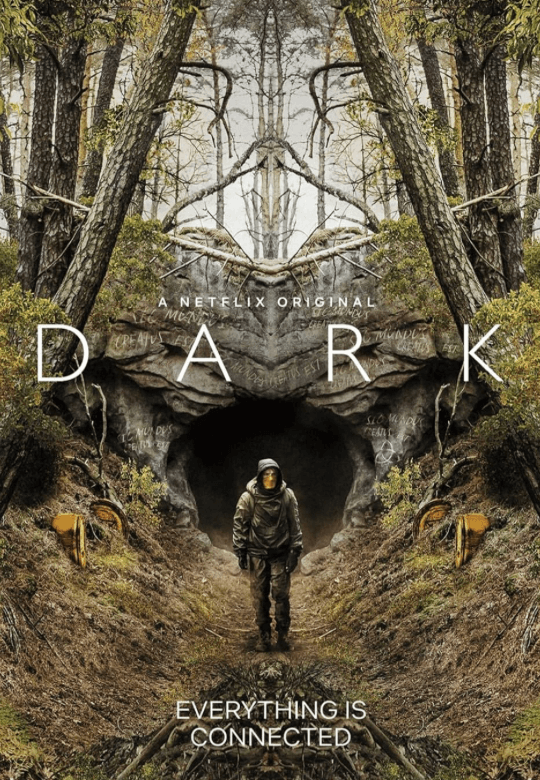
Dark
Door | Science Fiction, Thriller, Mystery | ||||||||
|---|---|---|---|---|---|---|---|---|---|
Creator | Baran bo Odar, Jantje Friese | ||||||||
Producer(s) | Netflix, W&B Television | ||||||||
Actors | Louis Hofmann, Lisa Vicari, Karoline Eichhorn, Andreas Pietschmann | ||||||||
Platform | Netflix | ||||||||
Number of Episodes | 26 (3 Seasons) | ||||||||
Duration | Approximately 1 hour | ||||||||
Germany's Dark begins with the disappearance of a child. Yet this disappearance does not merely affect only families but unravels the past, future, and hidden connections of the entire town. Although the series initially progresses as a mysterious classical event like, it gradually transforms into a much larger narrative: a structure that provokes reflection on Time, human nature, and fate on.
At the core of the series lies time travel, not as a mechanical plot device but as a means to explore profound philosophical questions. By moving the viewer beyond linear perceptions of time, it establishes a continuous past between past, present, and future. Time itself becomes as deterministic as a character.
Dark carefully presents clues to its audience and weaves its entire narrative in fragments. Connections between four main families and overlapping time periods allow the series to function like a puzzle that unfolds step by step. Every detail matters, and the series patiently demonstrates how these details gradually meaning over time.
The series’ atmosphere is built through gloomy forests, abandoned buildings, and darkness tunnels. Its visual storytelling serves not only an aesthetic purpose but also reflects the inner worlds of the characters and the show’s central emotional tone. The music and sound design become one of the most powerful tools drawing the viewer into this dark world.
Dark is a production that demands careful attention. Following the characters’ different ages, timelines, and alternate possibilities is not easy; yet the series never underestimates its audience as it draws them into a brilliantly crafted narrative. Each episode raises new questions while simultaneously revealing another piece of the larger picture.
Dark - Netflix
Daniel, Austin. *‘Dark’ Netflix Series Analysis: Crafting Linear Circularity*. Accessed March 24, 2025. https://scriptophile551675913.wordpress.com.
Goddard, Jasper. *Dark TV Series Review: A Profound Meditation on Predeterminism and the Nature of Free Will*. Accessed March 24, 2025. https://medium.com/@jasper23.
IMDb. *Dark (TV Series 2017–2020)*. Accessed March 24, 2025. https://www.imdb.com/title/tt5753856.
Tassi, Paul. *Netflix’s ‘Dark’ Is The Most Mentally Exhausting Show I’ve Ever Seen, But One Of Sci-Fi’s Best*. Accessed March 24, 2025. https://www.forbes.com/sites/paultassi.
YouTube. Accessed March 27, 2025. https://www.youtube.com/watch?v=ESEUoa-mz2c.

Dark
Door | Science Fiction, Thriller, Mystery | ||||||||
|---|---|---|---|---|---|---|---|---|---|
Creator | Baran bo Odar, Jantje Friese | ||||||||
Producer(s) | Netflix, W&B Television | ||||||||
Actors | Louis Hofmann, Lisa Vicari, Karoline Eichhorn, Andreas Pietschmann | ||||||||
Platform | Netflix | ||||||||
Number of Episodes | 26 (3 Seasons) | ||||||||
Duration | Approximately 1 hour | ||||||||
Time Travel and Philosophical Depth
Layered Narrative and Intellectually Demanding Structure
Strong Visuals and Atmosphere
Viewing Experience: Challenging Yet Rewarding