


This article was automatically translated from the original Turkish version.
+2 More
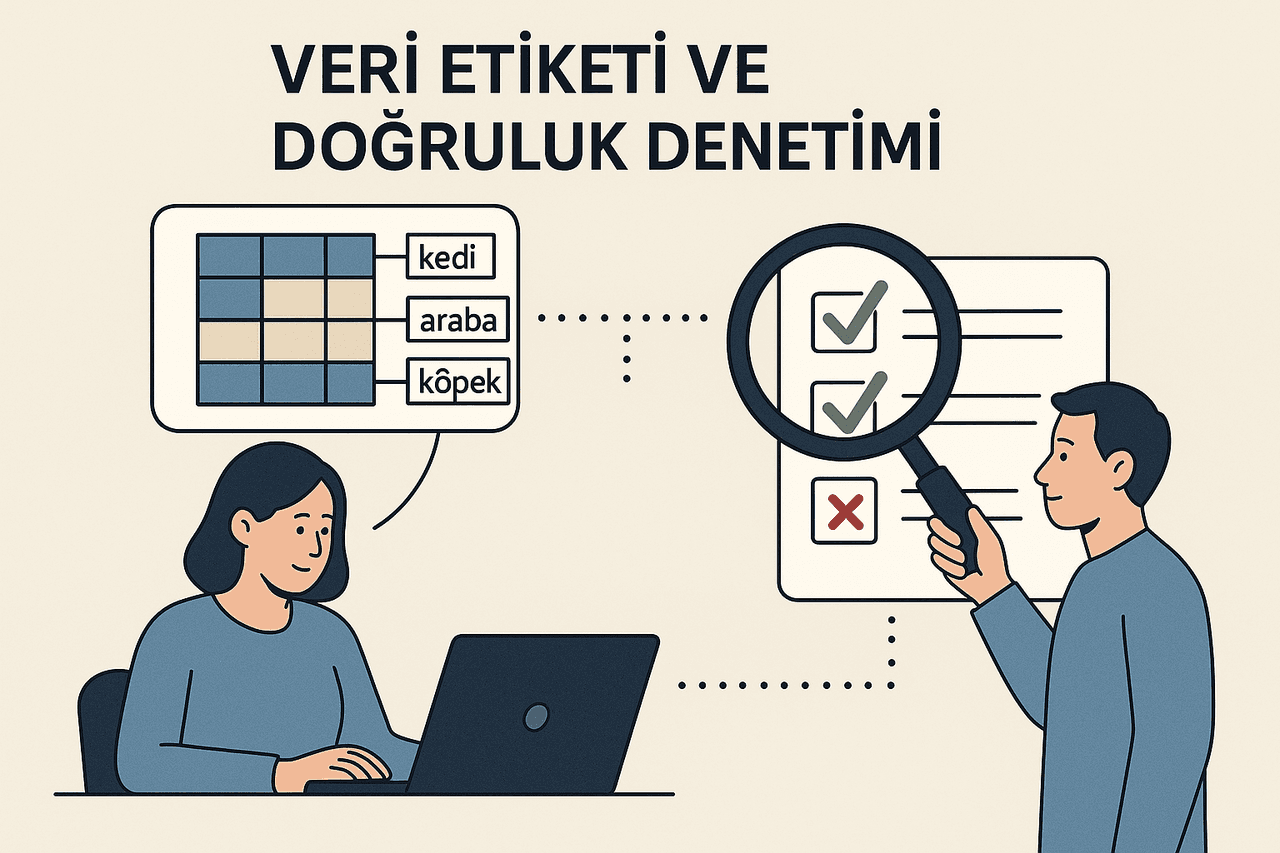
Generated with artificial intelligence.
Data Labeling and Accuracy Verification
Basic Application Areas | Artificial intelligence training, Machine learning, Data management, Search engine optimization, Information verification | ||||||||
|---|---|---|---|---|---|---|---|---|---|
Basic Risk | Incorrect or manipulated labels leading to erroneous decisions and security vulnerabilities in artificial intelligence systems. | ||||||||
Data tagging is the process of adding descriptive labels or metadata to data elements that provide contextual information such as content, format, source, and relevance level. This process enables organizations to simplify their data management workflows, enhance data usability, improve discoverability, and facilitate regulatory compliance. Fact-checking, on the other hand, is the process of examining claims made by others to evaluate their accuracy, with the results typically presented in a structured data format, especially in the context of digital content. These two concepts intersect significantly in the development of artificial intelligence systems, as correctly and reliably labeled data is essential for effectively training machine learning models and ensuring the accuracy of information generated or analyzed by these models. Incorrect or intentionally manipulated data labels can severely undermine the reliability of AI systems and lead to erroneous outcomes.
Data tagging is the process of transforming raw data into a format that is understandable and usable for machine learning models. This process adds valuable context to data, helping users and systems understand the purpose, significance, and relationships of data elements with other data entities. Labeled data provides a more suitable structure for advanced analytics, machine learning, and data mining tasks.
Although data tagging and data classification are often confused, there is a fundamental distinction between them. Data tagging involves adding descriptive and contextual labels to data elements, while data classification is the process of assigning data elements to predefined categories or classes based on their attributes, characteristics, or sensitivity levels. Classification helps prioritize data protection measures and access controls by organizing data according to its importance, confidentiality, or regulatory requirements.
Data tagging can be implemented using different models depending on the structure of the data and the objectives of the project. Four commonly used models are:

Data Tagging Illustration (Generated by Artificial Intelligence.)
Data tagging varies depending on the type of data and the specific tasks involved. In fields such as computer vision, this process is also referred to as data annotation. The main types of tagging include:
Fact-checking is the process of verifying claims presented to the public using reliable sources and transparently publishing the results. In the digital age, search engines and social media platforms increasingly highlight fact-checking outcomes to prevent the spread of misinformation.
Search engines such as Google support a structured data type called `ClaimReview` to display summarized versions of fact-checking information from web pages in search results. Adding `ClaimReview` structured data to a web page can enable it to appear in search results in a special format (rich result). This structured data includes the following essential elements:
To be eligible for display as a rich result in search results, fact-checking content must adhere to specific guidelines. Some of these guidelines include:
The foundation of both data tagging and fact-checking processes is data reliability. Data reliability means that the data being entered, collected, or used possesses qualities such as accuracy, consistency, validity, timeliness, and completeness. Analyses performed or models trained on inaccurate data can lead to serious risks, including wasted time, poor decisions, and reputational damage.
Quality control is critical at every stage of the tagging process to ensure product quality and reliability. This applies to both physical product labeling and digital data tagging. Some methods used to ensure quality include:
Artificial intelligence systems are only as reliable as the quality of the data they are trained on. Errors or intentional manipulations during the data tagging process pose serious risks to these systems. A model trained on incorrectly labeled data may make faulty decisions. For example, a healthcare AI trained to detect cancerous cells could misdiagnose diseases due to mislabeled training data. This can also lead to incorrect investment decisions in financial systems or the spread of fake news on social media platforms. To minimize these risks, strategies such as two-layer review, automated systems capable of detecting mislabeled data, and transparency in AI decision-making processes must be adopted. The accuracy of data labeling is not merely a technical issue—it is also an ethical and societal responsibility.
Google for Developers. "Arama İçin Doğruluk Kontrolü (ClaimReview) İşaretlemesi." Google. Accessed July 15, 2025. https://developers.google.com/search/docs/appearance/structured-data/factcheck?hl=tr.
IBM. "What Is Data Labeling?" IBM. Accessed July 15, 2025. https://www.ibm.com/think/topics/data-labeling
Ultralytics. "Bilgisayarla Görme için Veri Toplama ve Etiketleme Stratejileri." Ultralytics Docs. Accessed July 15, 2025. https://docs.ultralytics.com/tr/guides/data-collection-and-annotation

Generated with artificial intelligence.
Data Labeling and Accuracy Verification
Basic Application Areas | Artificial intelligence training, Machine learning, Data management, Search engine optimization, Information verification | ||||||||
|---|---|---|---|---|---|---|---|---|---|
Basic Risk | Incorrect or manipulated labels leading to erroneous decisions and security vulnerabilities in artificial intelligence systems. | ||||||||
No Discussion Added Yet
Start discussion for "Data Labeling and Accuracy Verification" article
Data Tagging
Difference Between Data Tagging and Data Classification
Data Tagging Models
Types of Data Tagging
Fact-Checking
ClaimReview Structured Data
Application and Compliance Guidelines
Data Reliability and Quality Control
Quality Control in the Tagging Process
Risks of Manipulation in AI Systems