


This article was automatically translated from the original Turkish version.
Depersonization is a dissociative disorder characterized by the individual’s perception of themselves and their surroundings as unreal. This experience is often associated with intense stress, anxiety, or trauma disorders and leads to a sense of detachment from one’s self. In some cases, this feeling emerges suddenly, while in others it may become a persistent state. Individuals experiencing depersonalization frequently report feeling alienated from their own bodies and thoughts, as if they are inside a dream. This phenomenon can be intermittent at times and at other times become chronic, negatively affecting the individual’s daily life.
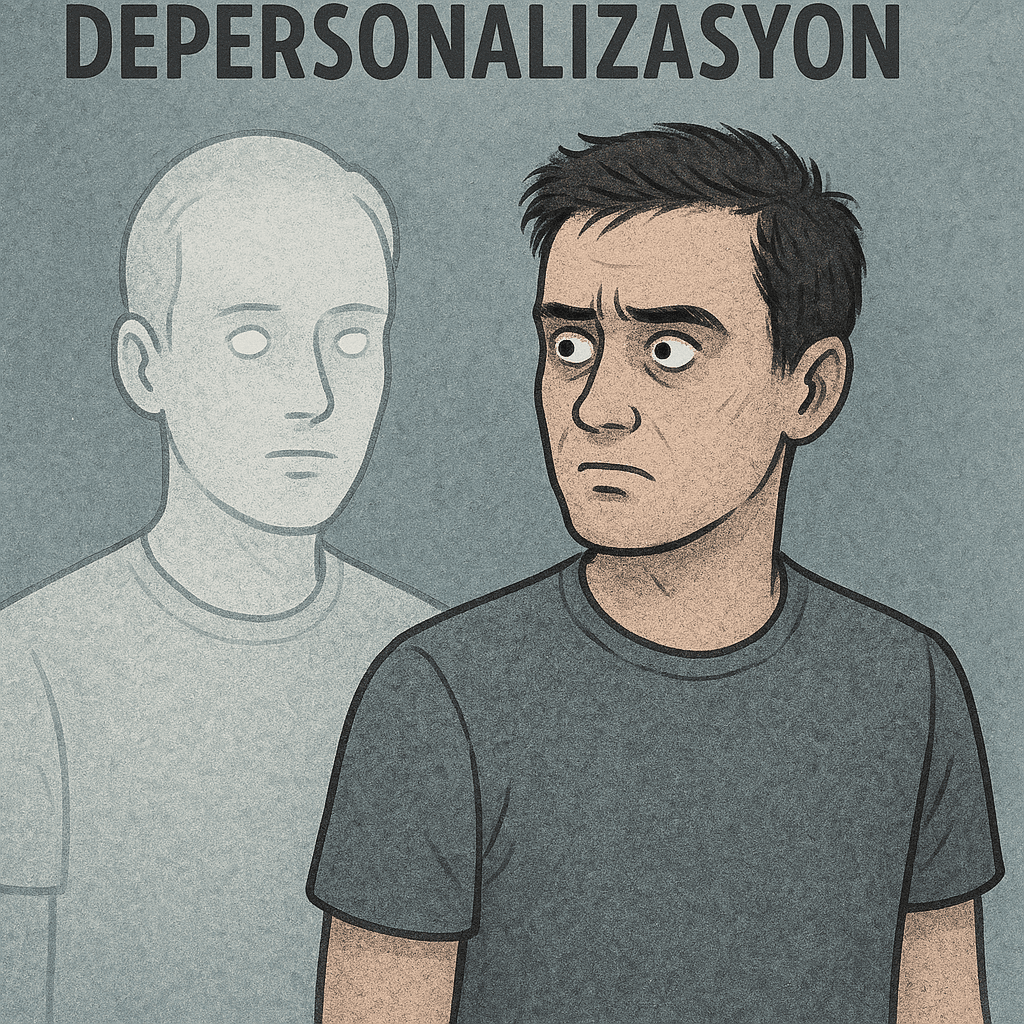
Generated by artificial intelligence.
The concept of depersonalization was first described in 19th-century psychiatric literature and began to be studied within the framework of dissociative disorders in the 20th century. Psychoanalytic theories explain this condition as resulting from repressed thoughts in the unconscious, while cognitive and neurological approaches point to abnormalities in specific brain regions. Freud’s psychoanalytic perspective viewed depersonalization as a consequence of unconscious conflicts. Today, research in neuroscience indicates that the prefrontal cortex and limbic system play a significant role in this process.
The core symptoms of depersonalization disorder include:
The exact causes of depersonalization are not fully understood, but several key triggering factors have been identified:
The diagnosis of depersonalization disorder is based on psychiatric evaluation and the pattern of symptoms. Diagnosis is typically made in conjunction with other psychiatric conditions, such as panic disorder, major depressive disorder, or obsessive-compulsive disorder.
Treatment approaches generally include:
Tekin, M., and Tekin, A. "Anksiyete Bozukluklarında Dissosiyatif Belirtiler." Psikiyatride Güncel Yaklaşımlar 6, no. 4 (2014): 330-339.
Toktosunova, C. ASR Journal. 2022.
Uysal, E., Ağaç, T., and Konkan, R. "The Relationship Between Depersonalization/Derealization Symptoms and Metacognitions in Patients with Panic Disorder." Turkish Journal of Clinical Psychiatry 28 (Year information missing): 0-0.

History
Symptoms
Causes
Diagnosis and Treatment