
This article was automatically translated from the original Turkish version.
+2 More
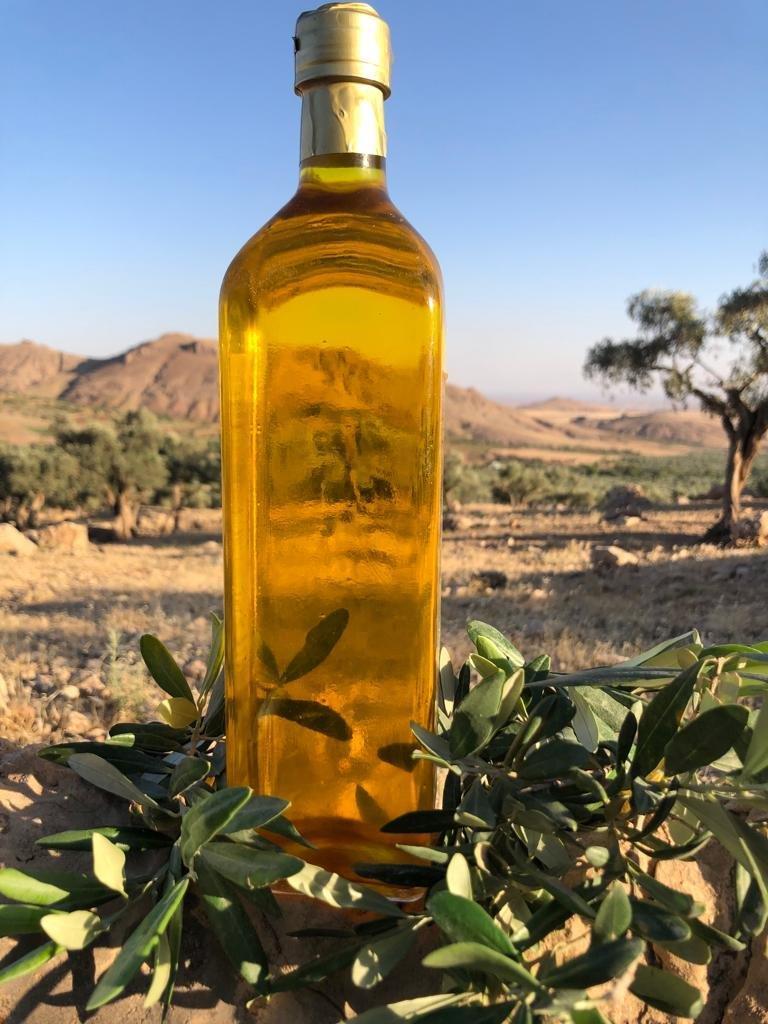
Derik Halhalı Olive Oil is a natural cold-pressed olive oil obtained exclusively from Halhalı variety olives grown within the boundaries of Derik district in Mardin Province, Türkiye. Characterized by low free acidity and high phenolic compound content, this oil delivers a distinct, persistent pungency reminiscent of red pepper heat.
The area where Derik Halhalı Olive Oil is produced is the Derik district of Mardin Province. The geographical boundary lies within a region where the Mediterranean and continental climates interact. The northern part of the region is surrounded by mountain ranges extending from west to south, while the southern part opens into a plain. This topography creates a microclimate valley influenced by the Mediterranean climate, while the region simultaneously experiences the dry conditions of the continental climate.
Elevation ranges between 600 and 800 meters, a height that imparts a more pronounced pungency and extended shelf life to Derik Halhalı Olive Oil. The soil structure is rich in lime and contains high levels of potassium, magnesium, phosphorus, iron, manganese, and copper. Soil texture is generally loamy, with localized clay-loam areas. Due to continental climatic conditions, relative humidity remains low, and irrigation opportunities are limited. This arid environment contributes to olive trees producing fruits richer in phenolic compounds.
Derik Halhalı Olive Oil is produced solely from Halhalı variety olives cultivated within the defined geographical boundary. The product belongs to the category of natural cold-pressed olive oil. It features low free acidity and a high concentration of phenolic compounds. On tasting, it produces a distinct, prolonged burning sensation that spreads from the tongue to the lips, reminiscent of red pepper heat.
The physical and chemical properties of the product are defined within the following limits:
The fatty acid composition also serves as an indicator of the product’s identity and quality:
The fatty acid profile of the product reflects the combined influence of the region’s climatic and edaphic (soil-related) conditions. The arid climate increases the proportion of oleic acid and the concentration of phenolic compounds.
The production of Derik Halhalı Olive Oil consists of two main stages: olive cultivation and olive processing into oil.
The Halhalı variety olives used to produce this oil are cultivated exclusively within the boundaries of Derik district. Due to arid climatic conditions, irrigation is applied at most two to three times during the growing season. No agricultural chemicals or synthetic fertilizers are used; only composted animal manure (from sheep or goats) is applied to meet soil nutrient requirements.
Harvesting begins in October, when the fruit is still green, and concludes by mid-November. Harvesting is carried out manually or mechanically, ensuring no damage to the fruit. Damaged or defective olives are removed. Olives are collected in plastic crates with a capacity of 20–25 kg that allow air circulation and processed within a maximum of 8 hours. This short interval after harvest enhances the phenolic content, fruitiness, and pungency of the final product.
Derik Halhalı Olive Oil is produced as a natural cold-pressed olive oil using two-phase continuous decanter systems. The production stages are as follows:
The production and market supply of the product are monitored by a five-member oversight body coordinated by the Kızıltepe Chamber of Commerce, comprising experts from the Dicle Development Agency, Derik District Directorate of Agriculture and Forestry, Mardin Provincial Directorate of Agriculture and Forestry, and the Nutrition and Dietetics Department of Mardin Artuklu University.
Inspections are conducted at least twice annually: one focused on olive cultivation in orchards, and the other on production facilities and products on the market. Additional inspections may be carried out upon request or complaint. Inspection criteria include the use of Halhalı variety olives, compliance with production stages, chemical properties, and, where necessary, fatty acid composition. The correct labeling of the product with the designation “Derik Halhalı Olive Oil” and the origin emblem is also verified. The oversight body may, when necessary, engage services from public or private institutions and experts.
Responsibility for the protection of rights and the execution of legal procedures rests with the entity that registers the product.
Turkish Patent and Trademark Office. "Derik Halhalı Zeytinyağı Coğrafi İşaret Detay." Accessed July 14, 2025. https://ci.turkpatent.gov.tr/cografi-isaretler/detay/1210.
Turkish Patent and Trademark Office. "Derik Halhalı Zeytinyağı Coğrafi İşaret Tescil Belgesi (PDF)." Accessed July 14, 2025. https://ci.turkpatent.gov.tr/Files/GeographicalSigns/1e560307-6409-497d-b9f5-1c095f96c43d.pdf.

No Discussion Added Yet
Start discussion for "Derik Halhalı Olive Oil" article
Geographical Boundaries and Climatic Conditions
Botanical Source and Distinctive Product Characteristics
Physical and Chemical Properties
Fatty Acid Composition
Production Process
Olive Cultivation
Oil Extraction Process
Monitoring and Protection