

This article was automatically translated from the original Turkish version.
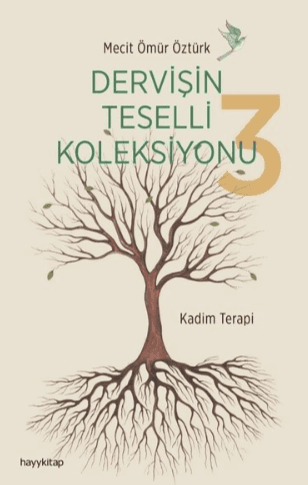
Derviş’s Collection of Comfort 3, authored by Mecit Ömür Öztürk, was published in 2023. The work is written in Turkish and is evaluated within the framework of religious and spiritual themes. The book examines the existential dimension of human beings and their responses to the difficulties and calamities encountered in the course of life.
The study focuses on the psychological disturbances, disappointments, and states of hopelessness that individuals experience in the face of problems, whether minor or major. The author uses metaphors to explain the fragilities of everyday human existence and evaluates spiritual and physical vulnerabilities together.
The work aims to examine human behavior in the face of life’s uncertainties, from both individual and societal perspectives, through a religious and spiritual lens.
Derviş’s Collection of Comfort 3 / Ancient Therapy is a work that addresses the challenges, calamities, and unexpected situations encountered by individuals in the course of life. The central focus is on the physical and spiritual fragilities of the human being. Humanity is defined as a being capable of being deeply shaken even by minor sorrow, temporary setbacks, or disappointment.
The subject of the work is built upon the relationship between human existential weaknesses and the uncertainties of life. An individual’s spiritual structure can exhibit sensitivity even in response to the most ordinary events; this sensitivity may sometimes transform into intense anxiety or profound despair. The book treats this condition as a fundamental human truth and emphasizes that the distress experienced is not only personal but also has societal dimensions.
Furthermore, the book states that worldly life is structured as a continuous stream of troubles. Within the flow of life, recurring pains are intertwined with fleeting moments of happiness. In this context, the world is occasionally portrayed as a field of hardship and trial.
One of the most emphasized themes in the work is the fragility inherent in human nature. The text explains how individuals can be profoundly affected even by minor sorrows or everyday problems. The spiritual impact of physical ailments is illustrated, as well as how even a simple negative event can disrupt inner equilibrium. Thus, the human being is presented as inherently weak and susceptible to disturbance.
The book underscores that life is inherently filled with uncertainties and unexpected developments. The inevitability of obstacles and disruptions in daily life is highlighted. Even a minor problem can damage a person’s hopes and negatively affect their life. In this context, the persistence of difficulties is presented as a natural component of life’s continuity.
The text explores how low-probability expectations, empty hopes, and ambiguous possibilities can lead to disappointment in individuals. A person may become anxious even in the face of insignificant possibilities; this state can trigger spiritual fluctuations and lead to despair. The book asserts that disappointment is a continuous human experience.
In the work, worldly life is depicted as a realm woven with troubles. Happiness and peace are described as temporary, while pain and hardship recur in cycles. This perspective is linked to the notion that worldly existence functions as a test or trial. At times, this view is reinforced through metaphors that suggest the world may be perceived as a prison.
Another theme explored in the book is the inseparability of spiritual and physical dimensions. Even the slightest physical discomfort resonates in the spiritual realm; conversely, spiritual disturbances affect physical health. Through this interconnection, the holistic and fragile nature of the human being is elucidated.

No Discussion Added Yet
Start discussion for "Dervish's Comfort Collection 3 (Book)" article
Subject
Themes Explored
Human Fragility
Life’s Uncertainties and Disruptions
Disappointment and Hopelessness
The Hardships of Worldly Life
The Relationship Between Soul and Body