


This article was automatically translated from the original Turkish version.
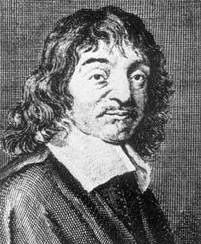
Descartes
Birth Year | 1596 | ||||||||
|---|---|---|---|---|---|---|---|---|---|
Death Year | 1650 | ||||||||
Nationality | French | ||||||||
Movements | Rationalism, Cartesianism, Foundationalism, Conceptualism | ||||||||
Areas of Interest | Epistemology, Metaphysics, Mathematics, Analytic Geometry | ||||||||
René Descartes (1596–1650) is widely regarded as the "Father of Modern Philosophy" due to his decisive break with the Scholastic-Aristotelian tradition and his development of a new philosophical and scientific frame. His methodological skepticism based on radical doubt aimed to establish a secure foundation for knowledge and culminated in the famous phrase "Cogito, ergo sum" ("I think, therefore I am"). This approach not only shaped the trajectory of modern epistemology but also laid the foundations of rationalist thought.
Beyond philosophy, Descartes was a pioneering mathematician and science. His contributions to Analytic geometry, his formulation of physical laws, and his early insights into optical and meteorology played a critical role. His mechanistic interpretation of natural phenomena, which explained them through fundamental laws rather than Aristotelian final causes, marked a significant shift in scientific thinking. His dualistic distinction between mind and body influenced philosophical debates and opened the door to the enduring mind-body problem road.
Descartes’s major works—Discourse on the Method (1637), Meditations on First Philosophy (1641), and Principles of Philosophy (1644)—reflect his ambitious effort to construct a comprehensive system. His influence extended beyond his lifetime, shaping Enlightenment thought, mechanistic physiology, and debates on the nature of human cognition. Although admired for his contributions, Descartes has been criticized for failing to resolve the skepticism he sought to overcome. Nevertheless, his legacy remains central to ongoing discussions about knowledge, science, and existence on place.
René Descartes occupies a foundational position in the development of modern skepticism, particularly through his methodological approach to doubt and his quest to establish an unquestionable foundation for human knowledge. Unlike ancient skeptics who often treated doubt as an end in itself, Descartes employed doubt as a systematic vehicle to eliminate unreliable beliefs and rebuild knowledge on a foundation of certainty. This approach suspicion, by redefining the relationship between certainty and knowledge, profoundly influenced modern epistemology.
Descartes’s skepticism method is explicitly laid out in his work Meditations on First Philosophy (1641), where he systematically questions the reliability of all sources of knowledge. His method of doubt requires the rejection of any belief that could possibly be false, allowing only those beliefs that withstand rigorous scrutiny to remain. This approach functions as a tool designed to identify a foundational truth from all forms of skepticism. Descartes presents three main skeptical arguments to challenge the validity of knowledge derived from senses and reason:
One of the first sources of knowledge Descartes examines is sensory perception, which he argues cannot serve as a fully reliable basis for reality. Although human senses are necessary for perceiving the external world, they are prone to error and wrong. Optical illusions such as a stick appearing bent when submerged in water or distant objects seeming larger than they are demonstrate how sensory input can be misleading. Beyond simple misperceptions, more complex illusions like mirages in deserts or auditory hallucinations prove that even when individuals trust their observations, their senses can deceive them.
Descartes extends this skepticism to everyday experience, arguing that if the senses have ever deceived us even once, they cannot be trusted as a fully reliable source of knowledge. He emphasizes that people often accept sensory information without question, and thus such perceptions must be subjected to doubt. This argument challenges the Aristotelian and Scholastic traditions that emphasized empirical observation as the primary path to knowledge. By expressing doubt in sensory experience, Descartes paves the way for a search for a more secure foundation of knowledge that does not rest on fallible external perceptions.
Expanding on the unreliability of sensory experience, Descartes presents the dream argument, which questions the distinction between waking reality and dreams. Descartes observes that during dreams, individuals commonly experience vivid and seemingly coherent scenarios that are indistinguishable from waking life. In some cases, a dreamer may believe they are engaged in normal activities—such as walking down a familiar street or chat with a friend—only to later realize these experiences were entirely illusory.
If there is no certain criterion by which one can distinguish between dreaming and waking states while experiencing them, then all knowledge based on sensory experience becomes uncertain. Descartes acknowledges that waking life is generally more consistent and structured than dreams, but since dreams can simulate reality with convincing fidelity, it is always possible that what one perceives at any moment is merely a dream. This argument undermines confidence in empirical knowledge and reinforces the search for a foundation of certainty independent of sensory experience.
The dream argument also resonates with broader philosophical concerns about reality and perception. Later philosophers such as David Hume and Immanuel Kant grappled with similar issues regarding the limits of human cognition. More recently, advances in cognitive science and virtual reality have further complicated the problem of distinguishing between real and artificial experiences, demonstrating the enduring relevance of Descartes’s skeptical challenge.
To push skepticism to its most extreme point, Descartes introduces the evil demon hypothesis, which questions the reliability of human reasoning itself. Descartes entertains the possibility of an all-powerful, malicious being that systematically deceives him about everything he perceives and believes. If such a being existed, even truths that appear self-evident—such as mathematical propositions (e.g., 2 + 2 = 4) or logical principles—could be illusions imposed upon him by this deceiver.
This argument is significant because it challenges not only empirical knowledge but also rational thought, traditionally considered more secure. While sensory illusions and dreaming cast doubt on external perception, the evil demon hypothesis suggests that even reasoning and internal thought could be manipulated. This situation drives Descartes to question whether any truth can be known with absolute certainty beyond sensory experience and logical inference, and whether any thing exists that is beyond doubt.
The evil demon hypothesis serves as a precursor to subsequent philosophical debates on reality, deception, and artificial intelligence. It anticipates modern questions about the reliability of human cognition, whether an external reality can be known objectively, and whether simulations or virtual realities could convincingly mislead us into believing falsehoods are true. In contemporary philosophy, thought experiments such as the "brain in a vat" thought and discussions of simulation theory reflect similar concerns to those raised by Descartes’s imaginary deceiver.
After subjecting all sources of knowledge to radical doubt, Descartes turns to the search for an indubitable foundational truth. He ultimately identifies one proposition that cannot be denied:
"Cogito, ergo sum" ("I think, therefore I am").
This statement asserts that the very act of doubting or thinking necessarily implies the existence of a thinking subject. Descartes argues that even if the evil demon were deceiving him about everything, he could not deny that he was engaged in the thinking process. This awareness marks the first step in rebuilding the system of knowledge on an indubitable foundation.
The Cogito functions as the cornerstone of Descartes’s epistemology, establishing the self as the primary certainty from which further knowledge can be derived. From this point, Descartes attempts to reconstruct knowledge by identifying other clear and distinct truths that can be accepted with the same certainty.
To escape radical skepticism, Descartes presents arguments for the existence of a benevolent God who guarantees the reliability of human reasoning. Descartes contends that the idea of a perfect being could not have originated in a flawed mind and that God’s perfection entails that He cannot be a deceiver. If God exists and is fundamentally good, then the human intellect, when properly applied, can attain true knowledge.
This argument provides Descartes with a solution to skepticism. By securing the existence of a non-deceptive God, he aims to restore confidence in reason, the external world, and the reliability of perception. This approach has been widely debated because it incorporates theological claims into a rationalist framework. Later philosophers such as Kant and Hume criticized Descartes’s reliance on theological solutions to resolve epistemological problems.
Descartes’s methodological skepticism has had a profound impact on the development of modern philosophy. His approach influenced both rationalist and empiricist traditions and spurred further investigation into the nature and limits of human knowledge. Although he sought to overcome skepticism, Descartes’s arguments have contributed to the enduring significance of skepticism in epistemological debates.
Subsequent philosophers expanded and examined the skeptical challenges Descartes raised. For instance, David Hume questioned the certainty of causality and deductive reasoning; Immanuel Kant proposed that human consciousness structures perception through innate categories. Descartes’s distinction between mind and body also generated lasting debates in philosophy of mind, particularly concerning the interaction between mental and physical substances.
"Descartes." *Stanford Encyclopedia of Philosophy*, last modified October 23, 2023. https://plato.stanford.edu/entries/descartes/descartes.jpg.
Descartes, René. Meditations on First Philosophy. Translated by Donald A. Cress. Indianapolis: Hackett Publishing Company, 1993.
Descartes, René. The Philosophical Writings of Descartes. Translated by John Cottingham, Robert Stoothoff, Dugald Murdoch, and Anthony Kenny. Cambridge: Cambridge University Press, 1984–1991. 3 vols.
Hatfield, Gary. "René Descartes." *The Stanford Encyclopedia of Philosophy* (Summer 2024 Edition), edited by Edward N. Zalta and Uri Nodelman. Accessed March 12, 2025. https://plato.stanford.edu/archives/sum2024/entries/descartes/.

Descartes
Birth Year | 1596 | ||||||||
|---|---|---|---|---|---|---|---|---|---|
Death Year | 1650 | ||||||||
Nationality | French | ||||||||
Movements | Rationalism, Cartesianism, Foundationalism, Conceptualism | ||||||||
Areas of Interest | Epistemology, Metaphysics, Mathematics, Analytic Geometry | ||||||||
No Discussion Added Yet
Start discussion for "Descartes' Understanding of Skepticism" article
Descartes’s Role in Modern Skepticism
Methodological Skepticism and the Search for Certainty
The Deceptiveness of the Senses
The Dream Argument
The Evil Demon Hypothesis
The Cogito and the First Principle of Knowledge
The Role of God in Overcoming Skepticism
Impact on Modern Epistemology