


This article was automatically translated from the original Turkish version.
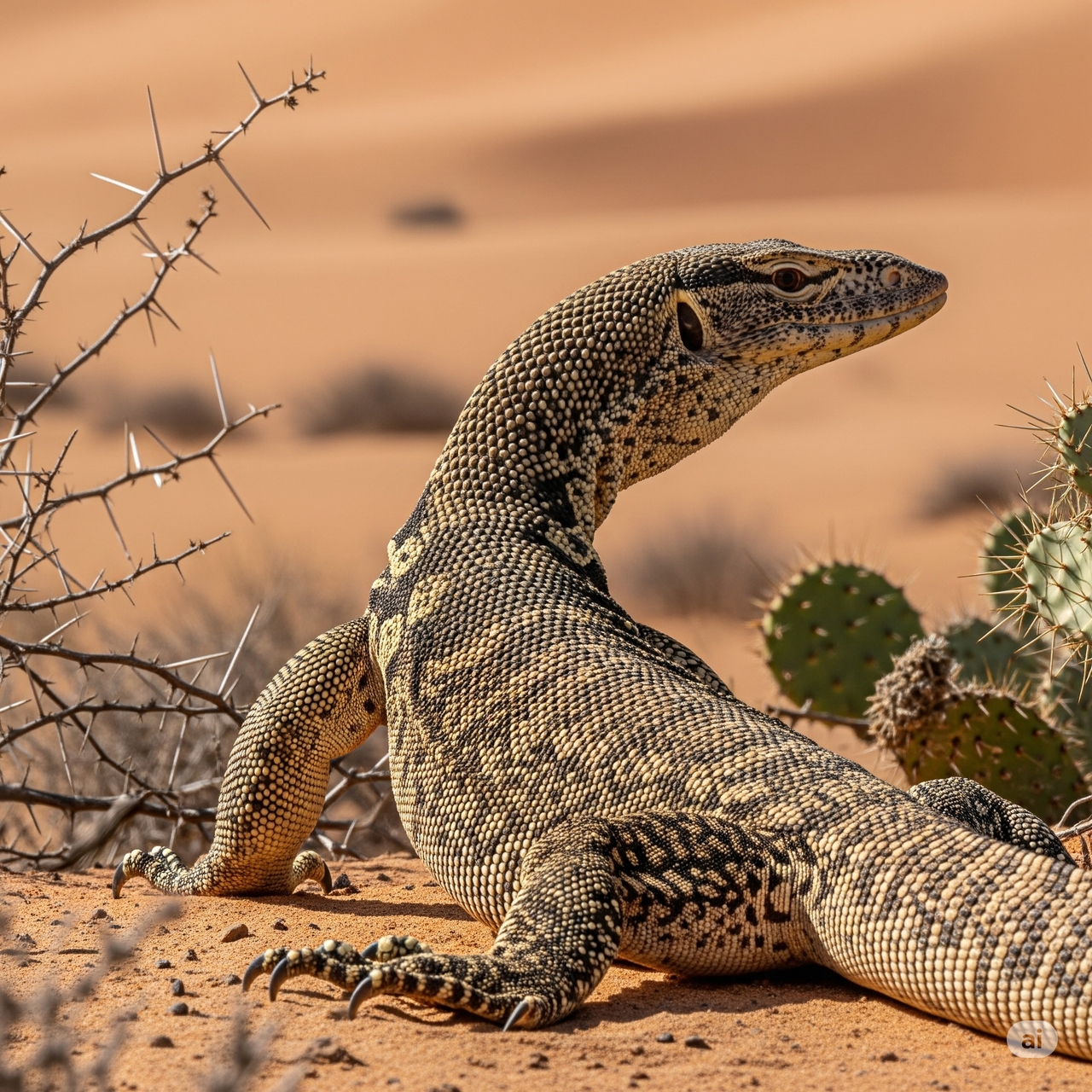
Yapay zeka yardımıyla oluşturulmuştur.
The desert monitor (Varanus griseus) is a large-bodied terrestrial lizard species belonging to the Varanidae family. This species typically inhabits arid semiarid and desert habitats and is an important representative of biological diversity due to its adaptability and ecological role. Its wide but fragmented distribution makes it vulnerable to climatic and geographic changes.
Desert monitors are characterized by a long cylindrical body structure powerful limbs and a thick tail. Their backs display three to five dark bands while their tails have thirteen to nineteen ring-like bands. The tail tip is blunt. They typically reach lengths of 90–130 cm; some individuals may grow up to 150 cm. The midbody region contains between 108 and 139 scale rows. Their heads are broad and flattened an adaptation particularly suited for life in sandy soils.
Varanus griseus inhabits a vast geographic range extending from North Africa through the Middle East to the steppes of Central Asia and the Arabian Peninsula. Its distribution is divided into three subspecies:
This species prefers habitats such as stony deserts semiarid steppe areas sandy plains with sparse vegetation edges of agricultural fields and dried-up riverbeds. It is rarely found in wooded areas. Populations are denser in remote undisturbed locations.
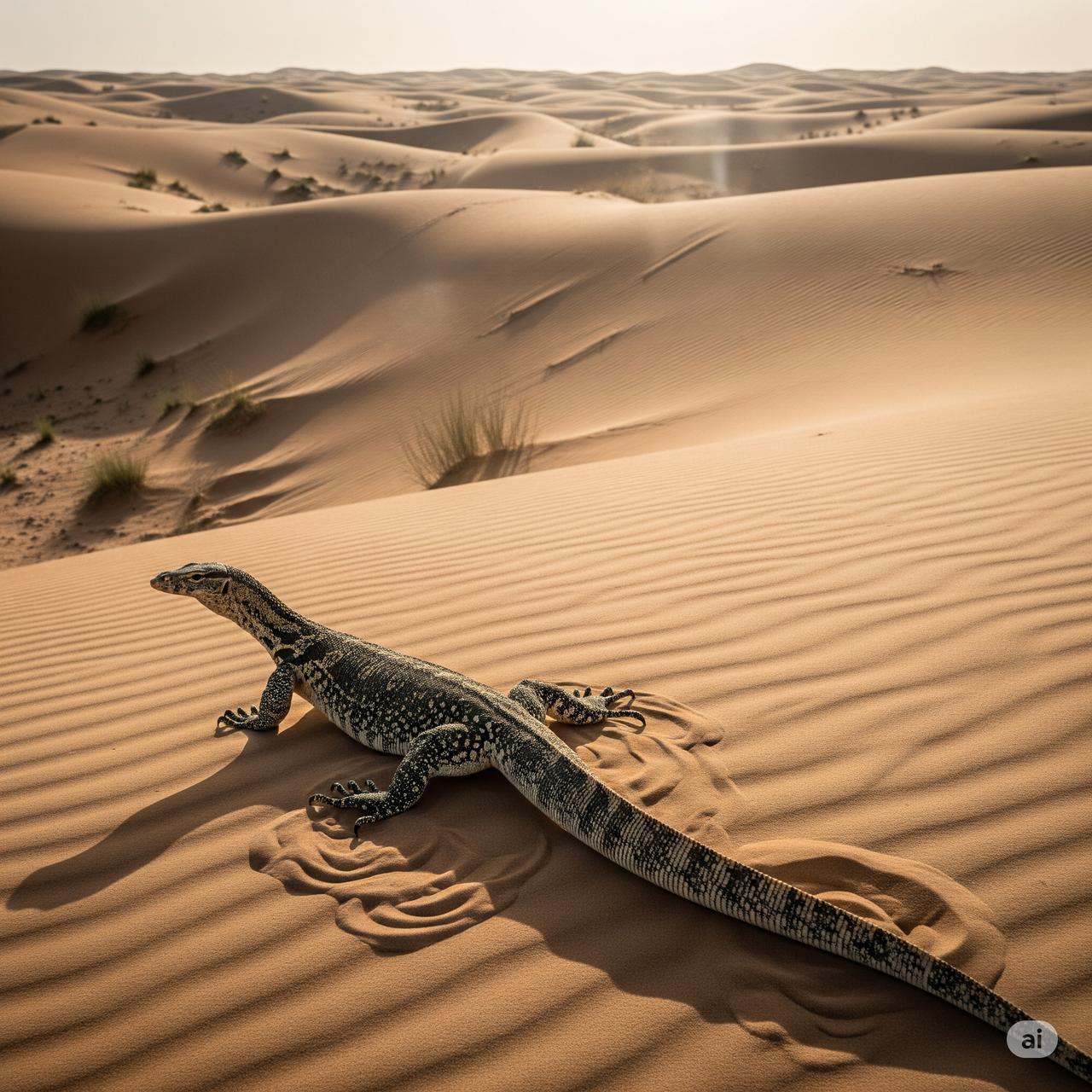
Desert Monitor. (This image was generated with the aid of artificial intelligence.)
Desert monitors are diurnal meaning they are active during the day. They show peak activity during the morning and midday hours when sunlight is most intense. Their dietary preferences are highly varied. Their natural diet includes small mammals reptiles eggs and bird chicks as well as invertebrates such as insects scorpions and snails. They locate prey primarily through smell and movement using their tongues like snakes to detect chemical traces in the environment. Due to their high energy requirements they lead an active lifestyle.
Reproductive periods vary by region but generally occur during the summer months. Females lay between five and twenty eggs in sandy or loose soil. The eggs hatch after two to three months. Newborns measure 20–25 cm in length and become independent within a short time. They reach sexual maturity within two to three years.
According to data from the IUCN (International Union for Conservation of Nature) Varanus griseus is classified as “Least Concern.” However this assessment is based on its broad geographic range and does not reflect local population pressures. Local populations face significant threats including:
Desert monitors play a vital role in ecosystem balance by helping to control rodent populations which provides indirect benefits to agricultural areas. Therefore their conservation is important not only for the survival of the species but also for maintaining the sustainability of natural ecological balances.

Yapay zeka yardımıyla oluşturulmuştur.
No Discussion Added Yet
Start discussion for "Desert Monitor (Varanus griseus)" article
Morphological Characteristics
Distribution and Habitat Preferences
Diet and Behavior
Reproduction and Growth
Threats and Conservation Status