


This article was automatically translated from the original Turkish version.
+2 More
Deveci Han is a two-story monumental structure located in the center of Edirne Province in northwestern Türkiye, on Hükümet Caddesi in Çavuşbey Mahallesi. It reflects the characteristic architectural elements of the early Ottoman period. Frequently mentioned in historical documents, this caravanserai stands out for its original stonework, robust wall construction, and layout that mirrors the commercial life of its time. Situated along Edirne’s historic trade axis, the structure played a significant role in the development of regional commerce in the past. Today, Deveci Han occupies plot 218, parcel 22 and is registered in the inventory of the Ministry of Culture and Tourism with the status of “Monumental Protection,” holding a special place in the city’s cultural and architectural heritage.
The exact construction date of the building is unknown, but its stylistic features point to the first half of the 15th century. Located along Ottoman trade routes, the structure was used for accommodation and commercial purposes for a long period. It was repaired in 1846 by Governor Rüstem Pasha and subsequently converted into a prison. Between 1891 and 1892, during the governorship of Hacı İzzet Pasha, it underwent a second restoration, during which a infirmary and four rooms were added.
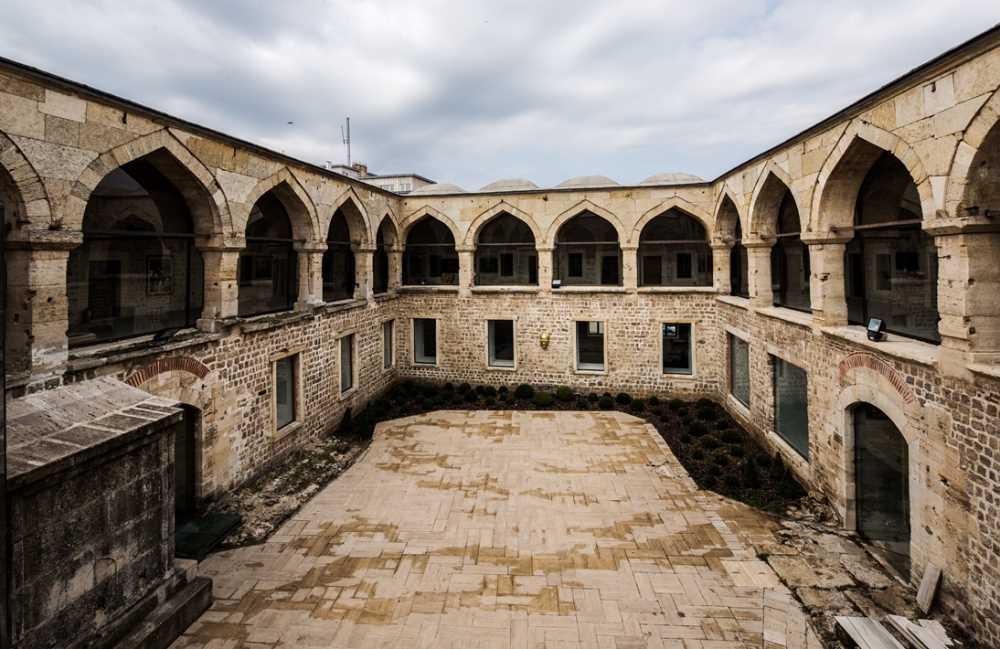
Deveci Han (Culture Portal)
The building is two stories high. The ground floor and upper floor layouts reflect the classical Ottoman caravanserai typology. The upper floor contains thirty-one rooms. The wall construction employs cut stone and brick jointing techniques. The ground floor spaces are vaulted with tonoz ceilings. Access to the upper floor rooms is via stone staircases. The courtyard is arranged centrally, in accordance with the typical caravanserai planning of the period.
At the time of its construction, Deveci Han functioned as a caravanserai for accommodation and commercial activities. Following the 19th-century renovations, it served as a prison for many years, during which structural modifications were made. It continued to function as a jail until the mid-20th century and was later repurposed for administrative and cultural uses.
The building has been placed under state protection by the Ministry of Culture and Tourism and is classified in official records as a “Cultural Asset of Monumental Significance.” After successive restorations, its original plan layout has been largely preserved, and the stone wall construction and floor arrangement have survived to the present day.
Deveci Han is a historical structure that preserves the architectural character of early Ottoman commercial buildings and occupies an important place in Edirne’s urban memory. It reflects the economic and social structure of its era through classical elements of caravanserai architecture—courtyard, rooms, stone tonoz vaults, and a two-story layout. Furthermore, it serves as an example of how Ottoman-era han structures acquired diverse functions over time.

No Discussion Added Yet
Start discussion for "Deveci Han (Edirne)" article
History
Architectural Features
Usage History
Conservation and Restoration Status
Cultural and Architectural Significance
