

This article was automatically translated from the original Turkish version.
+1 More
Location | Tokat city center Sulusokak district | ||||||||
|---|---|---|---|---|---|---|---|---|---|
Period(s) | 17th century Ottoman period | ||||||||
Building Type | Caravanserai/han structure | ||||||||
Feature(s) | monumental portal facade vaulted rooms constructed of stone and brick Courtyard han plan | ||||||||
Function(s) | It provided accommodation and storage services to historical trade caravans | ||||||||
Status | It has been restored currently open for cultural use | ||||||||
Significance | One of the most important han structures along Tokat's Ottoman-era trade routes | ||||||||
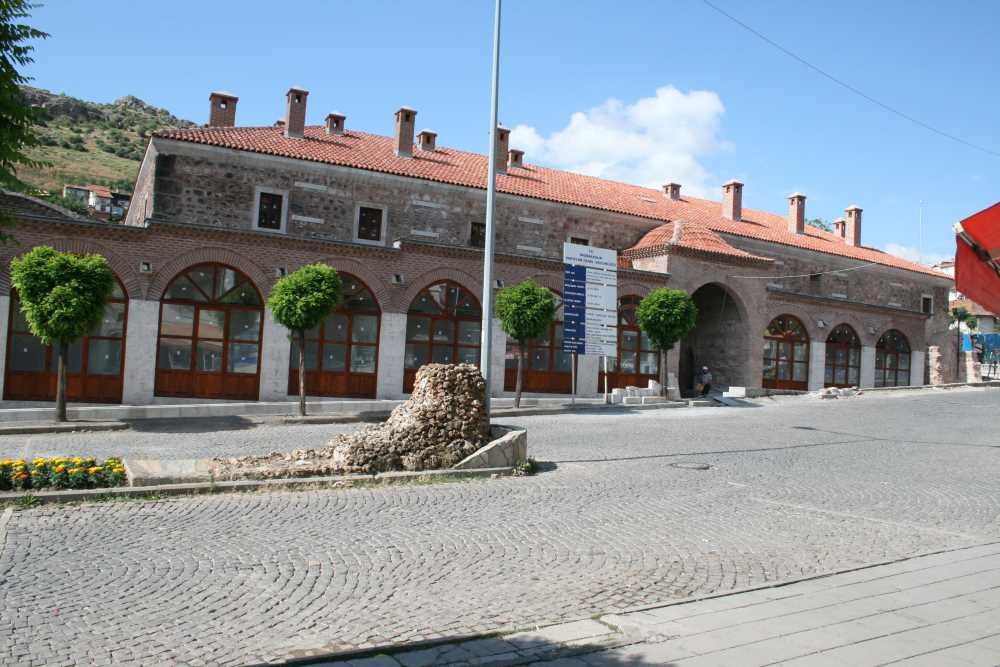
Deveciler Hanı is an important commercial caravanserai located in the center of Tokat, built during the Ottoman period. Historically situated along caravan routes, this structure reflects the economic vitality of Tokat and stands as one of the city’s original elements both architecturally and in terms of its functional heritage. Following restoration efforts led by the Ministry of Culture and Tourism, Inn, the han has been repurposed as the Tokat Culture House, thereby preserving its historical identity while assuming a new cultural mission.
As its name suggests, Deveciler Hanı was historically used for the trade and accommodation of goods transported by camel caravans. Tokat’s strategic position along trade routes connecting the Black Sea with Central Anatolia since the Middle Ages led to the construction of numerous hans and caravanserais in the city. Deveciler Hanı stands out among these structures due to its location and uniqueness. During periods of intense trade and transport, it functioned as a center where merchants and travelers lodged, stored their goods, and conducted commerce. At the same time, hans served as focal points for social interaction and economic activity within the city.

Deveci Hanı (Culture Portal)
Deveciler Hanı is a structure that embodies the classical Ottoman han architectural style. Built of stone, its entrance façade features an arched design. Inside, arcaded galleries surround a rectangular courtyard, with rooms opening onto these galleries. The ground floor was typically used for storage and animal stables, while the upper floor housed lodging rooms.
The building’s symmetrical plan and stonework are particularly striking. The high-arched entrance gate is designed in accordance with the monumental entrance architecture typical of classical Ottoman hans. The courtyard, serving as both the functional and social heart of the han, is paved with stone. The upper floor has been restored and converted into exhibition and cultural activity spaces.

Deveci Hanı (Culture Portal)
Deveciler Hanı underwent a comprehensive restoration process through the collaboration of the Tokat Provincial Special Administration and the Ministry of Culture and Tourism. The historical fabric of the building was preserved using original materials and techniques, ensuring the retention of both its aesthetic integrity and historical identity. After restoration, the han was opened to the public under the name “Tokat Culture House” to promote and sustain the cultural heritage.
Today, the han serves as a cultural space open to visitors, featuring thematic exhibitions that showcase traditional Tokat handicrafts, culinary culture, and daily life. It also hosts cultural events and artistic activities. This transformation of the building exemplifies an important approach to the preservation of historical structures through functional reuse for public benefit.
T.C. Ministry of Culture and Tourism. "Deveciler Hanı." *Turkey Culture Portal*. Accessed July 17, 2025. https://www.kulturportali.gov.tr/turkiye/tokat/gezilecekyer/devecler-hani
T.C. Tokat Valiliği. “Valimiz Tokat Kültür Evi ve Arastalı Bedesten'de İncelemelerde Bulundu.” Tokat Valiliği Resmî Web Sitesi. Accessed July 17, 2025. https://www.tokat.gov.tr/valimiz-tokat-k-lt-r-evi-ve-arastali-bedesten-de-incelemelerde-bulundu
T.C.Tokat İl Directorate of Culture and Tourism. "Hanlar, Kervansaraylar ve Medreseler." Tokat Provincial Directorate of Culture and Tourism Official Website. Accessed July 17, 2025. https://tokat.ktb.gov.tr/TR-142138/hanlar-kervansaraylar-ve-medreseler.html

Location | Tokat city center Sulusokak district | ||||||||
|---|---|---|---|---|---|---|---|---|---|
Period(s) | 17th century Ottoman period | ||||||||
Building Type | Caravanserai/han structure | ||||||||
Feature(s) | monumental portal facade vaulted rooms constructed of stone and brick Courtyard han plan | ||||||||
Function(s) | It provided accommodation and storage services to historical trade caravans | ||||||||
Status | It has been restored currently open for cultural use | ||||||||
Significance | One of the most important han structures along Tokat's Ottoman-era trade routes | ||||||||
No Discussion Added Yet
Start discussion for "Deveciler Hanı – Tokat" article
Historical Context and Functional Features
Architectural Features
Current Function and Restoration Process