

This article was automatically translated from the original Turkish version.
+2 More
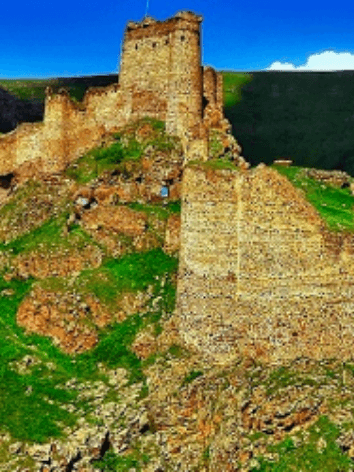
Şeytan Kalesi is a fortress situated on a steep rocky hill with cliffs on three sides, on the right bank of a stream, 1.3 kilometers north of Yıldırımtepe village, formerly known as Rabat, in the Çıldır district of Ardahan. This natural location allows access to the fortress from only one direction. Due to its strategic and inaccessible position, the fortress has been named “Şeytan Kalesi” (Devil’s Castle).
In local legends, the fortress’s impregnability led to its association with “evil spirits” or “the devil.” Architecturally, it is a typical medieval castle. The most striking feature is the triangular defensive area on the western side, shaped in harmony with the natural terrain and integrated with the main tower. The plan of Şeytan Kalesi follows the elevation, with walls extending from west to east. Inside the fortress are remnants of a chapel, a cistern, storage structures, and other ruins. Ceramics dating from the 10th to 13th centuries have been found around the fortress, along with fragments dated to the 5th and 4th centuries BCE. While this indicates pre-medieval activity in the area, no architectural remains from the early period have yet been identified. Archaeological excavation is required to clarify the historical chronology of the site.
The fortress stands at an elevation of 1,910 meters above sea level and measures 161 by 93 meters. It has an asymmetrical plan and originally had three towers, one of which remains intact today. Access to Şeytan Kalesi is possible by vehicle up to a nearby observation point, followed by a footpath. Modern night lighting has been installed.

Ardahan Şeytan Kalesi (Republic of Türkiye Ardahan Governorate)
The exact date of the fortress’s construction is unknown. Some researchers suggest it was built during the Urartian period. However, these claims have not been confirmed by archaeological or written historical sources. The ruins and architectural details indicate that the fortress was constructed during the Early Medieval period. Additionally, the discovery of ceramic fragments dated to the 5th and 4th centuries BCE suggests that settlement or military use may extend to earlier periods. Yet, due to the absence of architectural remains from these early phases, a definitive date cannot be established.
In the 16th century, Şeytan Kalesi lay within the borders of the Georgian Principality of Samtshe-Saatabago. According to the Georgian chronicle of Meshuri Matiane, during the reign of II Manuchar, the fortress and five other nearby fortresses were ceded to the Ottomans in the 1560s following an agreement with Lala Mustafa Pasha. From that time onward, the Ottomans continued to use the fortress for military purposes. The nearby trading settlement of Rabat gradually evolved into an ordinary village.
The most notable structure within the fortress is a single-nave chapel dated to the 14th century. Located in the lower section of the fortress, it is dedicated to Saint Stefan. Today, only the four walls of this structure remain standing. Additionally:

Ardahan Şeytan Kalesi - Anadolu Agency
Today, Şeytan Kalesi is a significant tourist destination attracting visitors in both summer and winter months. The surrounding Karaçay Canyon offers an ideal environment for scenic viewing and nature-based activities such as mountaineering, hiking, and hydrotherapy. The region is visited by domestic and international tourists, history enthusiasts, and hikers.
Şeytan Kalesi currently welcomes approximately 60,000 tourists annually, with daily visitor numbers reaching 35 to 40 on peak days. The site is also considered significant for faith-based tourism.

History
Founding Period and Uncertainties
Georgian and Ottoman Periods
Architectural Structures and Remains
Modern Tourism and Cultural Potential