


This article was automatically translated from the original Turkish version.
+3 More
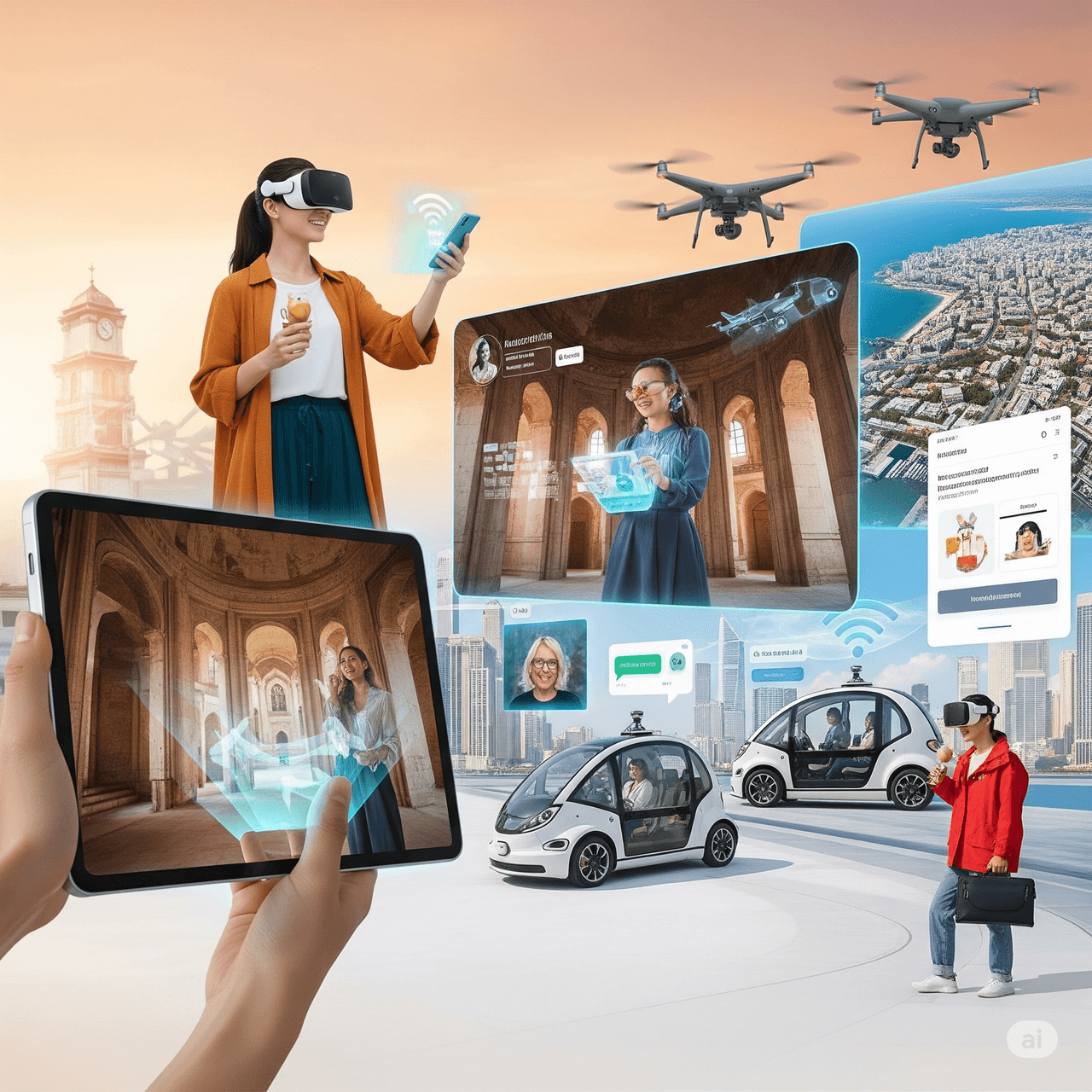
Generated with artificial intelligence.
New Generation Tourism Technologies
Core Technologies | Artificial Intelligence, Internet of Things (IoT), Virtual/Augmented Reality (VR/AR), Big Data | ||||||||
|---|---|---|---|---|---|---|---|---|---|
Main Application Area(s) | Smart Hotels Sustainability Digital Marketing Personalized Travel Planning | ||||||||
Related Concept(s) | Industry 4.0 Smart Tourism | ||||||||
Goals | Enhancing Customer Experience, Operational Efficiency, Competitive Advantage | ||||||||
Popular Trends | Sustainable Travel, Digital Detox, Personalized Tours | ||||||||
Digital and next-generation tourism applications constitute a set of technological innovations that have evolved in parallel with Industry 4.0 and are fundamentally transforming the tourism sector. This transformation encompasses the integration of technologies such as artificial intelligence (AI), the Internet of Things (IoT), virtual reality (VR), augmented reality (AR), big data analytics, and blockchain into every stage of the travel experience. The process is reshaping a broad spectrum of tourism activities—from how tourists plan their trips to their accommodation experiences, from destination exploration to transportation—creating a more personalized, efficient, sustainable, and interactive understanding of tourism. For countries with high tourism potential such as Türkiye, adapting to this digital transformation is a strategic necessity to gain a competitive advantage globally and ensure sustainable growth.
Industry 4.0 is a process that profoundly affects not only manufacturing sectors but also service industries. In tourism, this transformation manifests through the integration of technological tools into human life and travel habits. Technologies such as robotics, artificial intelligence, IoT, VR, and AR are now employed across all areas of tourism. This shift has been further accelerated by global crises such as the pandemic, leading to increased investments in digitalization within the sector. Many technological innovations previously viewed as long-term plans have been rapidly implemented in response to changing consumer behaviors and expectations. Digital transformation is a holistic approach that requires businesses not only to adopt technological tools but also to restructure their organizational frameworks, operational processes, and human resource policies. As a result, businesses aim to enhance operational efficiency while delivering richer and smoother experiences to tourists, thereby maximizing customer satisfaction and loyalty.
Smart tourism is an approach in which technology enhances the travel experience by making it more personalized and efficient. At its core are data-driven systems capable of responding in real time to tourists’ needs and expectations.
Smart hotel applications represent digital transformations in the accommodation process. Through Internet of Things (IoT) technologies, guests can remotely control environmental settings such as room temperature and lighting via mobile applications. AI-powered digital concierge systems and chatbots automatically respond to user requests, while technologies like facial recognition automate check-in and check-out procedures. Additionally, systems designed to reduce energy consumption in vacant rooms contribute to improved energy efficiency and support environmental sustainability goals.
Artificial intelligence and big data analytics enable the provision of personalized solutions in travel planning. These technologies analyze data such as users’ previous travel preferences, interests, and budget information to offer customized itineraries, accommodation options, dining choices, and activity recommendations. Unlike traditional package tours, dynamic planning tailored to individual expectations is now possible. Furthermore, consideration of real-time weather data and crowd maps in tourist areas allows for more effective management of travel duration.
Virtual and augmented reality technologies are emerging as powerful tools for marketing and enhancing the travel experience. These technologies provide tourists with unique and interactive experiences both before and during their trips.
Virtual Reality (VR) technology is increasingly used in the tourism sector for destination promotion and enhancing customer experience. This technology enables users to experience a location in three-dimensional, interactive form without physically being present. As a result, potential tourists can conduct spatial and visual previews of a destination before visiting, enabling them to make more informed travel decisions.
In the context of tourism marketing, VR contributes significantly to the more effective promotion of destinations through digital tours accessible from remote locations. In Türkiye, historically and naturally significant sites such as the Ancient City of Ephesus, the fairy chimneys of Cappadocia, the travertines of Pamukkale, Topkapı Sarayı, and Mount Nemrut can be digitally reconstructed into interactive platforms allowing users to explore them virtually. Such applications increase interest among international tourists and positively shape their first impressions of the destination.
The opportunities offered by VR technology in tourism are not limited to promotional purposes. Hotels and accommodation facilities use VR tours to show guests details such as room interiors, views, and social areas, allowing them to experience their stay in advance. This reduces uncertainty in reservation decisions and increases satisfaction and trust. Moreover, in specialized segments such as conference tourism, cruise tourism, and thematic destinations, VR applications play a crucial role in visualizing products and services.
The educational and accessibility benefits of VR are also noteworthy. Virtual tours provide an alternative for individuals who face physical barriers to travel, while schools, museums, and cultural institutions integrate this technology into digital learning processes. For example, an archaeology museum can use VR headsets to allow visitors to virtually return to the original excavation sites of exhibited artifacts and experience their historical context.
Augmented Reality (AR) technology enriches user interaction with the physical environment by overlaying digital information onto the real world. Through this technology, users can add layers of virtual information to their immediate surroundings, resulting in more informative, interactive, and memorable experiences. In tourism, AR fulfills multiple functions including deepening, informing, and guiding visitors’ exploration of cultural, historical, and natural sites.
AR technology operates via mobile devices (smartphones, tablets) and specialized eyewear systems, enabling users to access layered information about structures, artifacts, or natural elements in their immediate environment. For instance, a tourist entering Hagia Sophia in Istanbul can use an AR-enabled mobile application to view the building’s historical appearance in three dimensions, examine its mosaic decorations in detail, and undertake a virtual journey through its historical layers. Such applications go beyond the limited information provided by traditional information panels or guidebooks, offering users an interactive narrative embedded in time and space.
AR-guided systems at archaeological and historical sites such as Topkapı Sarayı, the Ancient City of Ephesus, Hattuşaş, and Göbekli Tepe enable visitors to visualize the original architecture of ancient structures. Through these visualizations, three-dimensional models of missing or ruined buildings are integrated into the real environment, allowing visitors to observe them on-site. Consequently, visitors do not merely see ruins but also better comprehend the historical context of these structures. In this way, AR strengthens the tourist experience and facilitates the interpretation of cultural heritage.
Augmented reality also enhances destination discovery by integrating with urban navigation, information access, and gamification techniques. For example, thematic AR tours in a city can assign tasks to users as they visit specific points, unlock information cards, or award prizes. Such gamified systems offer an engaging form of exploration particularly appealing to younger tourists and digitally literate users. Similarly, AR menus, interactive brochures, or virtual guide applications in restaurants, museums, or hotels can make user experiences more informative and personalized.
AR technology also makes significant contributions in education and accessibility. Special AR systems developed for individuals with visual or hearing impairments provide sensory information layers that make spaces more accessible. Furthermore, during school trips or virtual tours, students can examine historical and cultural sites in detail without leaving the classroom and access information through interactive methods.

Next-Generation Tourism Applications (Generated by artificial intelligence.)
Technological advancements have brought fundamental changes to the planning, management, and marketing of tourism destinations. Digital applications replacing traditional methods enable more effective promotion of destinations, better management of visitor flows, and improved tourist experiences. Mobile technologies, big data, artificial intelligence, and online platforms have made destination management decisions by both public and private sector actors more data-driven and dynamic. Thanks to these technologies, destinations can now compete not only physically but also in the digital realm.
Today, a large proportion of travelers plan their holidays online. This has made digital marketing and online reservation systems essential tools for the tourism sector. Destination Management Organizations (DMOs) and tourism businesses can reach their target audiences directly through mobile-compatible websites, fast and secure reservation infrastructures, platforms featuring user reviews, and digital advertising channels. Promotions on social media platforms, collaborations with content creators, search engine optimization (SEO), and targeted advertising campaigns yield particularly effective results among younger and digitally literate audiences. These strategies not only increase destination awareness but also directly influence the travel decision-making process.
Businesses and destination managers in the tourism sector can analyze tourist behavior in greater depth thanks to advanced data analytics and artificial intelligence solutions. Data such as reservation patterns, spending habits, satisfaction feedback, and social media interactions are collected and processed into meaningful patterns. These analyses are used to measure the effectiveness of marketing activities, better define visitor profiles, and develop targeted campaigns.
AI-supported systems are also widely used in operational areas such as dynamic pricing, resource management, and demand forecasting. In the hotel industry, room prices are adjusted in real time based on factors such as occupancy rates, seasonal variations, and competitive conditions, optimizing revenue management and enhancing customer satisfaction. In some destinations, AI-supported prediction systems monitor and direct visitor density, helping to develop preventive measures against problems such as overtourism.
Digitalization offers significant opportunities for managing the environmental and social impacts of tourism while simultaneously laying the groundwork for new travel trends.
Digital technologies play a key role in reducing tourism’s environmental footprint. Systems for energy and water conservation in smart hotels, renewable energy sources, and intelligent waste management form the foundation of sustainable tourism models. Moreover, digital platforms empower local communities and artisans by enabling their direct participation in the tourism economy. Blockchain technology can promote the use of sustainable products by providing transparency in supply chains.
Technology has diversified travel habits. In the post-pandemic period, there has been a rise in nature-oriented and more individualized vacation preferences such as caravanning and boat rentals. Parallel to this, a desire to disconnect from constant technological connectivity has given rise to a new tourism trend known as “digital detox.” Travelers are choosing spaces such as WiFi-free resort villages, isolated mountain cabins, and glamping sites to seek mental and spiritual renewal through direct immersion in nature.
Smart mobility systems developed in major cities and tourist regions offer significant convenience to tourists. Mobile applications for public transportation display optimal routes and schedules, while testing autonomous vehicles in tourist areas holds the potential to provide more comfortable and sustainable transportation solutions in the future.
Adamo, Giuseppe Emanuele, Sonia Ferrari, and Monica Gilli. "Creativity as a Source of Differentiation in Urban Tourism: The Case of Torino City." International Journal of Tourism Research (January 24, 2019). Erişim Adresi.
Bianchi, Constanza, Sandra Milberg, and Andres Cúneo. "Understanding Travelers' Intentions to Visit a Short versus Long-Haul Emerging Vacation Destination: The Case of Chile." *Tourism Management* 59 (2017): 312–324. Erişim Adresi.
Chung, Namho, Heejeong Han, and Youhee Joun. "Tourists’ Intention to Visit a Destination: The Role of Augmented Reality (AR) Application for a Heritage Site." *Computers in Human Behavior* 50 (2015): 588–599. Erişim Adresi.
Dieck, M. Claudia tom, and Timothy Jung. "A Theoretical Model of Mobile Augmented Reality Acceptance in Urban Heritage Tourism." *Current Issues in Tourism* 21, no. 2 (2015): 154–174. Erişim Adresi.
Guttentag, Daniel A. "Virtual Reality: Applications and Implications for Tourism." Tourism Management 31, no. 5 (2010): 637–651. Erişim Adresi.
Kiryakova-Dineva, Teodora, Ivanka Vasenska, and Blagovesta Koyundzhiyska-Davidkova. "Glamping – An Active Back to Nature Trend in the Post-Pandemic Tourism Reality." International Conference on Tourism Research 15 (2022): 175–182. Erişim Adresi.
Yenisoy, C., and S. Meydan Uygur. "Lüks Kampçılık (Glamping) Turizmine Yönelik Bir Alanyazın İncelemesi." *Ankara Hacı Bayram Veli Üniversitesi Turizm Fakültesi Dergisi* 27, no. 1 (2024): 106–122. Erişim Adresi.

Generated with artificial intelligence.
New Generation Tourism Technologies
Core Technologies | Artificial Intelligence, Internet of Things (IoT), Virtual/Augmented Reality (VR/AR), Big Data | ||||||||
|---|---|---|---|---|---|---|---|---|---|
Main Application Area(s) | Smart Hotels Sustainability Digital Marketing Personalized Travel Planning | ||||||||
Related Concept(s) | Industry 4.0 Smart Tourism | ||||||||
Goals | Enhancing Customer Experience, Operational Efficiency, Competitive Advantage | ||||||||
Popular Trends | Sustainable Travel, Digital Detox, Personalized Tours | ||||||||
No Discussion Added Yet
Start discussion for "Digital and Next-Generation Tourism Applications" article
Industry 4.0 and the Digital Transformation of Tourism
Smart Tourism
Smart Hotels
Personalized Travel Planning
Virtual and Augmented Reality (VR/AR) Applications
Virtual Reality (VR) and Its Applications in Tourism
Augmented Reality (AR) and Its Applications in Tourism
Technology in Destination Management and Marketing
Digital Marketing and Online Platforms
Data Analytics and Artificial Intelligence Applications
Next-Generation Trends
Sustainable and Green Technologies
New Travel Habits
Smart Mobility