


This article was automatically translated from the original Turkish version.
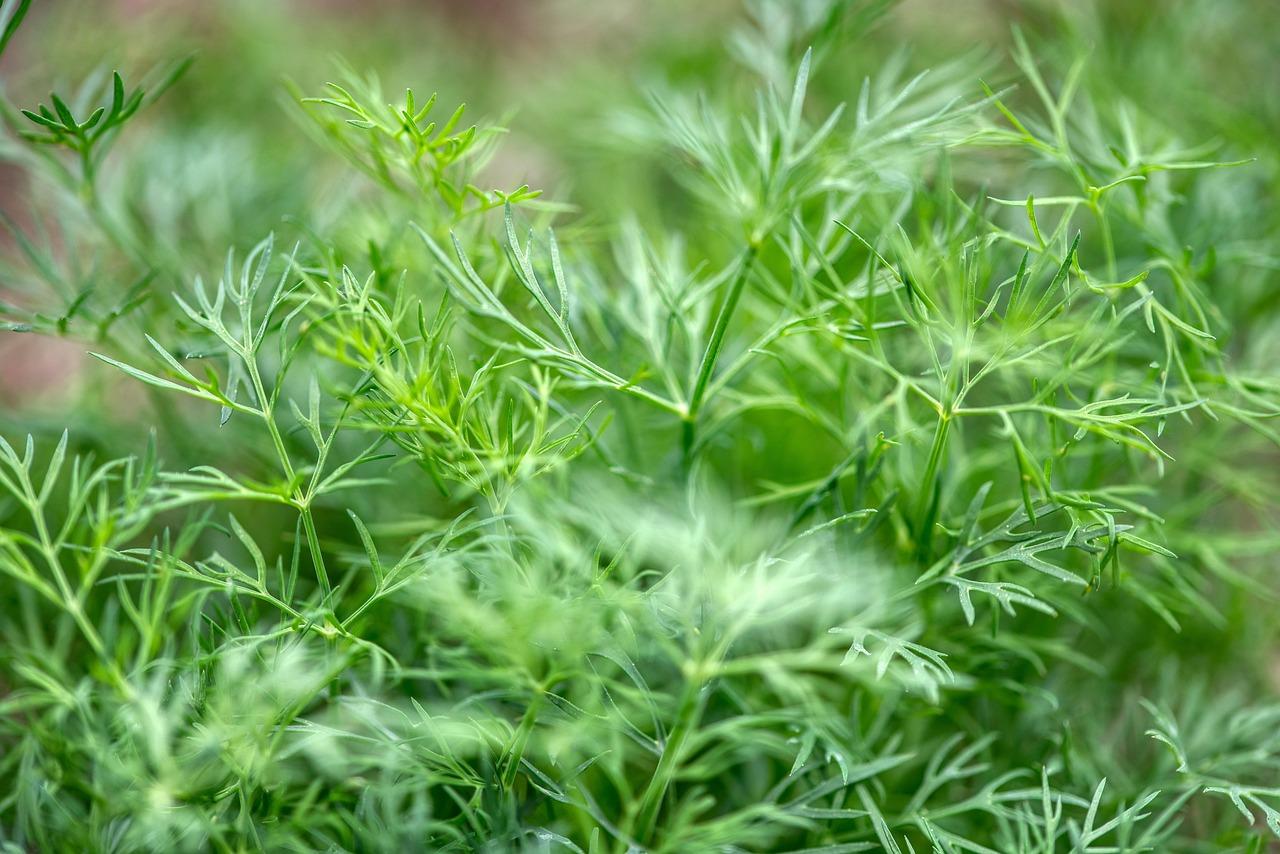
Dereotu
Scientific Name | Anethum graveolens L. | ||||||||
|---|---|---|---|---|---|---|---|---|---|
Family | Apiaceae (Carrot family) | ||||||||
Species | Annual herbaceous plant | ||||||||
Distribution | Widespread worldwide | ||||||||
Elevation | 20–100 cm | ||||||||
Leaves | Dark green Pinnate compound Filamentous segmented | ||||||||
Anethum graveolens L., a perennial aromatic herb belonging to the Apiaceae (Maydanozgiller) family. The specific epithet is of Latin origin and means strongly scented. The plant is native particularly to the Mediterranean, Southwest Asia and Southeast Europe. Its leaves and seeds are widely used in cooking.

Dereotu (Pixabay)
Anethum graveolens L. (dill), a one-year aromatic herb in the Apiaceae (Maydanozgiller) family. The plant typically grows between 20 cm and 1 metre in height. Its stem is upright, glabrous, circular in cross-section and slightly grooved; it branches from the base. The taproot system is fine and fibrous, rarely penetrating deeper than 30 cm.
The leaves are dark green, pinnately compound with filiform segments. They are arranged spirally along the stem, with each petiole attaching to the stem via a broad sheath and bearing a prominent midrib. This leaf structure gives the plant a fine, feathery appearance.
The flowers are greenish-yellow, actinomorphic (radially symmetrical) and hermaphroditic. Flowering occurs in compound umbels, each containing 15 to 30 rays. The flowering period generally occurs between June and July, with pollination primarily achieved by bees and other insects (entomophily).
The fruits are schizocarps consisting of two mericarps that separate upon maturity. The seeds are small, oval, brown, smooth and glabrous. They retain germination capacity for two to three years. The plant is valued for its leaf yield before flowering and for its seed yield after flowering.
Thanks to these botanical characteristics, dill can adapt to various ecological conditions both as a cultivated form and as naturally occurring individuals.
Dill performs best in warm, sunny and dry climates. Partial shade reduces yield. It prefers organic-rich, well-drained, slightly sandy soils with a pH range of 5.3 to 7.8. During dry periods it can bolt rapidly to seed. The plant is propagated by seed and exhibits a tendency for self-sowing.
Anethum graveolens contains numerous compounds including essential oils, flavonoids, phenolic acids, terpenoids, coumarins and steroids. The dominant compounds in its essential oils are:
These compounds are concentrated particularly in the fruits, flowering parts and leaves. The plant also contains important secondary metabolites such as flavonoids (e.g. quercetin, isoharmentin), phenolic acids, tannins, coumarins and triterpenoids.
Anethum graveolens (dill) is a medicinal and aromatic plant with versatile applications. Its most common use is in culinary contexts; fresh leaves are used as flavoring agents in salads, soups, vegetable and meat dishes. The seeds are used as spices in pickles, bread and certain sauces. Additionally, essential oils extracted from immature flowering parts are used to impart natural aroma to food products.

Dereotu (Pixabay)
In traditional medicine, dill has been used as a carminative (gas-relieving), antispasmodic and galactagogue (milk-promoting) remedy for digestive disorders. It has been particularly favored in traditional medical systems such as Ayurveda and Unani for treating stomach ailments, colic pain and to enhance breast milk production during lactation.
In cosmetics and personal care, dill is used as an essential oil source in products such as soap, detergent, shampoo and perfume, derived from its seeds.
Dill is an ecologically significant plant. During its flowering period, it attracts numerous pollinators including honeybees, wild bees, butterflies and flies through its nectar and pollen. In this way, it contributes to the conservation of biodiversity in agricultural ecosystems. This supportive role for pollinators can indirectly enhance agricultural yields when intercropped with entomophilous crop plants.
Moreover, dill is effective in indirect biological pest control. When used as a border crop against pests such as the carrot fly (Psila rosae), it can act as a distractor or repellent. Additionally, it provides habitat and breeding grounds for certain parasitoid wasp species (e.g. Cotesia glomerata and Pediobius foveolatus), helping to balance populations of harmful insects.
Due to these ecological functions, Anethum graveolens is regarded as a support crop in sustainable agricultural practices and is integrated into agroecological strategies that promote natural pest control.
Jana, S., and G. S. Shekhawat. "Anethum graveolens: An Indian traditional medicinal herb and spice." *Pharmacognosy Reviews* 4, no. 8 (2010): 179–184. Accessed May 31, 2025.https://www.ncbi.nlm.nih.gov/pmc/articles/PMC3249919/
Missouri Botanical Garden. "Anethum graveolens." Missouri Botanical Garden. Accessed May 31, 2025.https://www.missouribotanicalgarden.org/PlantFinder/PlantFinderDetails.aspx?kempercode=d682
Pexels. "Kırmızı Chillis ve Yeşil Bitki JPG." Pixabay. Accessed May 31, 2025.https://www.pexels.com/tr-tr/fotograf/kirmizi-chillis-ve-yesil-bitki-2110487/
Pixabay. "AI Generated Transparent Background JPG." Accessed May 31, 2025.https://pixabay.com/illustrations/ai-generated-transparent-background-8841579/
Pixabay. "Dill Cucumber Dill Herb Anethum JPG." Accessed May 31, 2025.https://pixabay.com/photos/dill-cucumber-dill-herb-anethum-5097092/
Pixabay. "Dill Herb Food Cup Water Hand JPG." Accessed May 31, 2025.https://pixabay.com/photos/dill-herb-food-cup-water-hand-7264145/

Dereotu
Scientific Name | Anethum graveolens L. | ||||||||
|---|---|---|---|---|---|---|---|---|---|
Family | Apiaceae (Carrot family) | ||||||||
Species | Annual herbaceous plant | ||||||||
Distribution | Widespread worldwide | ||||||||
Elevation | 20–100 cm | ||||||||
Leaves | Dark green Pinnate compound Filamentous segmented | ||||||||
No Discussion Added Yet
Start discussion for "Dill (Anethum graveolens)" article
Botanical Characteristics
Cultivation Conditions
Chemical Components and Active Compounds
Uses
Ecological Role