

This article was automatically translated from the original Turkish version.
Registration Number | 1132 | ||||||||
|---|---|---|---|---|---|---|---|---|---|
Registration Date | 06.06.2022 | ||||||||
Application Number | C2021/000167 | ||||||||
Application Date | 07.04.2021 | ||||||||
Name of the Geographical Indication | Dinar Taptama Köfte / Dinar Taplama Köfte | ||||||||
Product / Product Group(s) | Köfte / Dishes and Soups | ||||||||
Type of Geographical Indication | Mahreç mark | ||||||||
Applicant/Registrant(s) | Dinar Municipality | ||||||||
Address of the Registrant | Camikebir Mah. Hal Cad. No:1 03400 Dinar AFYONKARAHİSAR | ||||||||
Geographical Boundary | Afyonkarahisar Province | ||||||||
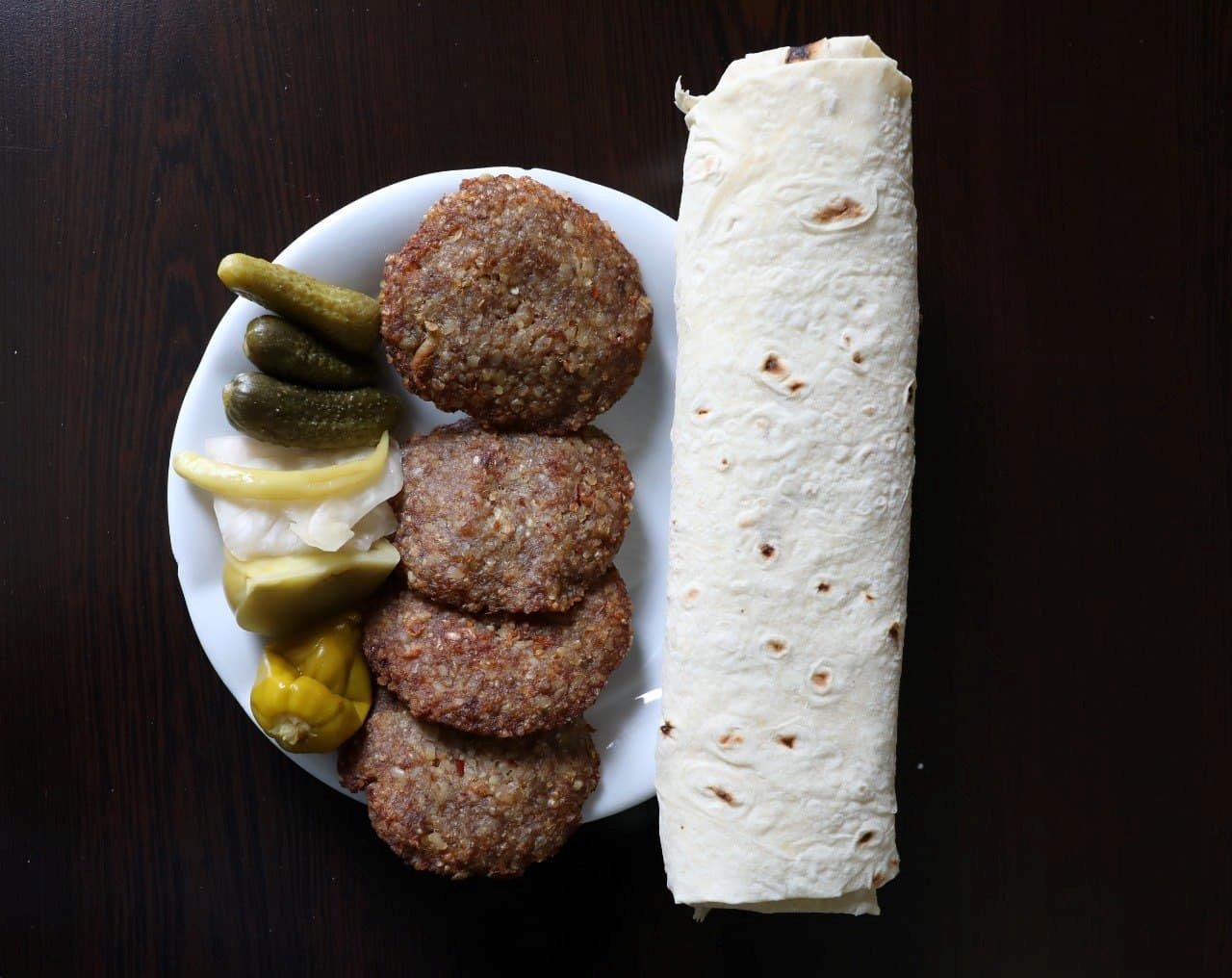
Dinar Taptama Köfte / Dinar Taplama Köfte is a traditional meat dish specific to the Dinar district of Afyonkarahisar and is registered as a geographical indication. The mixture is prepared by kneading half-fat ground beef with fine bulgur for kebabs, flour, egg, onion, garlic, and various spices. The mixture is shaped into oval forms and cooked either by frying in hot oil or baking on a griddle over wood fire. These köftes, approximately 8 cm in diameter and 1 cm thick, can be consumed hot or cold. The dish derives its name from the sound “taptama” produced when the palms are clapped together during the shaping process. It is traditionally served at weddings, funerals, and special occasions in Dinar.
Dinar Taptama Köfte / Dinar Taplama Köfte are oval-shaped köftes measuring approximately 8 cm in diameter and 1 cm in thickness. They can be consumed either hot or cold, and are preferably cooked by frying or cooking on a griddle over wood fire. During cooking, the integrity of the köfte must be preserved; therefore, the kneading process must be carefully executed to prevent crumbling.
Where possible, the bulgur used must be sourced from within the geographical boundary of the Dinar district.
The ground beef, flour, egg, half of the bulgur, spices, and water are mixed and kneaded. This initial kneading lasts approximately 15 minutes. The remaining bulgur, along with grated onion and garlic, is then added and kneaded for an additional 10 minutes. The mixture is considered complete when it changes color, the raw appearance disappears, and the bulgur grains soften and swell.
From the prepared mixture, approximately 60-gram portions are taken and shaped into wide oval forms between the palms. The köftes are then either fried in hot oil or cooked on a griddle. Köftes fried in oil are drained of excess fat on a plate lined with paper towel.
Dinar Taptama Köfte / Dinar Taplama Köfte must be produced exclusively within the boundaries of the Dinar district of Afyonkarahisar province. It is mandatory that all production stages occur within this geographical region due to the product’s traditional knowledge-based structure and cultural associations.
The geographical indication mark and the term “Dinar Taptama Köfte / Dinar Taplama Köfte” must appear directly on the product or its packaging. If this is not feasible, the marking must be displayed in a clearly visible location within the production facility.
Control activities are carried out by a minimum five-member control board coordinated by the Dinar Municipality. This board includes expert representatives from the Dinar Municipality, the Dinar District Directorate of Agriculture and Forestry, the Dinar Chamber of Commerce and Industry, the Dinar Guild of Artisans and Craftsmen, and the Dinar Vocational Higher School.
Inspections are conducted at least once annually on a regular basis, and may also be carried out at any time upon complaint or when deemed necessary. The inspection criteria are as follows:
Inspection results are documented and submitted to the Turkish Patent and Trademark Office. In cases of non-compliance, corrective actions are communicated to the relevant individuals or institutions. The inspection authority may, when necessary, engage experts or organizations from the public or private sector for assistance.
Turkish Patent and Trademark Office. "Dinar Taptama Köfte / Dinar Taplama Köfte" Geographical Indication Registration Certificate (PDF). Accessed August 16, 2025. https://ci.turkpatent.gov.tr/Files/GeographicalSigns/b6a41ab3-dc87-4497-96a0-7fb2dabcf210.pdf
Turkish Patent and Trademark Office. "Dinar Taptama Köfte / Dinar Taplama Köfte" Geographical Indication Registration Information. Accessed August 16, 2025. https://ci.turkpatent.gov.tr/cografi-isaretler/detay/3927

Registration Number | 1132 | ||||||||
|---|---|---|---|---|---|---|---|---|---|
Registration Date | 06.06.2022 | ||||||||
Application Number | C2021/000167 | ||||||||
Application Date | 07.04.2021 | ||||||||
Name of the Geographical Indication | Dinar Taptama Köfte / Dinar Taplama Köfte | ||||||||
Product / Product Group(s) | Köfte / Dishes and Soups | ||||||||
Type of Geographical Indication | Mahreç mark | ||||||||
Applicant/Registrant(s) | Dinar Municipality | ||||||||
Address of the Registrant | Camikebir Mah. Hal Cad. No:1 03400 Dinar AFYONKARAHİSAR | ||||||||
Geographical Boundary | Afyonkarahisar Province | ||||||||
No Discussion Added Yet
Start discussion for "Dinar Taptama Köfte / Dinar Taplama Köfte" article
Physical and Structural Characteristics
Ingredients (for a 12-person production batch)
Production Method
Geographical Boundary and Production Area
Marking and Labelling
Control Mechanism