

+1 More

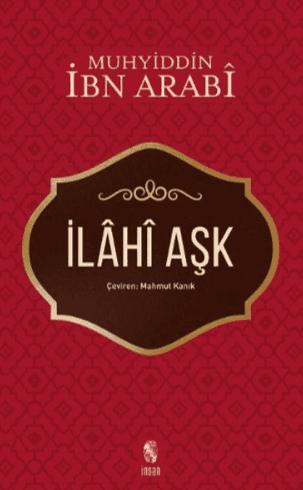
Author(s) | Muhyiddin Ibn Arabi | ||||||||
|---|---|---|---|---|---|---|---|---|---|
Translator(s) | Mahmut Kanık | ||||||||
Publisher(s) | İnsan Publishing | ||||||||
Publication Date | 28.10.2022 | ||||||||
Language(s) | Turkish | ||||||||
Page Count | 197 | ||||||||
Dimension(s) | 13.5 x 21 cm | ||||||||
Divine Love is a text that explores the metaphysical dimensions of the concept of love within the framework of Sufi thought. The work is based on the idea that love is the fundamental principle of creation, and it attempts to explain the relationship between the human being, existence, and God. The text presents love not merely as an individual emotion but as a cosmic bond and an existential necessity.
Divine Love is a text that examines the metaphysical and existential dimensions of love within Sufi thought. In the work, love is presented not as a personal emotion, but as an ontological principle that plays a central role in the creation of the universe. Based on the notion that creation is a result of divine love, the work emphasizes love as a key element in both the God–servant relationship and the meaning of existence. The text defines the process of spiritual maturation through love and explains this journey through symbols, metaphors, and classical Sufi terminology.
1. The Ontological Basis of Love:
Love is not considered merely an emotion or sentimental bond, but a fundamental principle at the core of existence. It is described as the reason for God’s act of creation—His desire to witness His own beauty. In this context, love is understood as an eternal and universal reality, the origin and sustainer of being. It is positioned as a metaphysical force that underlies the structure of existence and enables all things to come into being.
2. Creation:
The act of creation is presented as the result of divine love. Based on the idea that “God wished to be known,” creation is interpreted as a manifestation of love. All beings are said to have been brought into existence by this divine love and to operate in accordance with it. This perspective aligns with Ibn Arabi’s concept of wahdat al-wujud (the Unity of Being), where love is viewed as a reflection of the divine essence.
3. The Human Being and the Soul:
The human being is described as a creature that evolves through love. The soul attains perfection by realizing divine love and undergoing purification through it. In this process, the individual transcends the self and moves toward the truth. Love functions as a transformative power, guiding the individual through spiritual stages on the inner journey.
4. Sufi Symbolism:
Love is conveyed through abstract concepts, symbols, and metaphors. These include images such as the lover–beloved relationship, mirrors, light and shadow. Through these symbolic elements, the work attempts to suggest metaphysical realities that cannot be directly expressed. This narrative method is commonly used in the Sufi literary tradition.
5. Knowledge and Ma‘rifa:
Love is not only a spiritual experience but also a means to attain knowledge. In Ibn Arabi’s thought, ma‘rifa (spiritual knowledge) is not acquired through reason but through love. Love establishes a bond between the servant and God, and this connection plays a central role in the realization of truth. Therefore, love is regarded as an epistemological instrument.
İbn Arabî, Muhyiddin. İlahi Aşk. Çeviren Mahmut Kanık. İstanbul: İnsan Yayınları, 2022.

Author(s) | Muhyiddin Ibn Arabi | ||||||||
|---|---|---|---|---|---|---|---|---|---|
Translator(s) | Mahmut Kanık | ||||||||
Publisher(s) | İnsan Publishing | ||||||||
Publication Date | 28.10.2022 | ||||||||
Language(s) | Turkish | ||||||||
Page Count | 197 | ||||||||
Dimension(s) | 13.5 x 21 cm | ||||||||
Subject
Themes Addressed
This article was created with the support of artificial intelligence.


