


This article was automatically translated from the original Turkish version.
+2 More
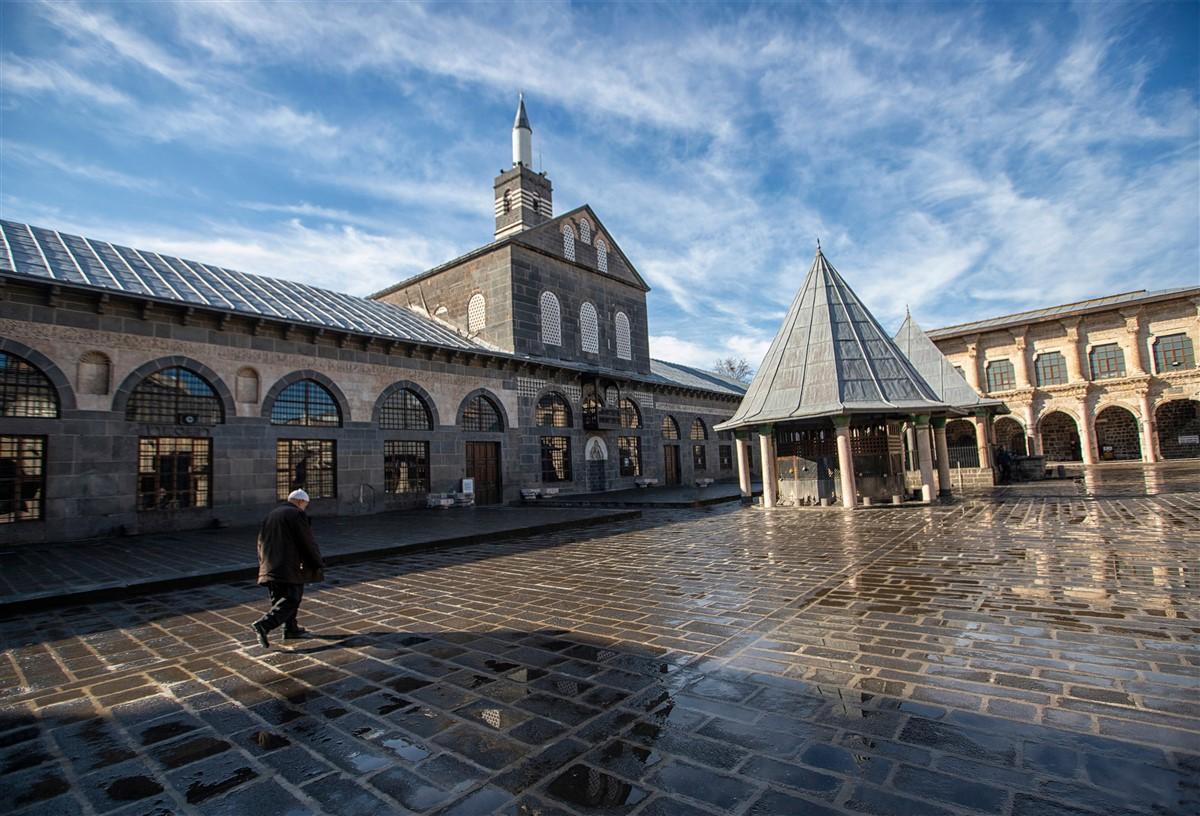
Diyarbakır Ulu Camii is one of the oldest mosques in Anatolia and the largest among the historic mosques in the city. Although its exact construction date is unknown, it was established after the Islamic conquest of the city in 639 CE during the reign of Caliph Umar, when the largest church of the settlement, the Mar Toma Church, was converted into a mosque. In the Islamic world, it is regarded as the fifth Harem-i Şerif (Holy Sanctuary), following Kaaba, Mescid-i Nebevi, Al-Aqsa Mosque and Damascus Umayyad Mosque. Architecturally, this building, interpreted as a reflection of Damascus Umayyad Mosque in Anatolia, has served as a center of worship throughout history and constitutes the largest complex of structures in Diyarbakır.

Diyarbakır Ulu Camii (Diyarbakır Governorship)
All states that ruled Diyarbakır have contributed to the Ulu Camii. Inscriptions and royal decrees from the Great Seljuk ruler Melikşah, Anatolian Seljuk ruler Gıyaseddin Keyhüsrev, Akkoyunlu ruler Long, and many Ottoman sultans, as well as from the İnaloğulları, Nisanoğulları and Artuqids, are found in various parts of the mosque. The mosque underwent major restoration in 1091 under the orders of Melikşah, and acquired its present form through successive additions and repairs in different periods. The facades of the mosque feature architectural decorations, reliefs and inscriptions from various eras, harmoniously integrated into place.
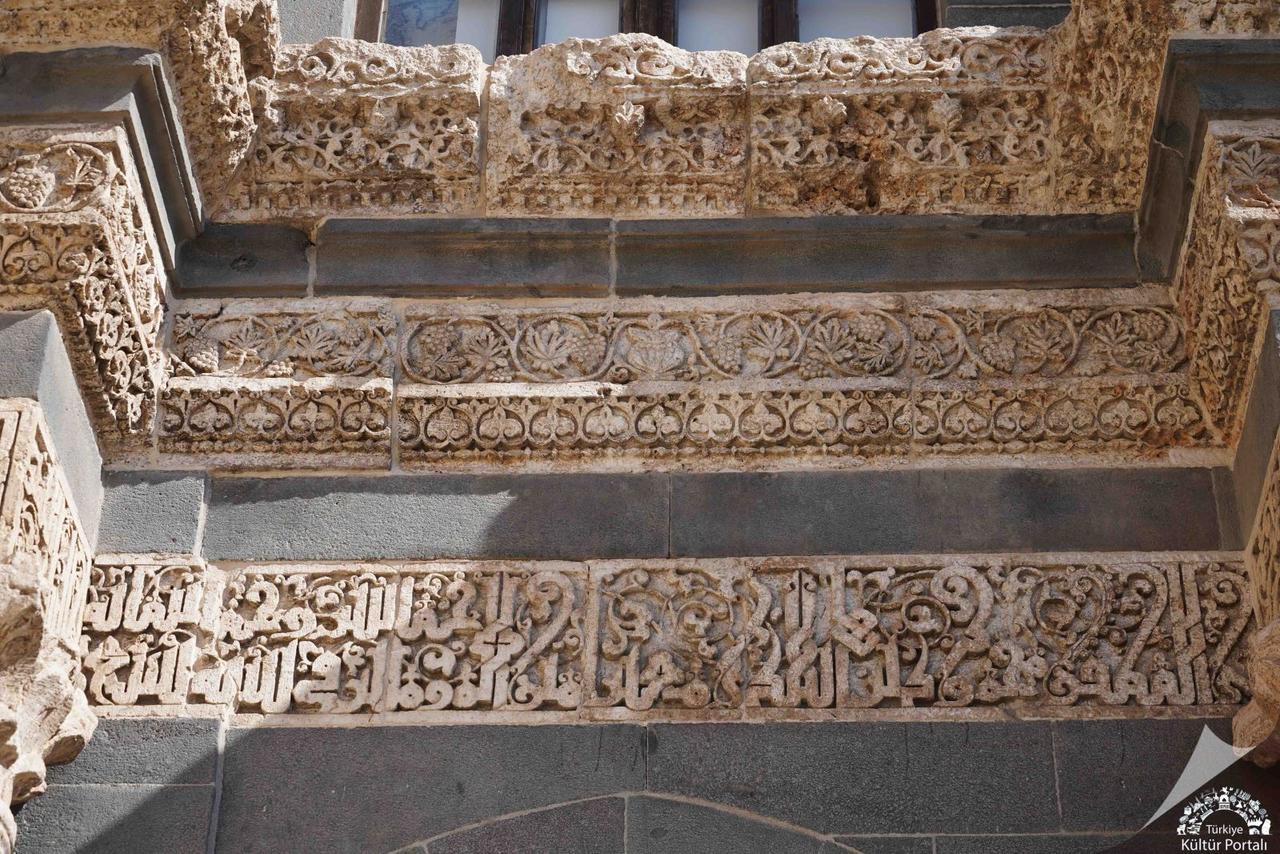
Reliefs on the courtyard facade (Türkiye Culture Portal-Iskan Altın)
The Diyarbakır Ulu Camii, with a cruciform plan, presents the appearance of a külliye with a large central courtyard. To the south lies the Hanefi section, to the north the Şafii section and the Mesudiye Medresesi, to the west the Zinciriye Medresesi, and to the east the arcaded sections. Access to the mosque is provided through three separate entrances; the eastern entrance (crown) door is notable for its symmetrical relief figures depicting lions in combat. The interior features a plan with numerous columns, and the ceiling and surfaces of the central area are adorned with pen decorations characteristic of the Ottoman period.

Central ceiling decorated in Ottoman-style kalem işleri (Türkiye Culture Portal-Haluk Yurtörten)
The Diyarbakır Ulu Camii attracts the attention of both local and foreign tourists through its architectural features and historical significance. With its Al-Jazari clock, sun hours, like original elements, and inscriptions bearing traces of diverse civilizations, it continues to stand as a symbol of Anatolia’s rich cultural heritage.
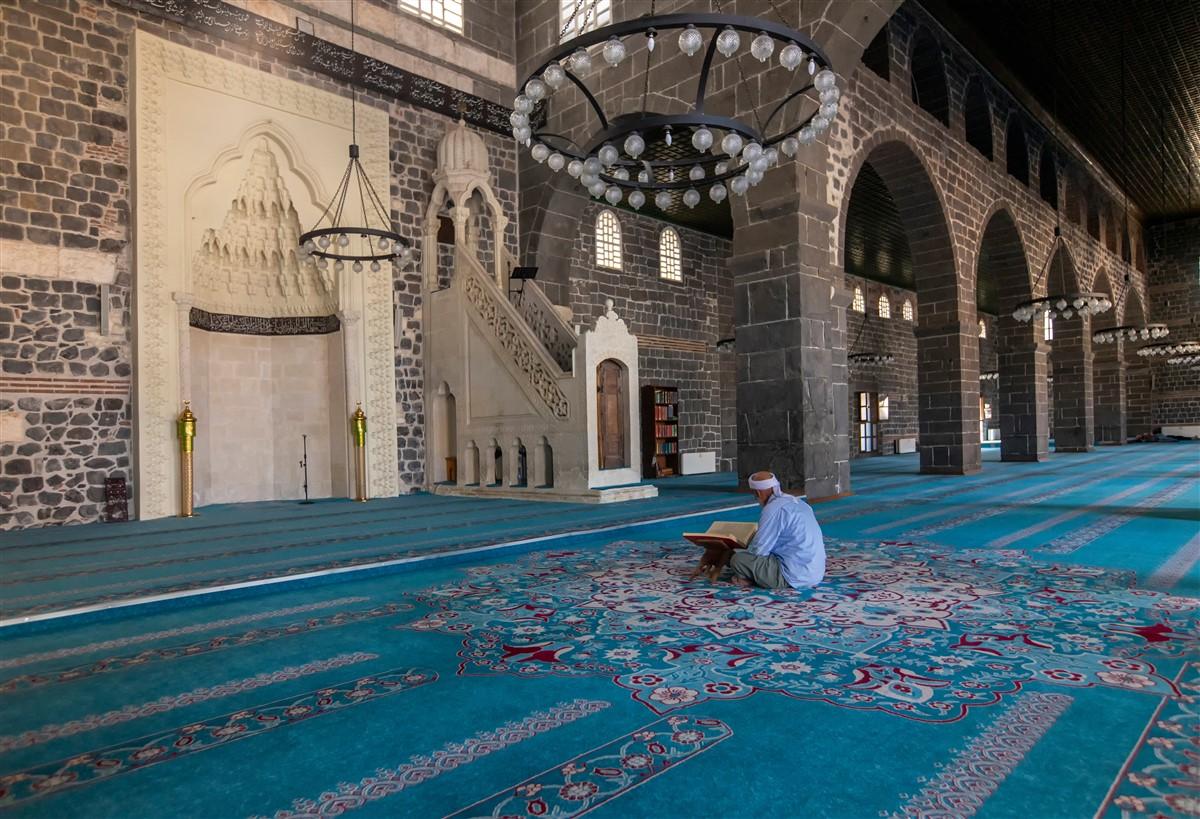
Interior of Diyarbakır Ulu Camii (Diyarbakır Governorship)

No Discussion Added Yet
Start discussion for "Diyarbakır Ulu Camii" article
Architectural Features
Sections of the Mosque