


This article was automatically translated from the original Turkish version.
Shipyard Organization
Definition(s) | A multidisciplinary production facility with the necessary technical infrastructure for new shipbuilding or maintenance and repair | ||||||||
|---|---|---|---|---|---|---|---|---|---|
First Dockyard (Turkish History) | İzmir (1081/Çaka Bey) | ||||||||
Sections | Material Management Production Areas Administrative and Planning Units | ||||||||
Technical Process | and Delivery Testing Installation Production Material Procurement Planning Design | ||||||||
Software Tools | Nesting software CAD Microsoft Project Primavera | ||||||||
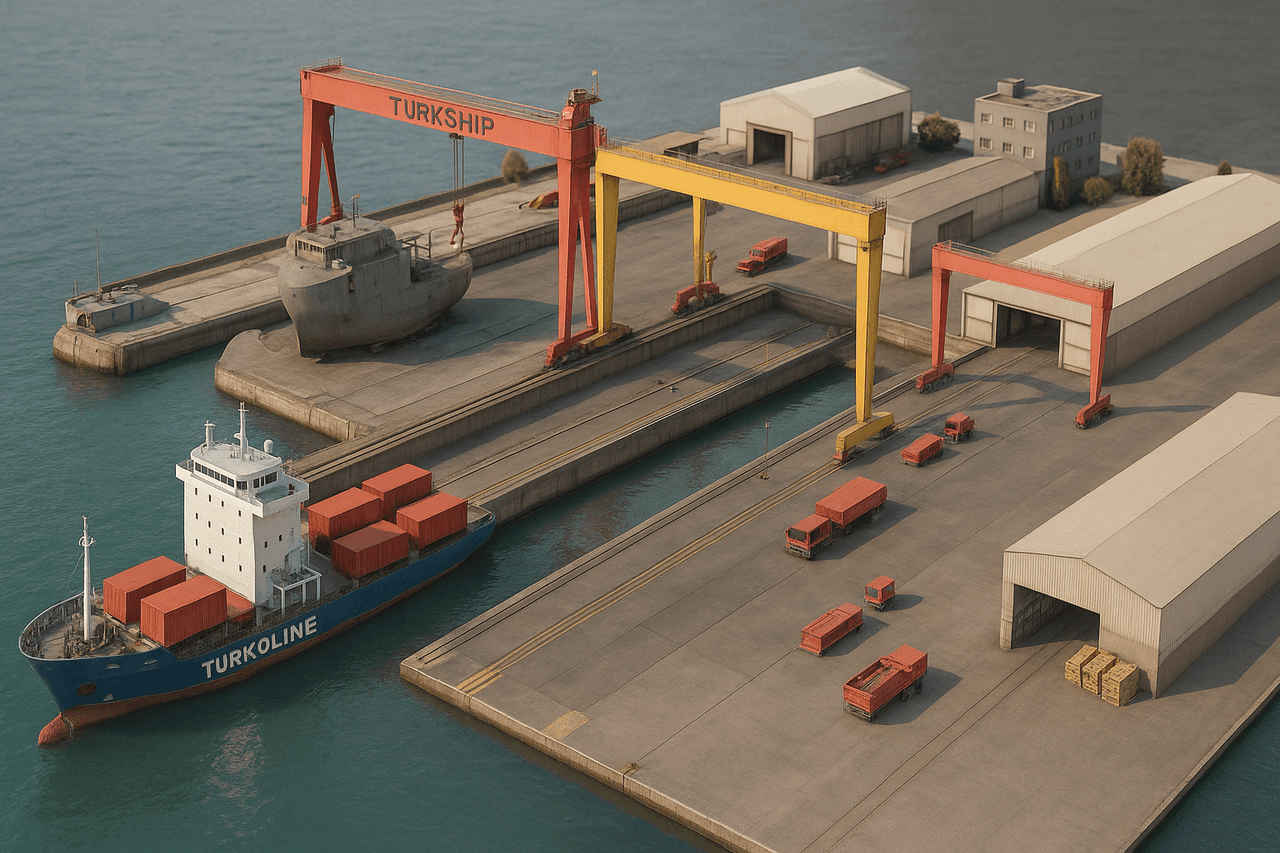
The term “shipyard” (tersane) in Turkish, which began to be used from the early 16th century, was borrowed from the Italian word darsena. A shipyard refers to production facilities equipped with the necessary infrastructure and capabilities to carry out operations such as the new construction of a required vessel or any watercraft, the conversion of an existing vessel, or its maintenance and repair. The shipbuilding industry has a composite structure that integrates various industrial products and different fields of engineering and technology. Thanks to the contributions it makes to related industries, this sector is strategically supported by countries that use it as a production hub for maritime trade, as well as for steel and iron, machinery manufacturing, and electrical and electronic industries.

Example of a General Shipyard View (Generated with Artificial Intelligence Assistance)
Technological advancement, the emergence of new methods, and evolving needs have led to fundamental changes in shipbuilding processes. Particularly, the diversification of materials used, innovations in propulsion systems, and the evolution of communication and navigation systems have significantly influenced the historical development of shipbuilding. Today, more than 80% of global trade volume being transported by sea has further enhanced the strategic importance of the shipbuilding industry.
The demand for shipbuilding extends back to the earliest periods of human history, predating the Common Era. Ancient peoples used simple boats and rafts on rivers for travel and cargo transport. Due to the inability to construct durable vessels for long-distance sea voyages during those times, seafaring remained limited to inland seas. According to some research, the use of these basic watercraft predates even the invention of the wheel, demonstrating how fundamental maritime activities were to human survival.
The Phoenicians and Egyptians stand out as pioneering civilizations in the development of shipbuilding. The Phoenicians are recognized as history’s first seafaring society, and their activities spread across a vast geographical area from the Middle East to the Mediterranean coast, playing a decisive role in the early stages of shipbuilding. These civilizations are known to have possessed powerful naval fleets between 1000 and 600 BCE. Maritime activities in the Mediterranean were later continued by the Carthaginians, who were Phoenician colonies, as well as by the Roman and Ancient Greek civilizations established on the Italian Peninsula; by the end of the Middle Ages, city-states such as Genoa and Venice assumed significant roles in this field. This Mediterranean-centered development process began to exert influence in Northern Europe and Scandinavia by the late Middle Ages.
Egypt is a civilization that has historically stood out due to its agricultural wealth and early examples of urbanization. Mesopotamia holds similar importance due to the fertility provided by the Tigris and Euphrates rivers. Along with the strategic and economic value added by the Nile River, this region became one of the key centers where early civilizations developed. It is generally accepted that the earliest known watercraft resembling ships emerged in these regions due to trade needs. Some sources suggest that the origins of watercraft lie along the Pacific coasts and the Chinese basin, where simple boats made from hollowed logs and rafts constructed from dried reeds or bamboo were used. In Egypt, vessels made from thick, paper-like material derived from the papyrus plant growing abundantly along the Nile provided the necessary sail surface when navigating from rivers to the sea. These developments also preceded the widespread adoption of sails in seafaring.
Maritime activities in the geography of Türkiye were first observed during the Seljuk period. During this era, shipbuilding activities began and gradually expanded in important port cities such as İzmir, Sinop, and Antalya. Çaka Bey, regarded as the pioneer of Turkish seafaring, played a central role in this process. In 1078, Çaka Bey was captured by the Byzantines and held prisoner in Istanbul for a time; however, in 1081, he escaped by taking advantage of the political upheaval following a change in the Byzantine throne. Reuniting with his own troops, Çaka Bey captured İzmir and constructed a shipyard that was considered highly advanced for its time. He also organized the area as a naval base.
Shipbuilding activities commenced at Çaka Bey’s shipyard, and in 1081, the first Turkish fleet—comprising 50 sailing and oared warships—was launched into the sea. This fleet achieved a significant victory against the Byzantine navy, forcing them to retreat with heavy losses. The year 1081, marking the institutionalization of Turkish seafaring, is today recognized as the founding year of the Turkish Naval Forces.

Commander and Seafarer of the Seljuks, Çaka Bey (Command of the Turkish Armed Forces Navy)
Following these developments, the Sinop Shipyard was activated in 1214 after Sultan Izzeddin Keykavus I of the Anatolian Seljuks captured Sinop and the naval base of the Empire of Trebizond.【1】 This made it possible to establish the first Turkish fleet in the Black Sea and initiate shipbuilding activities. As part of the Anatolian Seljuk State’s maritime policy, Sultan I Alaeddin Keykubad, known as Sultan-ül Bahreyn (Sultan of the Two Seas), ordered the construction of the Alaiyye Shipyard in 1227 in Alaiyye (modern-day Alanya). This structure is regarded as the most important naval facility of the Seljuk period and the first organized shipyard established by the Turks.
Despite centuries having passed since its construction, the Alanya Shipyard remained standing and was actively used for boat building and repair until the 1960s. Today, it serves as a museum illuminating the history of maritime and shipbuilding activities. In this regard, it represents a historical continuity both architecturally and culturally.

Alanya Shipyard (Flickr)
By the 14th century, the Ottoman Empire gained access to the sea with the conquest of Karamürsel in 1323. The first Ottoman fleet, which provided naval support during wars in the Kocaeli region, was established by Kara Mürsel Bey. Known as “Kara” (meaning “brave” or “valiant”) due to his exceptional bravery and success in battle, Kara Mürsel Bey is also recognized as the first admiral and the first shipbuilding engineer of the Ottoman Turks. Under his leadership, a naval base and shipyard were established in Karamürsel in 1327.
Following Karamürsel, the Ottomans constructed shipyards in Edincik, Gelibolu, and İzmit. After the incorporation of the Karesi Beylik into Ottoman territory, a shipyard was established in Aydıncık (Edincik); the İzmit Shipyard became operational after the conquest of İzmit in 1337. Among these early developments, the most significant was the Gelibolu Shipyard, established in 1401 during the reign of Yıldırım Bayezid. This facility, recognized as the Ottoman Empire’s first regular and large-scale shipyard, remained the empire’s most important naval base until the establishment of Tersane-i Amire.
In 1455, Fatih Sultan Mehmet established Tersane-i Amire on the Golden Horn, which became the center of Ottoman naval power. It served as the main base of the Ottoman Navy until the empire’s collapse, fulfilling its role as the administrative, production, and maintenance hub for the Ottoman fleet. In 1513, after the closure of the Gelibolu Shipyard, its equipment, tools, and expert personnel were transferred to Istanbul; as a result, Tersane-i Amire became one of the largest shipyards in the 16th century. The most remarkable achievement of the shipyard was the reconstruction of the Ottoman fleet, which had been destroyed in the Battle of Lepanto in 1571, with over 150 galleys built within just five months.
Following the production of the first modern ship at Tersane-i Amire in 1827, the first steamship was also produced in the same year; in 1886, the first Ottoman submarine, named Abdülhamid (Nordenfelt II), was constructed there. These developments demonstrate that Ottoman shipbuilding adapted not only to traditional methods but also to modern shipbuilding technologies.
The shipbuilding industry has undergone transformation throughout its historical development due to advancements in material technologies, propulsion systems, communication, and navigation systems. Modern shipbuilding is generally considered to have begun with the introduction of iron in 1777 and steel in 1862, and the application of steam engines as propulsion systems on ships in 1821. The shipbuilding industry has played a significant role not only in the development of maritime transport but also in determining the direction of global trade and shaping today’s global order.
At the time of the founding of the Republic of Türkiye, it became clear that the development of seafaring and maritime transport was one of the main factors in the country’s progress. Therefore, efforts were meticulously made to eliminate technological and infrastructural deficiencies in shipyards, make necessary investments, and support the national economy, thereby revitalizing the shipbuilding industry. Atatürk’s statement, “We must regard seafaring as the great national aspiration of the Turks and accomplish it in a short time,” highlighted the importance the Republic of Türkiye must attach to seafaring. Initially, shipyards damaged during World War I were repaired, and new investments were made.
The Gölcük Shipyard, established in 1926 to ensure the maintenance and repair of military vessels, is the most prominent example of this effort. By the 1930s, although shipyards in Türkiye were operational, technical personnel and technological shortages limited their capacity to maintenance and repair of only small-tonnage vessels according to the standards of the time. To meet the need for skilled personnel, a Department of Shipbuilding was established under the Faculty of Mechanical Engineering at Istanbul Technical University, aiming to train shipbuilding engineers for shipyards. Additionally, in 1954, the Chamber of Marine Engineers was founded, establishing a vital engineering infrastructure in this field.
By the 1960s, Türkiye began constructing modern vessels for passenger and cargo transport. Alongside developments in global maritime trade, structural organization of Türkiye’s shipyards significantly increased interest in the shipbuilding industry. According to statistics published by the Ministry of Transport and Infrastructure on shipyards and coastal structures, the number of active shipyards in Türkiye rose from 37 in 2003 to 84 as of January 2022. During the same period, shipyard capacity increased from 0.55 million DWT (deadweight tons) to 4.65 million DWT in 2022.
The shipbuilding industry is a dynamic sector that generates significant employment and high added value in countries where it is supported and strategically developed. It contributes to the national economy by attracting foreign investment and generating foreign exchange, while also adding value to related industries. According to data from the Ministry of Transport and Infrastructure, Türkiye reached a volume of $2.05 billion in exports of ships and watercraft in 2021. More than half of this export was directed to European Union countries. According to Trade Map and the International Trade Center (ITC) data, Türkiye ranks 12th among 110 countries exporting ships and watercraft. These figures clearly demonstrate Türkiye’s growing global importance in the shipbuilding industry.
Generally, administrative and social buildings are located at the entrance of the shipyard. This section encompasses design, documentation, planning and project management, business development and R&D, supply chain management (procurement and subcontracting), financial and administrative operations, information technologies, quality, human resources, HSE (health, safety, and environment), maintenance, and investment departments. Looking at the production section:
Warehouses and Open Storage Areas: Areas where materials, depending on their type and packaging, are safely stored until needed. In these areas, racking systems and grouping methods are used to ensure orderly stacking of materials.

Example of Warehouse Racks (Source: Gökhan Tıraşoğlu)

Open Pipe Storage Area (Source: Gökhan Tıraşoğlu)
Individual Part (Plate Cutting) Workshop: The production area where plates are processed according to nesting plans created by the design unit using CNC machines. In this workshop, parts undergo operations such as beveling, grinding, and marking to prepare them for pre-manufacturing processes.

Example of Nesting (Source: Gökhan Tıraşoğlu)
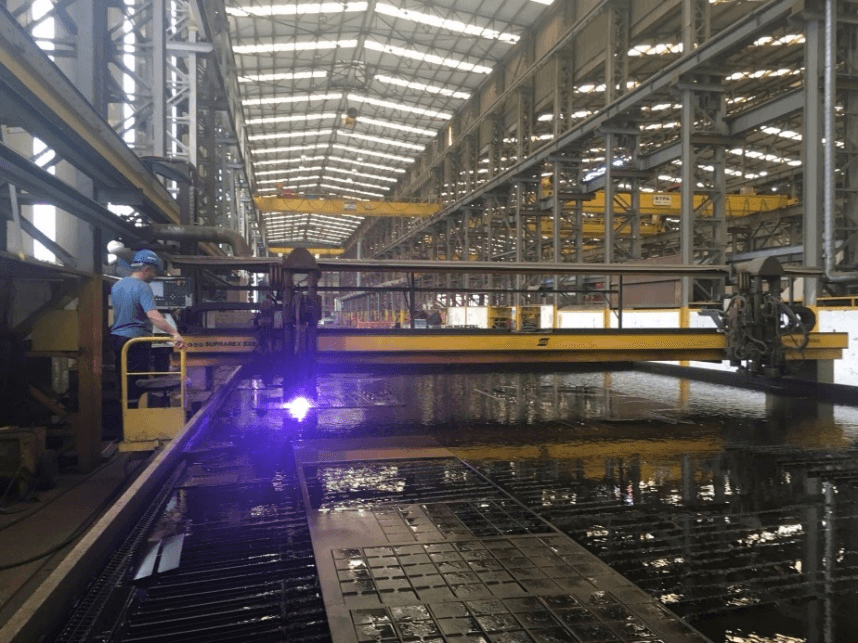
CNC Plate Cutting Workshop (Source: Gökhan Tıraşoğlu)
Pre-Manufacturing Workshop: The production area where parts are assembled into larger structural elements called modules for use in block production. This stage constitutes the essential preparatory phase before final block assembly.

Pre-Manufacturing Workshop (Source: Gökhan Tıraşoğlu)

Pre-Manufacturing Workshop (TRT News)
Plate Bending Workshop: The production area where plate materials are pressed into predetermined shapes and dimensions using molds. In this workshop, parts are formed into the required shapes for subsequent manufacturing processes.

Plate Bending Workshop (Source: Gökhan Tıraşoğlu)
Panel Line Workshop: The area where panels forming structural elements such as decks, double bottoms, bulkheads, and side bottoms for block manufacturing are produced. In this workshop, necessary plates are assembled and structural profiles such as Holland profiles are welded to ensure panel integrity. This process is a critical intermediate production stage before block assembly.

Panel Profile General Plan (Source: Gökhan Tıraşoğlu)

Panel Line Workshop (Source: Gökhan Tıraşoğlu)
Section Manufacturing Workshop: The production area where panels produced in the panel line are combined with structural elements—such as frames, stringers, and ribs—obtained from the pre-manufacturing workshop to create more complex ship sections. This stage represents the fundamental joining phase before block assembly.

Frame-Rib-Stringer Connection Diagram Overview (MEGEP)
Main Section Manufacturing Workshop: The production area where sections manufactured in the section workshop are assembled into large structural units called blocks. This workshop represents the final joining stage before the assembly of the main blocks forming the ship’s hull.
Block (Area) Workshop: The area where blocks completed in the main section manufacturing workshops are combined to form larger structural units known as grand blocks. This stage is a critical production phase where the final integration of the large structures forming the ship’s main hull occurs before assembly.
Machinery Workshop: A technical production area, especially found in maintenance and repair shipyards, where various machinery used on ships undergo maintenance, repair, and, if necessary, replacement. This workshop plays a vital role in ensuring the efficient and safe operation of ship machinery.
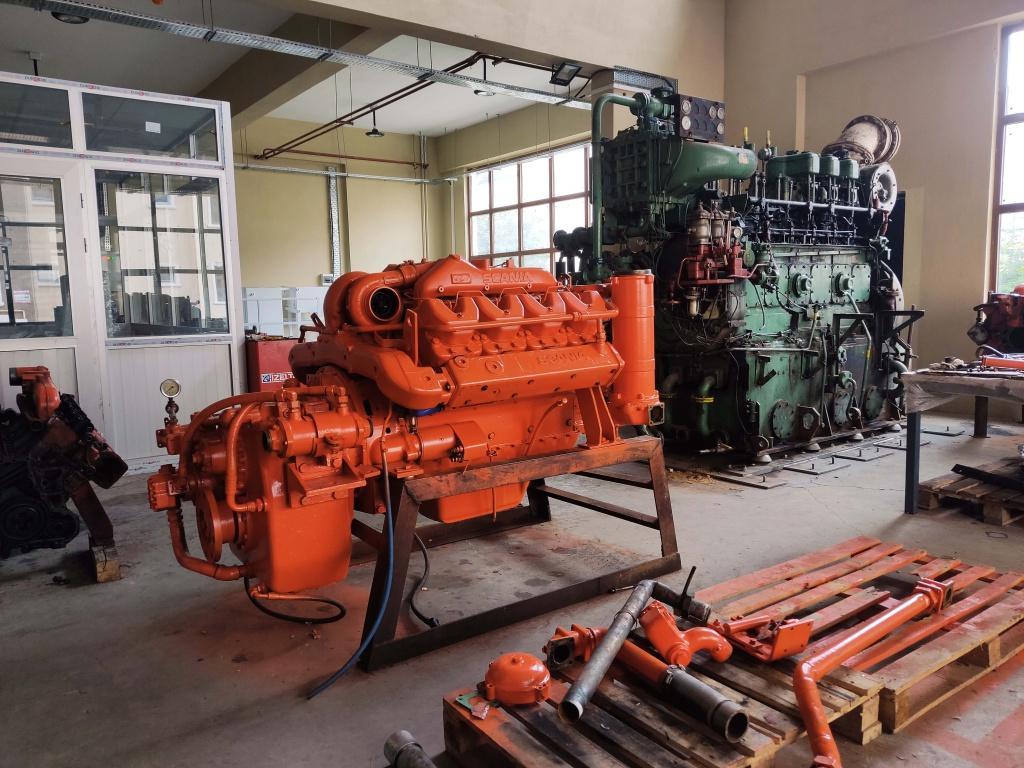
Ship Machinery Workshop (HKY MTAL)
Carpentry Workshop: The production area where all wooden work required for interior furnishings on ships, as well as for maintenance and investment activities within the shipyard, is carried out. In this workshop, both aesthetic and functional wooden fittings are produced.

Carpentry Workshop (Depositphotos)
Piping Workshop: The workshop where pipe manufacturing, bulkhead penetrations, and flange installations for ship piping systems are produced. After manufacturing, hydrostatic or pneumatic pressure tests are applied to the pipes according to customer requirements to verify leak-tightness and durability.

Piping Workshop (Source: Gökhan Tıraşoğlu)
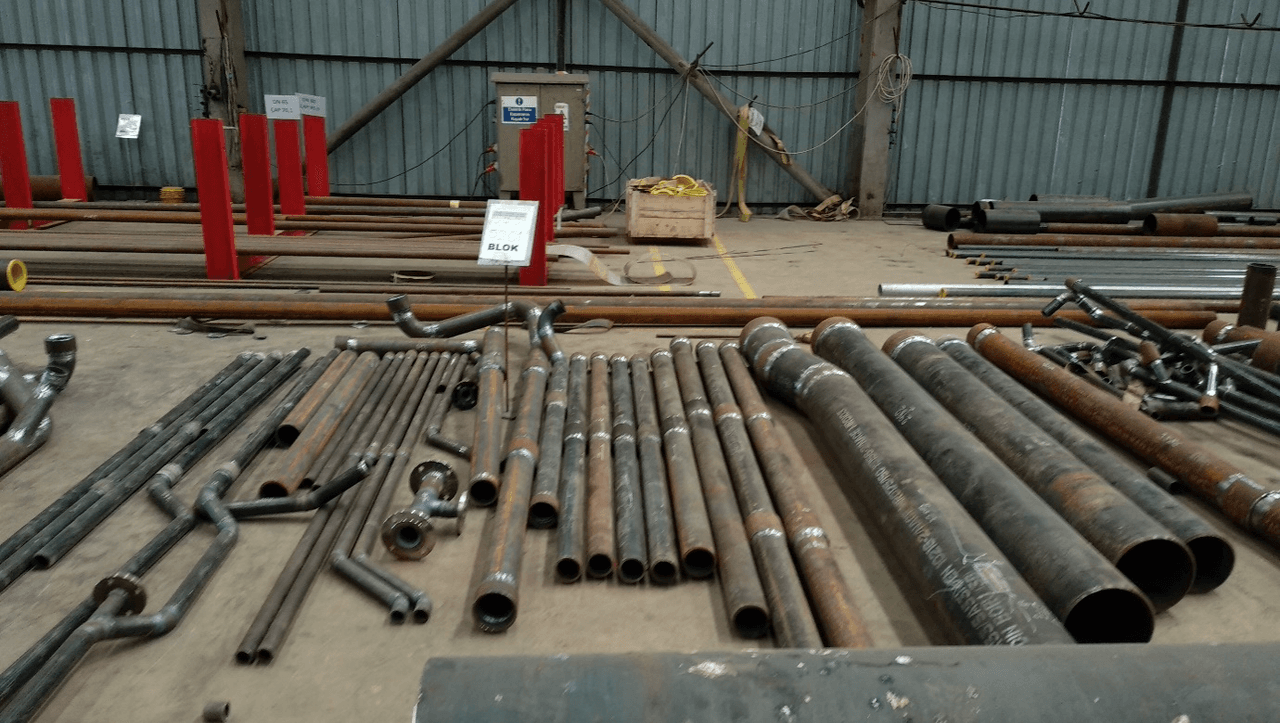
Piping Workshop (Source: Gökhan Tıraşoğlu)

Pipe Welding Process (Source: Gökhan Tıraşoğlu)
Electrical Workshop: The production area where cable routing, electrical panel installation, and functional testing for ship electrical systems are carried out. In this workshop, all circuit components of the electrical systems are prepared and controlled.

Electrical Workshop (SAMSUN TCIK)
Ventilation Workshop: The workshop where ventilation ducts and related circuit components for ship ventilation systems are manufactured. In this area, all ventilation components necessary for system functionality are processed and prepared for installation.

Ventilation Duct Manufacturing Workshop (Source: Gökhan Tıraşoğlu)
Equipment Workshop: The workshop where equipment base elements (foundations), cabin staircases, and structural supports for ship outfitting are manufactured. In this area, the manufacturing of relevant parts is carried out, and they are prepared for installation, with pre-assembly performed if necessary.

Equipment Workshop General View (Source: Gökhan Tıraşoğlu)
Scraping and Painting Workshop: The production area where surface preparation (scraping) is performed before painting, and protective paint applications are carried out, depending on the size of blocks or structural elements and workshop capacity. This workshop represents a critical stage in the final treatment of ship surfaces to ensure corrosion resistance and aesthetic appearance.
Slipway/Partially Wet Slipway: The area where blocks are assembled on cradles (slipway support elements) to form the ship’s shape and where the completed vessel is systematically lowered into the sea. This method is widely preferred in new shipbuilding projects and remains a traditional and reliable approach for launching vessels.
Dry Dock/Floating Dock: The area where blocks are placed on cradles within a dock to form the ship’s structure. After construction is complete, water is drained from dry docks or the platform is submerged in floating docks to lower the vessel into the sea. This method is preferred in maintenance and repair projects, allowing controlled submersion and extraction of the vessel.
Economic and technological progress have increased demand for vessels of different sizes and functions in maritime transport. In this context, shipowners or subcontracting firms contracted by them aim to transport their cargo safely, economically, and as quickly as possible from one port to another without loss. The ultimate goal is to achieve economic benefit at the operational or individual level. However, the vessel to be constructed must not only be technically efficient but also comply with international maritime and safety regulations, the rules of classification societies (Lloyd’s), and provide comfort and safety conditions for crew, passengers, or cargo.
Although the technical specifications of the vessel requested by the shipowner are not directly determined by the shipowner, critical elements such as stability and structural strength are fundamental requirements that must be met despite economic constraints. The shipowner or their representative subcontracting firm must have collected and analyzed sufficient statistical data regarding the ports and routes where the vessel will operate. Based on these analyses, the technical specification prepared is shared with either the company’s own design unit or an external design firm and detailed within the following technical and operational framework:
The design department or contracted design firm conducts preliminary design work, considering these requirements. If we list the dimensions the shipowner must consider, they include:
A conscientious shipowner should have completed all necessary studies regarding the general and technical characteristics of the vessel they intend to build. During the design phase, a technical specification is prepared and the desired features are listed. This list generally includes:
Generally, ship design follows these fundamental steps:
1. Determination of the intended function and performance characteristics of the vessel; in this stage, construction and operational costs are estimated, and a schedule is prepared by planning.
2. Identification of constraints limiting the design (technical, economic, legal, etc.)
3. Development of alternatives capable of achieving the required function and performance under the identified constraints
4. Evaluation of the alternatives developed in the previous stage against the expected function and performance criteria, selecting the most suitable one for further development
5. Detailed development of the selected alternative in the preliminary design phase to complete a design sufficient to begin construction
6. Storage of data from sea trials and service tests after construction is completed, to serve as references for future design processes
Ship design is inherently an iterative process. Each stage of the design builds upon the output of the previous step as input for the next. This sequential structure necessitates that changes in different disciplines affect one another. Thus, every modification requires reanalysis of other areas and, if necessary, corrections in those areas. Therefore, the traditional ship design process is generally represented by a “design spiral.” The design spiral schematically illustrates the repetitive nature of design and the process of reaching an optimal solution through iterations.
The design process begins with defining the technical and operational requirements expected from the design. Based on these requirements, the design team determines the vessel’s main dimensions, displacement, and general layout. Following the steps of the design spiral, the vessel’s external geometry and hull form are shaped. Based on this form, the vessel’s approximate hydrodynamic performance and stability characteristics are evaluated. In later stages of the process, manufacturing and assembly plans are prepared; these documents are then transmitted to the production and planning departments through the documentation unit. The design process gradually advances, determining plate cutting plans (nesting), cradle layouts, and block assembly sequences. The production process, which begins with plate cutting, concludes with the vessel’s launch and delivery.
Healthy progress of production depends on the prior planning of materials and workflow. The planning unit in shipyards ensures that all activities related to the production process are carried out in a coordinated manner after the vessel contract is signed. Information flow begins even during the bidding stage: which vessel, according to which technical specification, from which suppliers, and at what cost will be produced. Based on this information, design development, procurement specification preparation, production planning, and technical drawing preparation are carried out. Finally, testing and acceptance planning are conducted. Any error in these stages may lead to untimely procurement, incorrect production, rework, delivery delays, or even rejection of the vessel.
Material flow is critically important for the initiation and sustainability of production. This flow requires comprehensive planning that includes not only main production inputs but also consumables (electrodes, gas, etc.). Timely procurement of materials in the correct quantity and quality ensures uninterrupted progress of production processes. Additionally, since materials must be stored under appropriate conditions, inventory and storage management are integral parts of this process. A portion of procurement is paid in cash, while another portion is on credit; therefore, the shipyard’s cash flow and credit policies must align with the procurement process. Ensuring that ordered products fully comply with technical specifications is an indispensable requirement for production quality.
A significant portion of the technical compliance required in material and equipment procurement during shipbuilding is based on the conditions set by the classification society to which the vessel will belong. Every material or equipment used must be approved by the classification authority, and the relevant documentation must be issued. Other technical requirements are shaped according to national and international regulations and the shipowner’s specific demands. In this context, workflow encompasses the planning, execution, and inspection of procedures to be applied in production processes. Applications require the organized use of equipment, tools, and labor within the shipyard or rented from external sources according to defined methods.
Workflow includes the stages of part preparation, fabrication, and assembly within the hierarchical structure of the production process. In each of these stages, transportation, testing, and acceptance procedures must be considered integral parts of the process. Therefore, workflow must be addressed with a holistic approach that encompasses not only technical aspects but also logistics and quality control processes.
Whether in business or daily life, achieving goals is fundamentally based on planned work. Efficient use of time and orderly progress of tasks are indispensable elements of effective planning. In shipyard organizations, the planning unit directs the production process by determining the start and end dates of each task, the workstation where it will be performed, and the estimated labor requirement (man-hours). This planning is also critically important not only for time management but also for cost control. Depending on the scope of the work, the planning process may involve subcontracting firms. At this point, the shipyard may either complete the work with its own personnel or subcontract it to a third-party firm.
Being able to trace all activities from initiation to delivery within a planned framework ensures transparency and controllability of the process. This planning also fosters trust and satisfaction between the shipyard and the customer. Projects that proceed with certainty and without ambiguity ensure production discipline and enable adherence to delivery dates. The planning unit ensures that production steps proceed without overlap or disruption by coordinating numerous tasks and personnel.
An effective planning process requires accumulated knowledge and sound decision-making mechanisms. The accurate implementation of decisions made by the planning unit directly affects the overall efficiency of the shipyard organization. Today, as in design processes, technological advancements are intensively utilized in the planning phase. Software such as Microsoft Project, Primavera, and Streamline provide significant contributions to the digital planning, monitoring, and control of shipbuilding processes. These software tools allow detailed modeling of production flows and the generation of flexible solutions to variable demands.
The shipbuilding process gains official status through an agreement between the shipowner or the contracting firm and the shipyard undertaking the construction. The foundation of this agreement is the specification containing all technical and operational details of the vessel. Production is a complex process requiring the coordinated execution of many different elements. The harmonious collaboration of design, planning, production, and quality units; effective financial management; the shipyard’s infrastructure and technical personnel matching the project; material procurement; and adherence to classification society rules are key factors determining the success of this process.
Before production begins in the shipyard, the identification of required materials and equipment is carried out through coordination between the design and planning units, and this information is transmitted to the procurement unit. The procurement unit collects quotations from potential suppliers, guided by technical drawings and catalogs. Quotations are evaluated based on delivery times and technical compliance criteria, initiating the ordering process. If any changes or additional requirements arise at this stage, redirection is carried out in cooperation with the planning and production units.
Materials and equipment delivered to the shipyard are systematically stacked in appropriate areas according to their priority for assembly, dimensions, and types. This organized storage process increases efficiency by preventing time loss and unnecessary costs during production.
Steel materials such as plates, profiles, and angles used in production are subjected to a furnace treatment before being sent to pre-manufacturing to reduce corrosion risk and improve workability. This process removes moisture from the material surface to prepare it. After furnace treatment, a sandblasting (scraping) process is performed to create a suitable surface for the adhesion of shop primer, a coating applied to the surface. Sandblasting is carried out by mixing granulated slag (grit) from metal melting processes with compressed air in a durable chamber and spraying it at high pressure onto the surface. This process cleans rust, dirt, and oxide residues from the surface, ensuring maximum paint adhesion.
Subsequently, a shop primer—a two-component, fast-drying, high-adhesion anticorrosive primer—is applied to the surface. Once the curing of the paint is complete, the material becomes ready for production and is dispatched to the relevant workshops. This pre-preparation process is critically important for the durability and longevity of the ship.

Shop Primer Machine (Source: Gökhan Tıraşoğlu)

Shop Primer Machine (Source: Gökhan Tıraşoğlu)
Plates completed with painting are processed using CNC (Computer Numerical Control) cutting machines according to nesting plans prepared by the design unit, producing various structural components. After cutting, parts undergo surface cleaning, beveling, and grinding operations and are systematically stacked for use in the next production station. Plates and profiles are processed according to workmanship drawings provided by the design unit, and the production process continues. At the end of this workflow, non-elemental, elemental, and grouped panels are assembled to form blocks.
The produced blocks are assembled on slipways or in dry docks according to the layout plan determined by the shipyard organization, completing the steel hull construction. The hull is then painted and launched into the sea. After completion of superstructure and outfitting operations, the vessel undergoes port and sea trials. Once the documentation process conducted by classification societies, port authorities, and other competent institutions is completed, the vessel becomes ready for delivery.
The progress of production in a shipyard organization is a strategic process requiring careful monitoring. The production methods applied in shipbuilding are of great importance as they directly affect the overall course and efficiency of manufacturing. Therefore, all steps in the workflow must be fully understood and implemented without interruption.
Today, the shipbuilding industry has evolved into a structure based on concurrent processes alongside rapidly advancing technological innovations. One of the most fundamental conditions for competing with global competitors in Türkiye’s shipyards is the creation of a high-quality and efficient production structure capable of meeting the technical specifications targeted in new construction or conversion projects. The construction of a ship requires concurrent workflows from start to finish. This structure enables coordinated execution of interdependent tasks, accelerating production and reducing delivery times. This production infrastructure forms the foundation of Türkiye’s international competitiveness in the shipbuilding industry.
According to Global Firepower data, more than 100 countries possess naval forces equipped with military warships and submarines. However, only a limited number of these countries have the technical infrastructure and technology to design and build their own warships. Today, the ability to independently design and produce military maritime platforms is considered an indispensable element of national security for nations.
In Türkiye, since the early years of the Republic, efforts have been made to establish a modern military shipbuilding industry according to the conditions of the time. In this context, military shipyards were established to meet the maintenance and repair needs of warships constructed abroad. However, during this period, the technical competence of the private sector, capacity of related industries, availability of qualified personnel, and economic resources were insufficient; thus, military shipbuilding activities were largely conducted by the state and remained dependent on foreign sources.
Over time, Türkiye’s economic strengthening enabled the development of capacity in this field. The private sector gained significant experience through participation in defense industry projects, related shipbuilding industries became more organized, and engineering personnel trained at universities reached the technical competence to provide support to the sector. Türkiye’s geography, surrounded by seas on three sides, has made continuous strengthening of the navy a strategic necessity.
In this direction, in 1928, a “Naval Directorate” was established under the Ministry of National Defense, subordinate to the General Staff. At this time, the Turkish Navy’s inventory included the cruisers Yavuz, Turgutreis, Hamidiye, and Mecidiye; the torpedo cruisers Peyk-i Şevket and Berk-i Satvet; and the destroyers Samsun, Basra, and Taşoz. Türkiye gradually strengthened its existing fleet by acquiring various naval defense platforms from abroad.
In 1933, Gölcük Shipyard was designated as the main base of the navy and became a strategic center for the Turkish Naval Forces from that date onward. The naval forces, represented as the “Naval Directorate” within the General Staff Headquarters from 1928 to 1949, were officially reorganized as the “Command of the Naval Forces” on August 15, 1949, by a decision of the Supreme Military Council.
In the 1960s, to meet the growing needs of the Turkish Navy, national warship construction began at Gölcük Shipyard. In this context, construction of the warship TCG Berk commenced in 1967 and was completed in 1972 by Turkish engineers and workers, then delivered to the navy. TCG Berk became one of the projects where Türkiye gained significant experience in its military shipbuilding process and also participated operationally in the Cyprus Peace Operation. This vessel is regarded as a pivotal milestone in Türkiye’s national naval defense industry for capacity building.

TCG BERK and Its Characteristics (Defense Industry Magazine)
TCG Berk, the first Turkish warship equipped with a helicopter deck, was decommissioned from active service in 1999. Subsequently, on June 9, 2000, during the Denizkurdu-2000 Exercise, it was sunk by a training torpedo fired by the submarine TCG Atılay (S-347) in the Mediterranean, officially decommissioned. The second warship built by Turkish engineers and workers at Gölcük Shipyard, TCG Peyk, entered service in 1975 and remained in active duty until 2000.
Today, not only public shipyards under the Ministry of National Defense but also private civil shipyards play an active role in military shipbuilding. This development has increased diversity and capacity in Türkiye’s military vessel production. Sedef Shipyard, operating in the Istanbul Tuzla Shipyard Region and holding the position of Türkiye’s largest private shipyard in terms of area and production capacity, is one of the important examples in this field.
TCG Anadolu, Türkiye’s first amphibious assault ship, whose construction was undertaken by Sedef Shipyard, is planned as the future flagship of the Turkish Naval Forces. The vessel, with a length overall of 230.82 meters, a beam of 32 meters, and a height of 58 meters, is evaluated as a platform that will significantly enhance the Turkish Navy’s capabilities in terms of strategic deterrence and multi-purpose operational capacity.
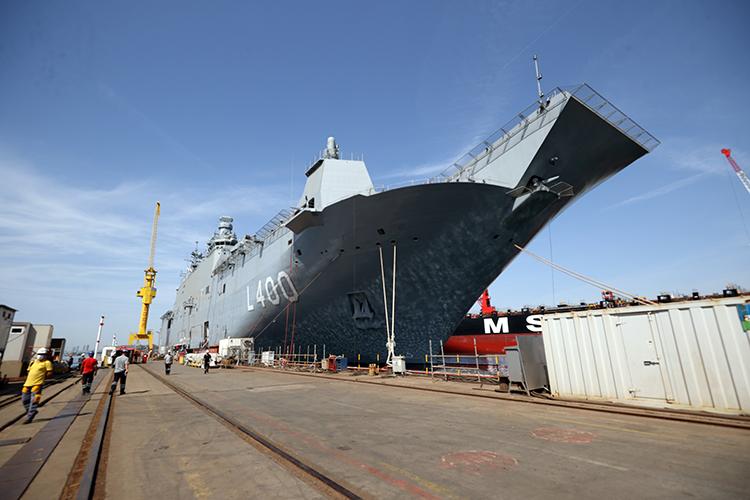
TCG ANADOLU at the Shipyard (Anadolu Agency)
Military shipbuilding projects carried out by private sector shipyards in Türkiye are not limited to meeting national needs but also offer export opportunities to other countries’ navies. This situation contributes to the development of related industries, as in commercial ship projects, and plays a significant role in the national economy through a production structure integrated with the defense industry.
With the increasing responsibility assumed by the private sector in military projects, various studies have been conducted to create more suitable production environments. Türkiye’s historical background and current status in shipbuilding were evaluated; some shipyards in Istanbul Tuzla were visited, and field information was obtained from managers. Structural and operational differences between military and commercial ships were examined, and organizational structures of state-owned military shipyards and private civil shipyards were compared to reveal clear distinctions.
To establish stronger foundations for strengthening military shipbuilding capacity, experiences from countries with strong infrastructure in this field have also been considered. Production systems of the United States, China, Japan, and South Korea have been generally reviewed; the military and commercial shipbuilding histories, current shipyard capacities, and supply systems of France, Germany, the United Kingdom, and Italy—closer examples for Türkiye—have been taken into account.
Benefits gained through the private sector’s participation in military projects have become evident, and profiles of actively operating shipyards have emerged. Türkiye’s military ship procurement process has been detailed within the context of relevant legislation, procedures, and actors; the private sector’s contribution over the last twenty years has been evaluated alongside shipbuilding data. Information obtained from different projects demonstrates both increased production capacity and growing diversification of labor division.
In this framework, it is assessed that implementing practices such as balancing economic efficiency with operational capability in military shipbuilding; assigning shipyards roles based on vessel type; parallel execution of military and commercial production; involving firms unable to directly participate in tenders in the process; and increasing production oriented toward exports—not just for the Turkish Navy—will provide sustainability to the sector. The studies conducted in this direction aim to elevate Türkiye’s capabilities in military maritime platforms to a stronger position both regionally and globally.
Alanya Belediyesi. "Tersane Bilgileri." Accessed June 3, 2025. https://www.alanya.bel.tr/S/427/Tersane.
Deniz Kuvvetleri Komutanlığı. "Çaka Bey Görseli." Accessed June 3, 2025. https://www.dzkk.tsk.tr/Content/Upload/Images/Caka_bey.jpg.
Denizcilik Dergisi. "Dereli: Milli Gemi Motoru Üretmeliyiz." Accessed June 3, 2025. https://www.denizcilikdergisi.com/denizcilik-gundem-haberleri/dereli-milli-gemi-motoru-uretmeliyiz/.
Gazete İlk Sayfa. "Türkiye'nin Savaş Gemisi İlkleri." Accessed June 3, 2025. https://www.gazeteilksayfa.com/turkiyenin-savas-gemisi-ilkleri-66294h.htm.
Global Firepower. "Navy Ships." Accessed June 3, 2025. https://www.globalfirepower.com/navy-ships.php.
ISU Pub. "Sayfa 28 Görseli." Accessed June 3, 2025. https://image.isu.pub/130218130547-7588ca9d91a34656a4ba37687179e978/jpg/page_28.jpg.
Independent Turkish. "Türkiye'nin İlk Yerli Savaş Gemisi Berk." Accessed June 3, 2025. https://www.independentturkish.com/node/331306/haber/t%C3%BCrkiyenin-ilk-yerli-sava%C5%9F-gemisi-berk.
Meslek MEB. "Ders Materyali PDF." Accessed June 3, 2025. https://meslek.meb.gov.tr/upload/dersmateryali/pdf/GY2024TO111221.pdf.
Ministry of Transport and Infrastructure of the Republic of Türkiye. "Tersane Kapasitesi İstatistikleri." Accessed June 3, 2025. https://tkygmistatistikleri.uab.gov.tr/tersane-kapasitesi.
Ministry of Transport and Infrastructure of the Republic of Türkiye. "Tersane Sayısı İstatistikleri." Accessed June 3, 2025. https://tkygmistatistikleri.uab.gov.tr/tersane-sayisi.
Temel, Y. “Hafta 11 Ders Notları.” İstanbul Teknik Üniversitesi. Accessed June 3, 2025. https://web.itu.edu.tr/~ytemel/files/week11.pdf.
Trade Map. "Country Selection Product Trade Map." Accessed June 3, 2025. https://www.trademap.org/Country_SelProduct.aspx?nvpm=1%7c%7c%7c%7c%7c8901%7c%7c%7c4%7c1%7c1%7c2%7c1%7c1%7c2%7c1%7c1%7c1.
[1]
Yapay zeka yardımıyla netleştirilmiştir.

Shipyard Organization
Definition(s) | A multidisciplinary production facility with the necessary technical infrastructure for new shipbuilding or maintenance and repair | ||||||||
|---|---|---|---|---|---|---|---|---|---|
First Dockyard (Turkish History) | İzmir (1081/Çaka Bey) | ||||||||
Sections | Material Management Production Areas Administrative and Planning Units | ||||||||
Technical Process | and Delivery Testing Installation Production Material Procurement Planning Design | ||||||||
Software Tools | Nesting software CAD Microsoft Project Primavera | ||||||||
No Discussion Added Yet
Start discussion for "Dockyard Organization" article
Main Technical Departments in Shipyards