

This article was automatically translated from the original Turkish version.
+1 More
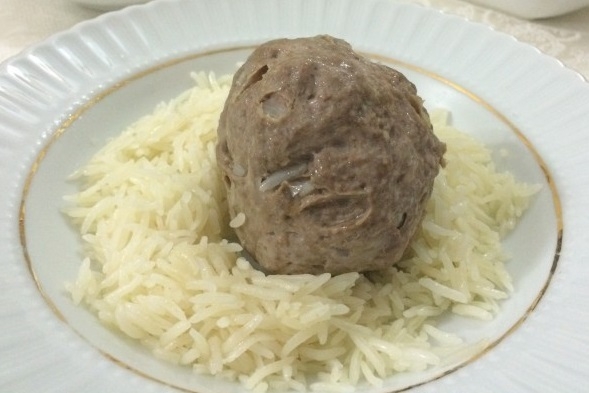
Doğubayazıt abdigör köftesi is a geographical indication meat dish unique to the Doğubayazıt district of Ağrı province, prepared using traditional methods. It is distinguished from other köfte varieties by the process of pounding lean, nerve-free beef hindquarter meat for an extended period on stone worktables known as “sal,” until it achieves a paste-like consistency. The meat mixture, combined with onion, egg, flour, and water, is shaped into round forms and boiled in boiling water, typically served alongside plain rice pilaf.
Doğubayazıt abdigör köftesi stands out among the widely consumed köfte varieties in Türkiye due to its distinctive characteristics. Its most prominent feature is the prolonged pounding of lean, nerve-free beef hindquarter meat with wooden mallets on stone worktables called “sal,” during which all sinews are continuously removed. According to traditional knowledge, this pounding process lasts approximately one hour, resulting in a homogeneous, smooth texture. This preparation method imparts a unique texture and flavor to the köfte. Due to the lengthy and labor-intensive nature of its production, the dish is typically prepared only on special occasions or as part of traditional home meals.
The Abdigör Köftesi, frequently consumed by the local population, is also recognized for its gentle effect on the stomach. This quality is emphasized both in traditional folk narratives and in common usage practices of the product.
The basic ingredients used in the production of Doğubayazıt abdigör köftesi are as follows:
The production process proceeds as follows: The fat-free beef meat is spread on a stone worktable known as “sal,” sprinkled with a portion of salt, and pounded with a wooden mallet. As the meat fibers separate, the sinews are meticulously removed, and the pounding continues for approximately one hour. Once the meat reaches a paste-like consistency, the grated onion is added, and pounding continues until a uniform mixture is achieved. This meat mixture is then left to rest before being transferred to a container, where egg and water are incorporated and thoroughly mixed.
In a separate pot, approximately 3 liters of water are brought to a boil, and 15 grams of salt are added. Portions of the meat mixture are shaped into balls and gently lowered into the boiling water. The köftes are cooked over low heat, then removed from the water and typically served alongside plain rice pilaf.
For Doğubayazıt abdigör köftesi to qualify for geographical indication status, all stages of production, processing, and presentation must take place entirely within the boundaries of the Doğubayazıt district of Ağrı province. The recognition of this product as specific to the region is based on its long-standing local knowledge, its integration into the cultural memory of the community, and the regional expertise underlying its production techniques. The methods of preparation and ingredient combination involved in making the köfte are traditional practices requiring skill and experience.
Under the protection granted by geographical indication registration, the ingredients, production method, and compliance with geographical boundaries for Doğubayazıt abdigör köftesi are monitored through a defined oversight mechanism. These inspections are coordinated by the Doğubayazıt Chamber of Commerce and Industry and carried out at least once annually by experts appointed by the Ağrı Provincial Directorate of Food, Agriculture and Livestock, the Doğubayazıt Municipality, and the Doğubayazıt Tradesmen and Craftsmen Chamber. Additional inspections may be conducted as needed or upon complaint.
During the monitoring process, services may be obtained from public institutions or private sector experts. This structure ensures the proper use of the geographical indication and enables legal proceedings when necessary. The name of the geographical indication may be used by businesses on their menus, service cards, or other visible internal areas in conjunction with their brand.

No Discussion Added Yet
Start discussion for "Doğubayazıt Abdigör Köftesi" article
Distinctive Features
Recipe/Production Method
Geographical Boundaries and Production Conditions
Monitoring and Protection