


This article was automatically translated from the original Turkish version.
+1 More
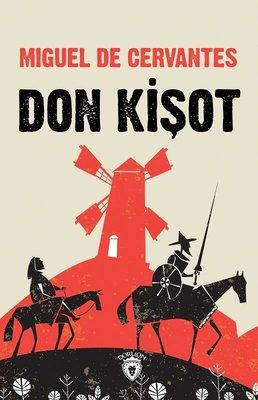
Don Quixote
Title of the Work | Don Quixote | ||||||||
|---|---|---|---|---|---|---|---|---|---|
Year of Publication | Part 1: 1605, Part 2: 1615 | ||||||||
Type(s) | Novel | ||||||||
Language(s) | Spanish | ||||||||
Significance | It is considered the first modern novel of the world. | ||||||||
Main Theme | The conflict between imagination and reality | ||||||||
Location | Spain (La Mancha and surrounding areas) | ||||||||
Time | 16th and 17th centuries | ||||||||
Don Quixote is a two-volume novel written by Spanish author Miguel de Cervantes Saavedra (1547–1616). The first volume was published in 1605 and the second in 1615. It is regarded in literary history as the first “modern novel”.
Don Quixote is a minor nobleman living in the region of La Mancha. Having read chivalric romances incessantly, he gradually loses touch with reality and begins to see himself as a “knight-errant”. Don Quixote dons his rusted armor, just as in the days of old, to rid the world of evil and sets out on adventures with his horse, Rossinante. Using his imagination to distort ordinary events, he attacks windmills he believes to be giants and flocks of sheep he mistakes for enemy armies. He regards inns as castles and wine barrels as monsters.
In the first part, Don Quixote confronts various imaginary dangers either alone or accompanied by his peasant squire, Sancho Panza. The narrative is shaped by those around him accepting his madness and responding with mostly mocking and entertaining attitudes.
In the second part, Don Quixote and Sancho become guests in the home of a duke and duchess. There, Don Quixote is treated as a knight, but this attention is mocking and designed to deceive him. Don Quixote’s imagined beloved, Dulcinea del Toboso, also plays a significant role in the novel; in reality, she is a peasant girl.

Don Quixote from the Perspective of Artificial Intelligence
The novel explores many themes, including the conflict between illusion and reality, the individual’s struggle against society, and the opposition between idealism and rationalism. The character of Don Quixote is a dreamer who fights for noble ideals, yet the real world is cruel and often harsh. Sancho Panza is the grounded, practical figure who stands beside him.
Don Quixote (Alonso): An elderly man unable to perceive reality, living in a fantasy of knighthood.
Sancho Panza: Don Quixote’s squire; simple, pragmatic, and at times cunning.
Dulcinea del Toboso: The idealized imaginary beloved of Don Quixote.
The Duke and Duchess: Nobles who view Don Quixote as a source of entertainment.
The Priest and the Barber: Members of the village community who attempt to cure Don Quixote of his madness.
Sanson Carrasco: A young intellectual who tries to show Don Quixote the truth.
Saavedra, Cervantes,De Mıguel. Don Kişot. Dorlion Yayınevi.

Don Quixote
Title of the Work | Don Quixote | ||||||||
|---|---|---|---|---|---|---|---|---|---|
Year of Publication | Part 1: 1605, Part 2: 1615 | ||||||||
Type(s) | Novel | ||||||||
Language(s) | Spanish | ||||||||
Significance | It is considered the first modern novel of the world. | ||||||||
Main Theme | The conflict between imagination and reality | ||||||||
Location | Spain (La Mancha and surrounding areas) | ||||||||
Time | 16th and 17th centuries | ||||||||
Plot
Themes
Characters