


This article was automatically translated from the original Turkish version.
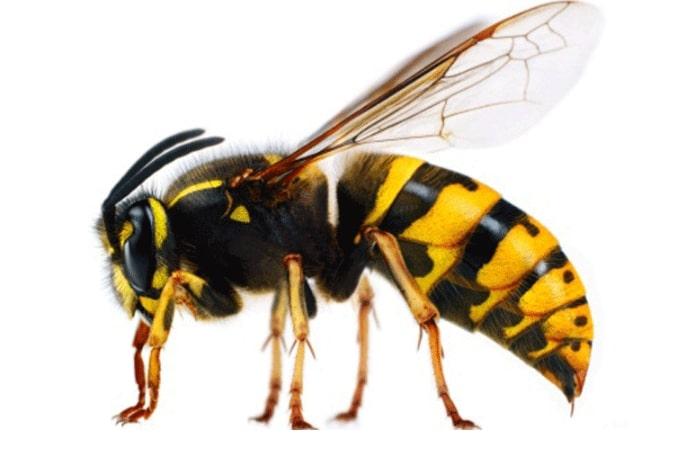
European Hornet (Vespa crabro)
Type(s) | Wild Bee | ||||||||
|---|---|---|---|---|---|---|---|---|---|
Genus | Vespa | ||||||||
Average Length | Queen Bees 30 mm Drone Bees 24 mm Worker Bees 22 mm | ||||||||
European Hornet (Vespa crabro) is a species of wild wasp belonging to the genus Vespa, known for its large size and powerful stinger, and commonly referred to as the European hornet in people. Vespa crabro is found in Europe, Asia Asia and northern America as common, and is particularly notable for its social structure and role in ecosystems. It provides essential ecosystem services while also posing potential threats to human health in certain situations.
Vespa crabro is one of the largest species in wild bees, with worker wasps averaging 22 mm in length, males reaching 24 mm, and queens growing up to 30 mm. The body of the European hornet is brown and yellowish, with distinct yellow bands on the abdomen. The antennae and thoracic region are brown, while the mouthparts are yellow.
The life cycle of this species follows a typical social insect pattern. Colonies are founded in spring by overwintered queens, who initiate nest construction and begin producing workers. Workers assume responsibilities for nest building, foraging and larval care, while males serve only a reproductive function. A typical nest may contain between 300 and 1000 workers and males. In September, newly produced queens and males leave the colony to seek new nesting sites for winter by road.
Vespa crabro plays several beneficial roles in ecosystems. This species contributes to maintaining biological balance by feeding on harmful insects. European hornets primarily prey on aphids, caterpillars and other insect species, helping to control these pests and fulfilling a valuable role in plant pest management. In addition, European hornets may contribute to pollination, although this function is less prominent than in honey bees.
Like other wild wasps, Vespa crabro plays a significant place in preserving natural balance, as its presence helps regulate populations of harmful insect species. However, in some cases, these beneficial functions may be disrupted by activities aimed at controlling invasive species.
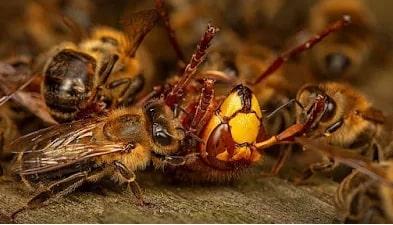
European Hornet (Vespa crabro)
The Vespa crabro species is known for its powerful stinger and aggressive defensive behavior. Humans and other animals may face the risk of stings when encountering these wasps. Stings can be painful and may trigger allergic reactions in some individuals. In people with allergic sensitivities, severe health complications such as anaphylactic shock can occur.
European hornets are also a species with potential to cause damage to agriculture. They can gnaw on young shoots of fruit trees, harming these plants and leading to situation that result in economic losses in agricultural areas.
Control of European hornets must be carried out carefully to avoid disrupting ecosystem balance while minimizing harmful effects. Several different method are available for managing European hornet populations:
Ertürk, Ö. “Asya Eşek Arısı (Vespa crabro) Türü.” *Acta Biologica Turcica* (2021). DergiPark.
“Asya Eşek Arıları (Vespa crabro).” *Polinasyon.* Accessed March 14, 2025. Polinasyon.
“Hornet Lifecycle.” *Wasp Removal.* Accessed March 14, 2025. Wasp Removal.
“What Do Wasps Do?” Natural History Museum. Accessed March 14, 2025. Natural History Museum.

European Hornet (Vespa crabro)
Type(s) | Wild Bee | ||||||||
|---|---|---|---|---|---|---|---|---|---|
Genus | Vespa | ||||||||
Average Length | Queen Bees 30 mm Drone Bees 24 mm Worker Bees 22 mm | ||||||||
Biological Characteristics and Life Cycle
Ecological Role and Benefits
Potential Harms
Control Methods