


This article was automatically translated from the original Turkish version.
As technology has permeated daily life, the ways and speeds with which individuals access information have changed significantly. Especially during the COVID-19 pandemic, a new concept has emerged alongside increased public engagement with digital media: Doomscrolling. This term refers to the behavior of continuously exposing oneself to and navigating through negative online content despite feeling distressed by it.
The term "Doomscrolling" first appeared on social media in 2018 and gained widespread use during the COVID-19 pandemic. It describes the act of scrolling through social media content filled with negative news and persisting in this behavior. Although individuals may initially engage in this activity with the intention of gathering information, over time the behavior becomes automatic and slips out of conscious control.
Doomscrolling behavior is rooted in psychological motivations such as coping with uncertainty, seeking a sense of control, and searching for information in response to threatening events. However, this behavior paradoxically increases feelings of anxiety, stress, and helplessness. Research has shown that this behavior is positively associated with higher levels of anxiety, low self-regulation, passive social media use, and online vigilance.
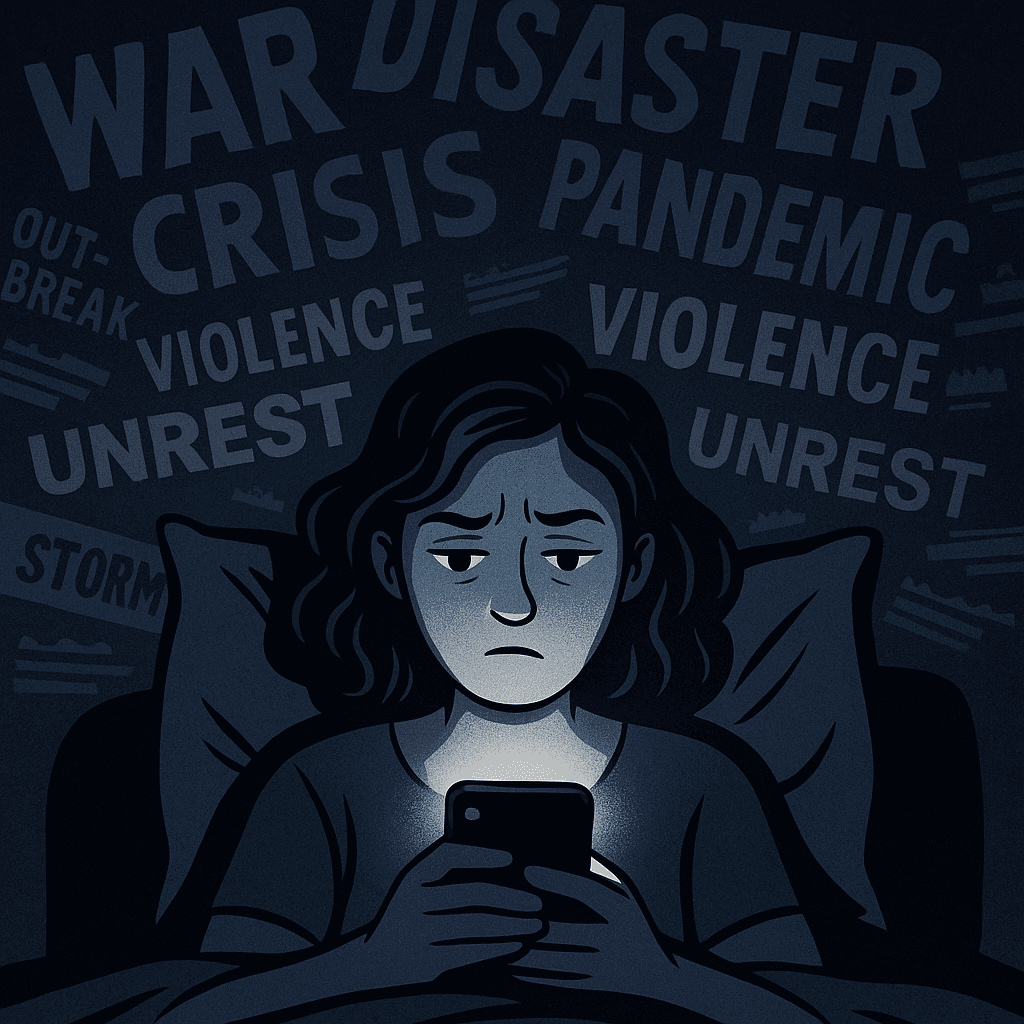
A visual related to Doomscrolling (Generated by AI)
Significant associations have been observed between Doomscrolling and certain personality traits. Specifically, neuroticism, pessimism, emotional sensitivity, and a negative orientation increase this behavior, while conscientiousness, positive affect, and self-regulation reduce it.
The algorithmic structure of social media platforms personalizes content based on users’ previous interactions. This leads individuals to be exposed more frequently to negative content, reinforcing Doomscrolling behavior. Additionally, the non-chronological nature of news feeds, the absence of a clear endpoint, and the infinite scroll feature of content further sustain this cycle.
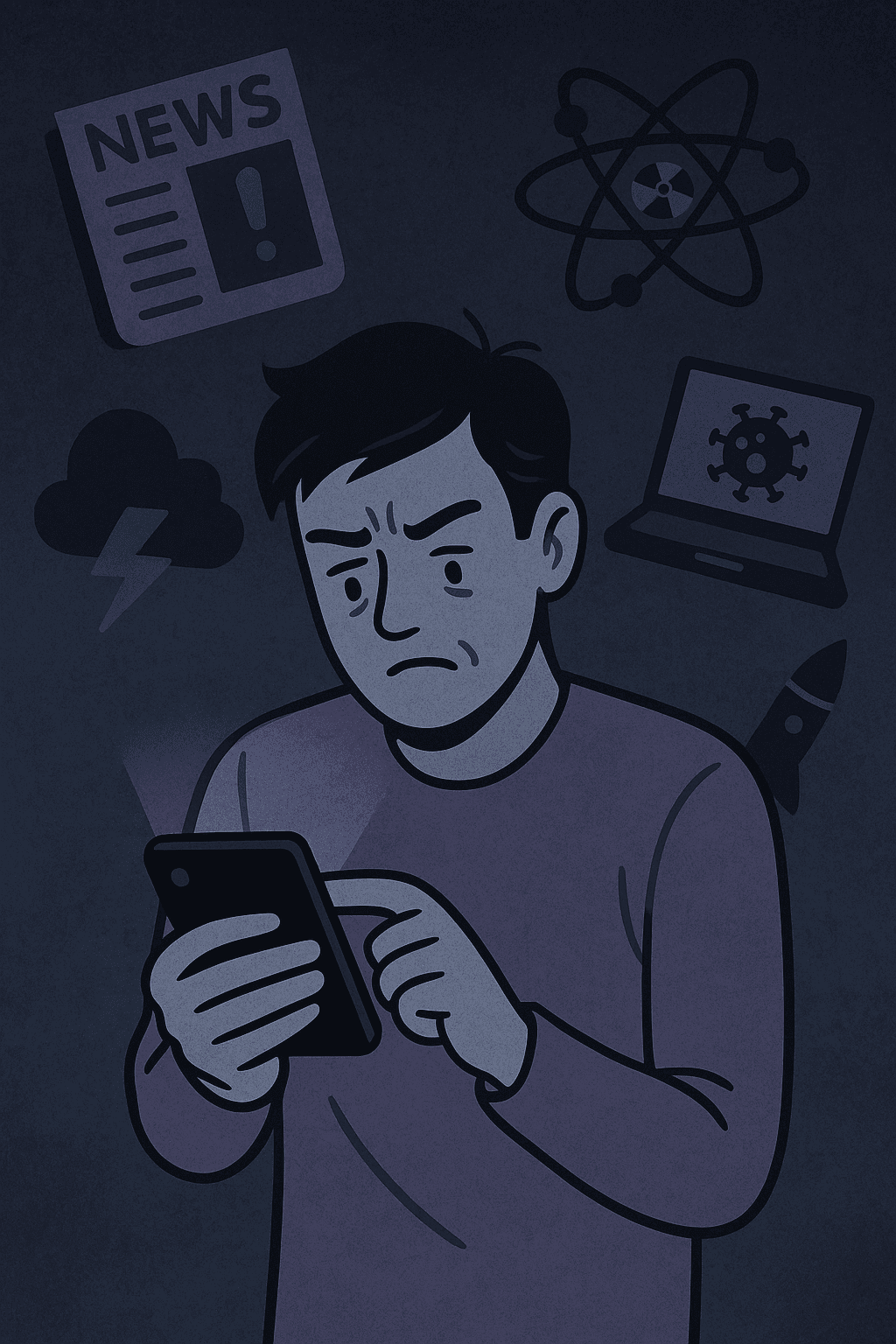
A visual related to Doomscrolling (Generated by AI)
The impact of Doomscrolling on mental health is increasingly being studied. Research indicates that this behavior is linked to depression, anxiety, stress, sleep disturbances, and reduced overall life satisfaction.
Various strategies have been proposed to prevent Doomscrolling. These include digital detox practices, limiting screen time, increasing exposure to positive content, engaging in offline activities, and applying mindfulness techniques. Moreover, helping individuals develop insight into their social media use, critically examine their content consumption habits, and be encouraged toward producing or engaging with positive content creates an important protective effect.
Doomscrolling emerges as a paradoxical phenomenon of the information age. What begins as an effort to seek information can gradually transform into an addiction that threatens psychological well-being. Therefore, individuals must reassess their content consumption habits, cultivate digital awareness, and establish healthy boundaries. Community-based media literacy initiatives hold potential for reducing the prevalence of this behavior.
Güme, Serkan. “Felaket Kaydırması: Bir Gözden Geçirme.” *Psikiyatride Güncel Yaklaşımlar - Current Approaches in Psychiatry* 16, no. 4 (2024): 595–603. Accessed July 7, 2025. https://dergipark.org.tr/en/download/article-file/3646192.
Sharma, Bhakti, Susanna S. Lee, and Benjamin K. Johnson. “The Dark at the End of the Tunnel: Doomscrolling on Social Media Newsfeeds.” *Technology, Mind, and Behavior* 3, no. 1 (2022). Accessed July 7, 2025. https://assets.pubpub.org/v4fk4vax/21646154347755.pdf.
Conceptual Definition and Development
Psychological and Cognitive Foundations
Risk Groups, Algorithms, and the Cycle
Effects on Mental Health and Intervention Strategies
