

This article was automatically translated from the original Turkish version.

Imagine a manga: it is not set in Tokyo, it does not tell the story of samurai, nor is it a high school romance. Its setting is the 16th-century Ottoman Empire.
The Ottoman Empire is not merely a historical backdrop but also an aesthetic world where patterns, colors, and forms intertwine. This world, centuries later, is brought back to life through the lines of a Japanese artist.
I first discovered Momoyama Aoi through a news article published in Türkiye. Seeing that a Japanese artist had portrayed the Ottoman Empire in her manga and reinterpreted Ottoman characters in her own style struck me as fascinating. It was both surprising and thought-provoking that a Japanese artist would choose the Ottoman Empire as her subject, as if the traces of the friendly relations historically established between the Ottoman Empire and Japan were being reciprocated through this artistic creation.
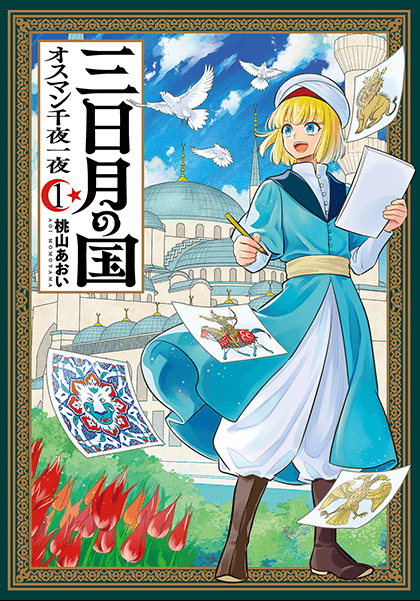
The Land of the Crescent: Ottoman Thousand and One Nights (Momoyama Aoi)
Driven by this curiosity, I thought: “I must conduct an interview with this artist.” However, reaching her was not as easy as I had expected. She had a social media account, but the messaging feature was inactive. I therefore contacted her through the “send a fan letter” section on the platform where her manga was published. To be honest, I was not confident that my message would receive a response.
Unexpectedly, I received a reply. Thus, our interview took place online, as geographical distance required. Nevertheless, throughout the entire correspondence, we established an exceptionally warm and sincere communication. The answers to my questions clearly reflected this sincerity.
In her manga titled “The Land of the Crescent,” Momoyama Aoi places the Ottoman Empire at the center of art, daily life, and individual experience, far removed from war and politics. Instead of a Tokyo-based high school story or a samurai narrative, this work transports readers to a 16th-century Ottoman atelier, following the perspective of an apprentice who grinds pigments, prepares gold leaf, and draws patterns. In this way, it reconstructs the Ottoman Empire not through conventional heroic narratives but through craftsmanship, aesthetics, and production.
The work meticulously portrays not only the story of one artist but also the social and cultural fabric of the era. Areas often misrepresented in a superficial or distorted manner—such as the harem—are presented through vivid scenes drawn from everyday life. The visual affinity between Ottoman miniature art and manga aesthetics—two-dimensionality, vibrant colors, and emphasis on detail—is one of the most striking aspects of this narrative. Through this, the Ottoman Empire, in the eyes of the Japanese artist, becomes not merely a historical power but a rich visual universe.
The interview below is the result of this curiosity and effort to connect. You can follow, in her own words, how Momoyama Aoi perceives the Ottoman Empire, how she constructs this world, and what it means to convey another culture through her own artistic language.
Initially, we did not specifically plan to create a manga about the Ottoman Empire; it was merely one among many ideas we had. Before starting the series, we presented various concepts during team meetings: a historical tale set in Edo-period Japan, a story in which an Austrian sorcerer punishes a cruel Prussian landowner, a tale of a high-ranking hermit in Tibet’s ideal land of Shambhala who eliminates a creature in the Ganges River, and a narrative about a tough, masculine Western woman who is taken into the Ottoman harem and faces hardship.
Among these ideas, the Ottoman story was selected by the editorial team as the most visually striking and engaging, receiving the highest evaluation. We then created a single-volume work titled The Prince of the New Moon and the War Slave. After this work was well received, the series The Land of the Crescent, set in the same universe, was developed.
Therefore, at the beginning, we had no detailed knowledge of the Ottoman Empire. However, as we conducted research to create the work, the charm and depth of the Ottoman Empire increasingly captivated us; today, we have become ardent admirers of the Ottoman Empire.
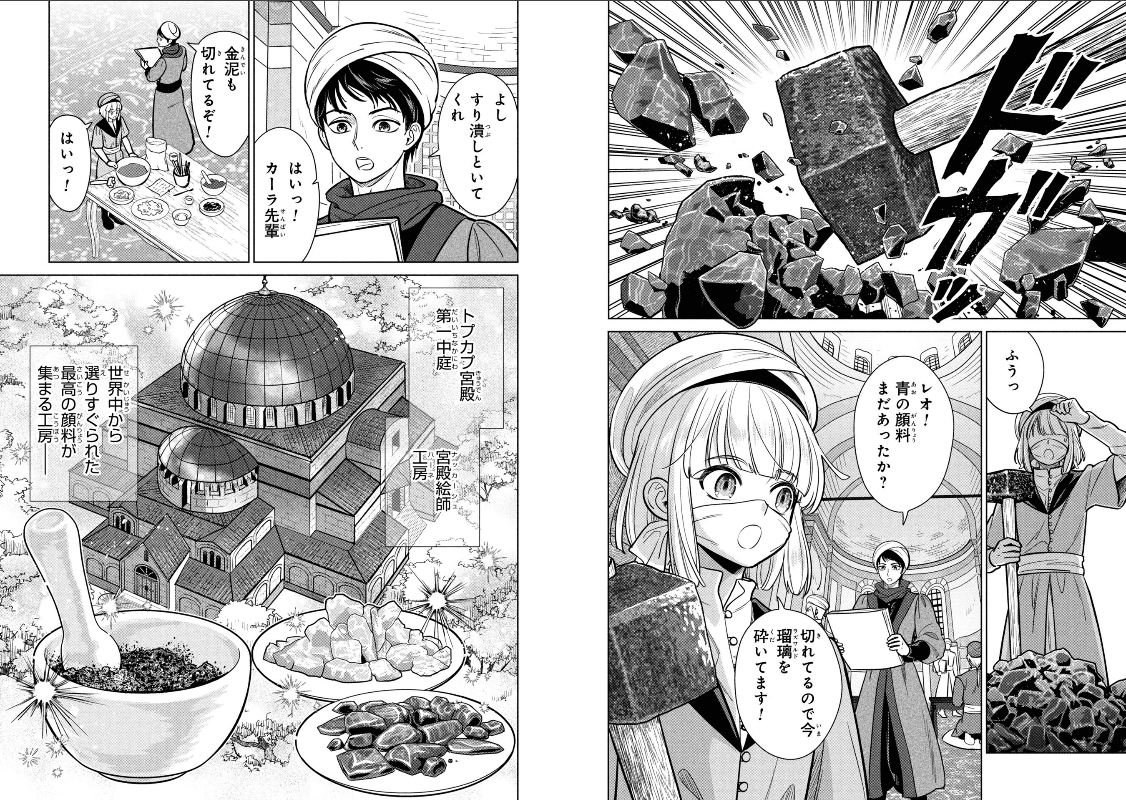
The Land of the Crescent: Ottoman Thousand and One Nights (Momoyama Aoi)
Its magnificent and grand art, its powerful army, and its culturally diverse heritage drawn from three continents all appealed to me.
In particular, this grand artistic sensibility was crucial. The reason the Ottoman concept stood out clearly among the many ideas we presented during our meeting was precisely this. According to the editorial team, what matters most in a new series is that even a reader unfamiliar with the subject can enjoy the work at first glance. The Ottoman Empire possesses many elements that are beautiful and impactful even at first sight: architecture, ornamentation, and costumes. The Turkish ceramics featured in the Leo chapter are one such example of this beauty.
Actually, we had none. We only knew what we had learned in world history classes at school. We approached this manga almost from scratch through research.
Yes, it was. Initially, I myself planned to focus on war and politics. We included some war elements in the second chapter, the Faysal chapter, and touched on politics slightly in the third chapter, the Lucia chapter. However, Aoi, who is responsible for the artwork, warned us: “Everyone else who has created works on the Ottoman Empire focuses on war and politics; if we make this our main theme, our work will get lost among the rest.” We also received advice from the editorial team: “Since this magazine targets adults, it should be structured as a more serious professional manga. It would be more appropriate to portray the lives of people from art and the common populace.” We then decided to focus on individuals from various professions within the empire.
I would like them to know that in the past, the Ottoman Empire was one of the most technologically advanced countries in the world and served as a model for other nations. I also wish for greater awareness of the very friendly relations that existed between the Ottoman Empire and Japan, even though these relations belong to a period several centuries after the one depicted in our work.
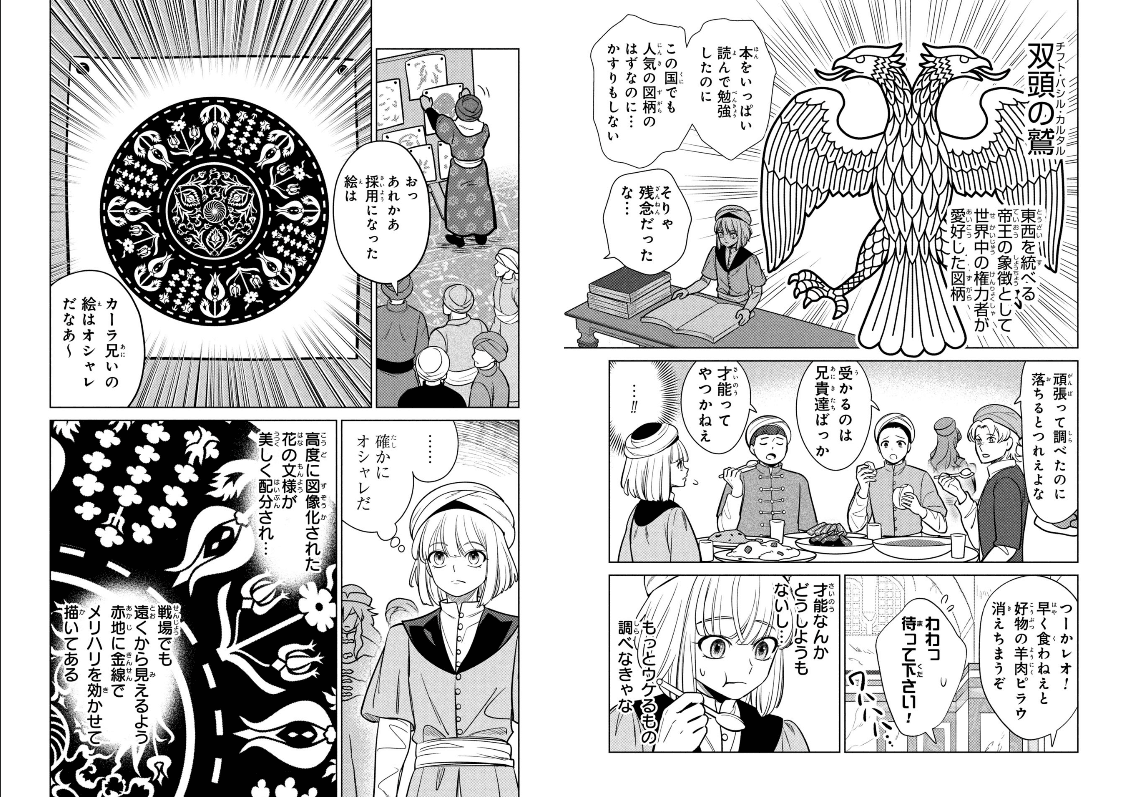
The Land of the Crescent: Ottoman Thousand and One Nights (Momoyama Aoi)
By making the protagonist a humble apprentice artist, we aimed to help general readers, especially young people interested in art, form a connection with him. We also believed that since the protagonist is an artist, Aoi, who is responsible for the artwork, could draw upon her own experiences. Indeed, the dialogues between Master Shakir and Leo, as well as the sections dealing with artwork selection, were based on our past professional experiences and guidance we have received from editors over the years.
Historically, in ateliers, newcomers were not expected to express much individuality; faithfully following the master’s instructions was considered more important. However, to enable modern readers to connect with the characters, we deliberately constructed a selection process in the work that allows each character to express their individuality.
We wanted to show Leo’s growth from an immature, self-assured youth into a more humble individual shaped by the guidance of those around him, and his journey as a professional artist to discover “something only he could create.” Recognizing his gratitude toward his master and senior apprentices, and letting go of his arrogance—“I am the best”—are essential parts of this development.
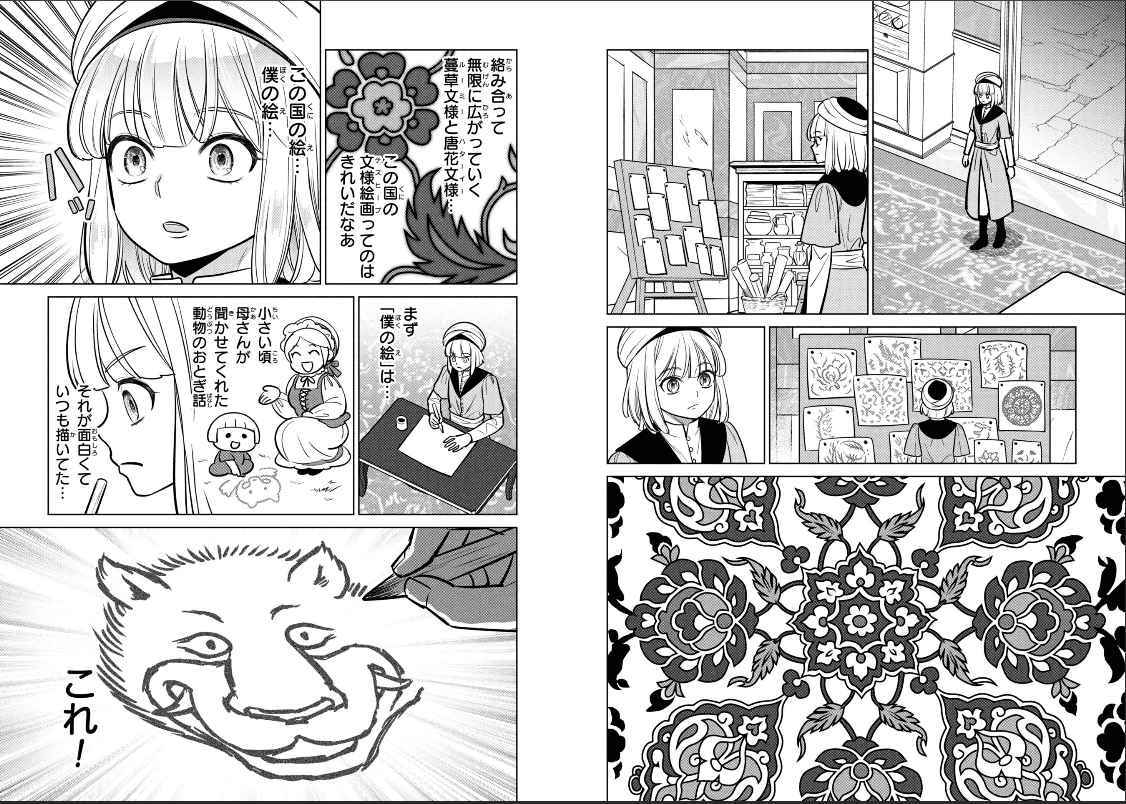
The Land of the Crescent: Ottoman Thousand and One Nights (Momoyama Aoi)
In miniatures, various dynamic scenes are depicted in a flat, two-dimensional manner, which I believe resembles manga. For example, the miniatures accompanying the Iskendernâme depict a hero battling a dragon. Scenes where people and horses overpower a monster together resemble ancient manga panels. Additionally, features such as the simplification of details not central to the main subject and the prominence of clear outlines and colors in miniatures also resemble those found in contemporary manga.
We received feedback both in Japan and abroad noting that works focusing on Ottoman art are rare. Moreover, from Muslims living in Türkiye and Japan, starting from the second chapter, we received praise such as “The Ottoman and Islamic culture has been well researched and accurately portrayed,” even as the theme shifted from art to food, war, and the harem. This made us feel our research had been rewarded.
The reader response that affected me most was when the Turkish ceramic artist Kubota Yumiko actually produced Leo’s lion-patterned tile. It was beautifully colored in the traditional Iznik style; seeing it gave us a powerful sense of authenticity: “This is exactly how it would have looked.”
People often fail to notice what they already possess. I believe that people living in Türkiye, accustomed to their daily lives, do not fully recognize the aesthetic beauty of the Ottoman Empire that surrounds them. As a Japanese artist, by rediscovering these elements through my own perspective, I hope Turkish readers will also realize: “Our country has such beautiful things.”
The Land of the Crescent is a narrative based on the tradition of One Thousand and One Nights, and therefore contains many fictional depictions distinct from historical reality. However, we have consistently strived to remain faithful to the core idea of conveying the aesthetic beauty of Ottoman culture. Through this work, I wish for more people to discover this beauty.
Momoyama Aoi is a manga artist duo composed of a married couple, where scriptwriting and visual production are handled by different individuals. In this arrangement, Momoyama (the scriptwriter, male) writes the script, while Aoi (the artist, female) handles the visual storytelling. Together, they combine their expertise from different disciplines to create a production practice in which narrative and visuals are balanced and seamlessly integrated.
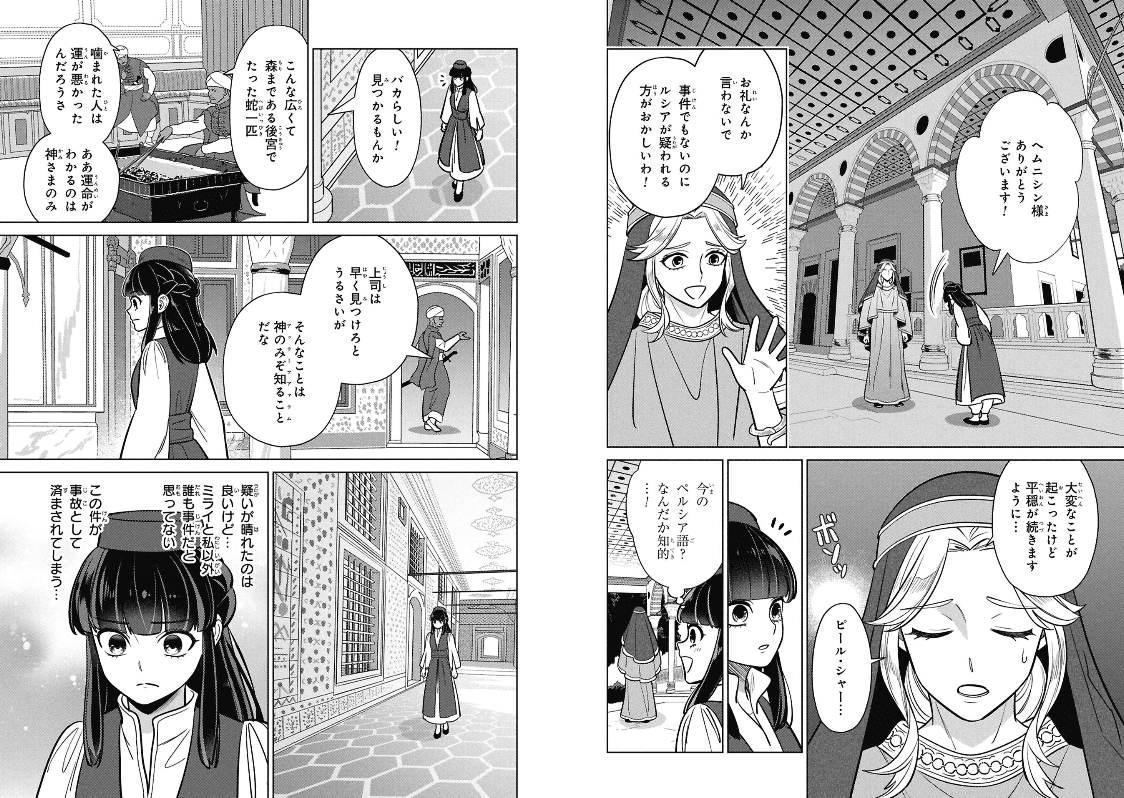
The Land of the Crescent: Ottoman Thousand and One Nights (Momoyama Aoi)
The scriptwriter, Momoyama, studied Indian philosophy and Buddhism at Ryukoku University, during which time he developed an interest in traditional religions such as Buddhism and Islam. Later, he met Aoi at an event; recognizing each other’s talents, the two artists began collaborating. This partnership gradually evolved into a lasting artistic alliance.
The artist, Aoi, graduated from the Design Department of the Faculty of Fine Arts at Osaka University of Arts and worked at Universal Studios Japan, where she participated in the design and illustration processes of various characters. Later, at Takarajimasha Publishing, she worked on illustration and manga production, and now applies this experience to her current projects at Shinchosha.
Japanese Text Link: 日本人アーティストの視点からオスマン帝国を描く――桃山あおいインタビュー
English Text Link: Drawing the Ottoman Empire Through the Eyes of a Japanese Artist: Interview with Momoyama Aoi
Yalçın, Nurten. "Osmanlı’yı Bir Japon Sanatçının Gözünden Çizmek: Momoyama Aoi ile Röportaj." KÜRE Ansiklopedi, 2026.
Interview Transcript
1. How did the idea of creating a manga about the Ottoman Empire arise?
2. From a Japanese perspective, what aspect of the Ottoman Empire first impressed you?
3. Did you have any prior connection to Ottoman history or art before starting this project?
4. You chose to portray the Ottoman Empire through aesthetics and daily life rather than war and politics. Was this a deliberate choice?
5. How would you like Japanese readers to perceive the Ottoman Empire?
6. Can you explain why you chose to center the story on an apprentice in the atelier rather than a sultan?
7. What kind of development and inner journey did you intend to portray through the character of Leo?
8. What relationship do you see between Ottoman miniature art and Japanese manga aesthetics?
9. How was your work received in Japan and internationally? Which reader responses affected you the most?
10. In your opinion, why can people sometimes understand their own history better through the eyes of another artist?
About Momoyama Aoi
Works
Awards