


This article was automatically translated from the original Turkish version.
+2 More
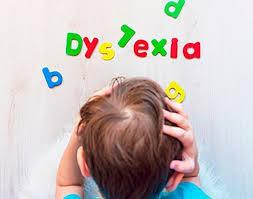
Dyslexia
Description | Dyslexia is a learning difficulty that causes individuals with normal intelligence levels to struggle with language, reading, and writing skills. The term dyslexia was formed by combining the German prefix 'dys-', meaning difficulty, with the Greek word 'lexis', meaning speech. | ||||||||
|---|---|---|---|---|---|---|---|---|---|
Effects on the Individual | and it can occur at any age but is typically identified during childhood. it is not an intellectual disability but may co-occur with attention deficit hyperactivity disorder (ADHD) difficulties with numbers and their pronunciations challenges in learning the relationship between letters and words Difficulty in combining sounds in speech | ||||||||
Dyslexia is a learning difficulty characterized by challenges in language, reading, and writing skills despite normal intelligence levels. The term dyslexia was formed by combining the Greek prefix "dys-", meaning difficulty, with "lexis", meaning speech.
The rate of dyslexia among left-handed individuals is not higher. This misconception arose from an overrepresentation of left-handed people in early studies. There is no link between left-handedness and dyslexia. Although a large proportion of dyslexic individuals are left-handed, this correlation is unrelated to the condition itself.
It cannot be said that all dyslexic individuals have high intelligence, exceptional abilities, or special talents. There is no connection between dyslexia and intelligence; it can occur at every level of cognitive ability. Dyslexia can be found not only in individuals with low or average IQ but also in those with high IQ.
Individuals with dyslexia struggle with combining sounds in speech, learning the relationship between letters and words, and understanding numbers and their pronunciations. This is not a sign of intellectual disability. Although it often co-occurs with attention deficit hyperactivity disorder (ADHD), it is a distinct condition. This condition can appear at any age but is most commonly observed in children. Individuals with dyslexia—often children—are aware of their difficulties and frequently try to conceal them from others. In such cases, the family is a critical factor. The treatment for dyslexia is education, and families must support the individual in this regard.
Dyslexia cannot be fully cured. However, support can be provided to help develop reading, writing, and speaking skills. Early and individualized educational approaches can help manage the condition, and speech therapy or specialized instruction may be beneficial. Medication is not used to treat dyslexia. The most effective intervention is receiving specialized support alongside regular schooling.
Einstein, who suffered from significant speech difficulties, encountered numerous challenges during his school years and once said:
"Teachers claimed my mind worked slowly, that I was antisocial, and that I would wander aimlessly in foolish dreams until my death."
Despite lacking support from his teachers, Einstein became a scientist whose contributions were vital to the foundation of physics and the modern world.
Edison struggled with speaking and failed in school due to difficulty concentrating on lessons. He described his experience as follows:
"My teacher called me addled, and my father believed it too. I had already decided I was the biggest fool of all."
Despite having both dyslexia and hearing impairment, Edison was a scientist whose work played a crucial role in our lives.
Hawking, who achieved major accomplishments in physics and mathematics and is considered one of the most intelligent people in history, also had dyslexia.
Acıbadem. (n.d.). Disleksi. Acıbadem. Accessed [insert date]. https://www.acibadem.com.tr/ilgi-alani/disleksi/
Emine, B. "DİSLEKSİ HAKKINDA GERÇEKLER: DİSLEKSİ. NEDİR, NE DEĞİLDİR?" Trakya Sosyal Bilimler Dergisi, Volume 19, Issue 1, 2017, pp. 1-17. Accessed June 30, 2017.
Erdem Psikiyatri. (n.d.). Dyslexia. Erdem Psychiatry. Accessed https://www.erdempsikiyatri.com/disleksi.
Read and Spell. (2022, November 30). Famous People with Dyslexia. Read and Spell. Accessed https://www.readandspell.com/famous-people-with-dyslexia.

Dyslexia
Description | Dyslexia is a learning difficulty that causes individuals with normal intelligence levels to struggle with language, reading, and writing skills. The term dyslexia was formed by combining the German prefix 'dys-', meaning difficulty, with the Greek word 'lexis', meaning speech. | ||||||||
|---|---|---|---|---|---|---|---|---|---|
Effects on the Individual | and it can occur at any age but is typically identified during childhood. it is not an intellectual disability but may co-occur with attention deficit hyperactivity disorder (ADHD) difficulties with numbers and their pronunciations challenges in learning the relationship between letters and words Difficulty in combining sounds in speech | ||||||||
Misconceptions About Dyslexia
Left-Handed People Are More Likely to Be Dyslexic
All Dyslexic Individuals Are Gifted or Have Special Talents
Effects on the Individual
Treatment of Dyslexia
Dyslexia and Scientists
Albert Einstein
Thomas Edison
Stephen Hawking