


This article was automatically translated from the original Turkish version.
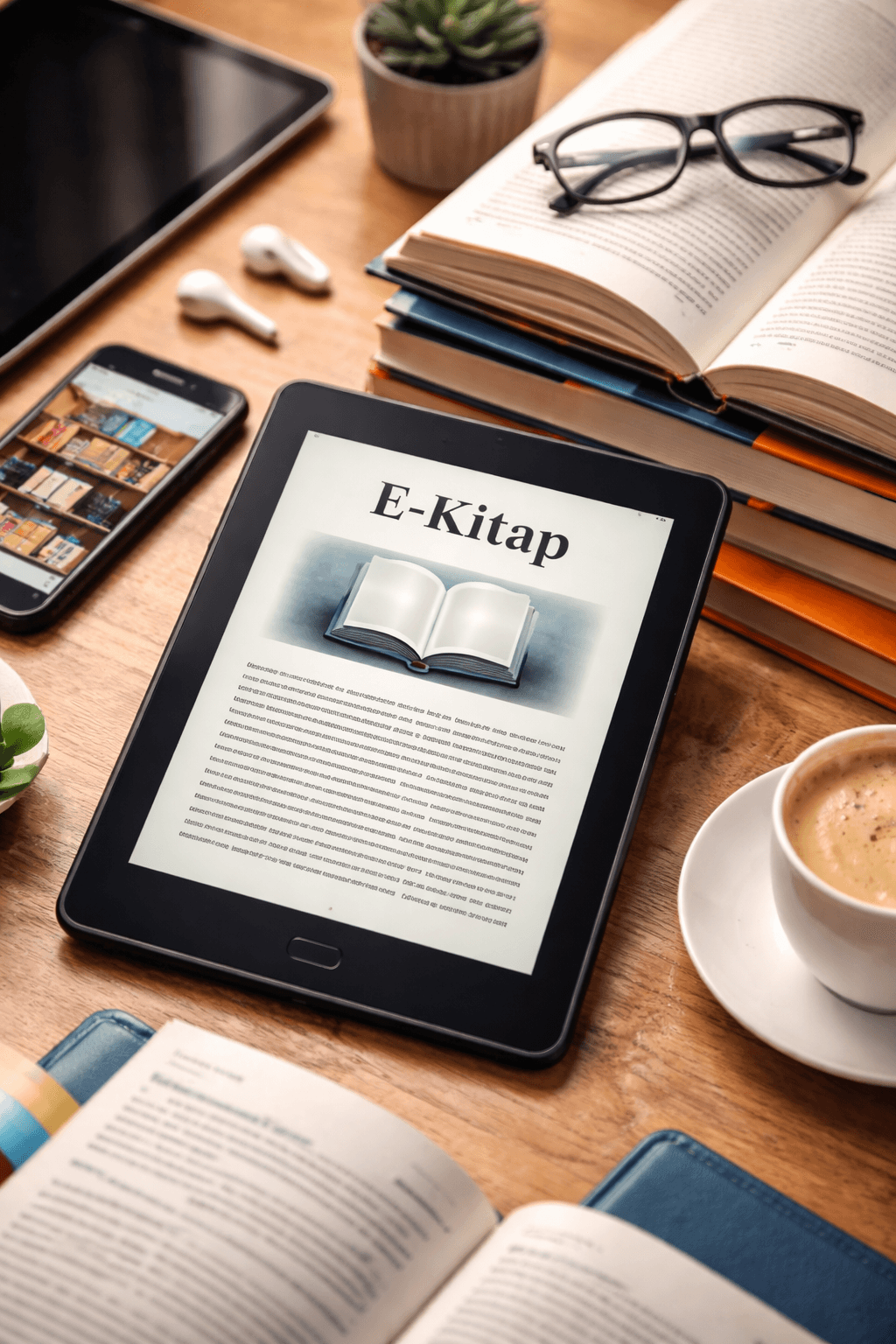
E-Kitap
(Yapay Zeka ile Oluşturulmuştur)
An electronic book (e-book) is a digital file format designed to be read on devices such as computers, smartphones, and tablets. While retaining the essential features of printed books, it can also incorporate multimedia elements such as audio, video, and interactive links. The publishing industry, which developed after the invention of the printing press, has undergone significant transformation through the advent of e-books, driven by advances in information and communication technologies.

Display Technologies(Generated by Artificial Intelligence)
E-book technology consists of software, hardware, standards, and protocol components. The most important hardware component of this technology is the e-book reader. The defining feature of these devices is e-ink (electronic ink) technology, which creates images by reflecting ambient light rather than emitting light from behind the screen as in traditional LCD or plasma displays.
This operating principle minimizes eye strain during prolonged reading and provides a paper-like reading experience in outdoor environments or under direct lighting. In addition, e-ink technology offers advantages such as low power consumption and a wide viewing angle. SiPix, a more advanced version of this technology, generates images by adjusting black and white levels within a single microcapsule and represents a significant step toward color electronic ink technology.

E-Books and File Formats(Generated by Artificial Intelligence)
E-books are prepared in various file formats optimized for different operating systems and devices. Among the most widely used standards today are PDF (Portable Document Format), developed by Adobe and compatible with multiple operating systems, and ePub, supported by the majority of mobile devices.
Compared to traditional publishing, e-book technology offers significant advantages in terms of portability, storage, and cost. Thousands of pages of textual data can be stored in digital environments or on small memory units without requiring physical space. Users can adjust text size, screen brightness, and digitally bookmark their place while reading.
From a publishing perspective, the elimination of costs related to paper, binding, printing, and physical distribution enables works to reach readers more economically. This creates new opportunities for authors who, due to limited financial resources, were previously unable to publish their works, and contributes to preserving cultural heritage in digital form for future generations. Additionally, e-books can be downloaded and updated instantly over the internet, enhancing the speed of access to information.


E-Kitap
(Yapay Zeka ile Oluşturulmuştur)
Hardware and Display Technologies
File Formats and Software Standards
Operational Advantages and Sectoral Impacts