


This article was automatically translated from the original Turkish version.
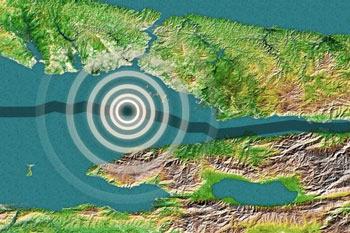
Istanbul has held a strategically significant position throughout history, both geopolitically and geologically, important. Due to its location along the North Anatolian Fault Line, City, it is at risk. When examining Istanbul’s earthquake history, events resulting in massive destruction and can losses are evident.
Byzantine sources record that the earthquakes of 557, 869, and 1346 were highly destructive. More detailed records pertain to earthquakes closer to the present day.
This major earthquake has been historically referred to as “Kıyamet-i Suğra” (Minor Judgment Day). It is known that the quake largely destroyed the city and caused the deaths of thousands. The earthquake is estimated to have had a magnitude of approximately 7.4–7.7. It is believed to have originated from one of the fault segments north of Sea of Marmara. According to Historical records, during the quake, cracks formed in the great dome of Hagia Sophia, and the city walls suffered extensive damage. Tsunami caused significant damage along the Marmara coast.
Technical Characteristics of the Earthquake
Historical Context
The earthquake occurred during the reign of Ottoman Sultan Bayezid II. This period was a period of considerable political and cultural strength for the Ottoman Empire. However, the earthquake deeply shook both the city and its population.
Matrakçı Nasuh described the intensity of the earthquake and its aftermath as follows:
“...suddenly, on the night of the 25th of Jumada al-Awwal in the year 914 of the Hijra, while people were asleep, a great earthquake struck Istanbul such that none had occurred since the fall of Adam. In the end, the Lord, in His infinite power, revealed the form of Judgment Day to all creation. The universe trembled in fear of His dread; especially the buildings of Constantinople (Istanbul), which reached heights rivaling the sky, were reduced to rubble. Countless minarets, walls, and houses collapsed, and countless people perished beneath the ruins.”

(Source, 1509 Istanbul Earthquake, AI)
Effects and Damage
Social and Economic Effects
A widespread migration wave followed the earthquake. Food shortages, epidemics, and security issues head emerged. Economic activity nearly came to a halt, tradespeople and merchants suffered major losses.
Geological Context
The 1509 earthquake resulted from the rupture of one of the segments of the North Anatolian Fault Line (NAF) beneath the Sea of Marmara. This fault lies along the boundary between the Eurasian Plate and the Anatolian Plate and is a strike-slip fault system.
The earthquake of 1766 is recorded as one of the most destructive in Istanbul’s history. It caused heavy damage on both the European and Anatolian sides of the city. In the aftermath, extensive restoration work was carried out on historical structures such as Topkapı Palace and Hagia Sophia. According to records from Ottoman archives, economic losses caused by the earthquake were mitigated through tax amnesties and state aid.
Technical Characteristics of the Earthquake
Historical and Social Context
The 1766 Istanbul earthquake occurred during the reign of Ottoman Sultan III. Mustafa. This period was a time when the Ottoman Empire was noted for its reform efforts and modernization initiatives. However, this earthquake negatively affected Istanbul’s political and economic structure, hindering recovery efforts.

(Source, gdh.digital, 22 May 1766 earthquake)
Effects and Damage
Social and Economic Effects
Trade and the economy suffered extensive damage, forcing many merchants to close their shops. A large wave of migration followed the earthquake. Migrants from rural areas contributed significantly to the city’s reconstruction. The Ottoman State implemented measures such as tax amnesties to compensate for public losses.
Geological Context
The Sea of Marmara is a pull-apart basin formed by the North Anatolian Fault Line. The 1766 earthquake resulted from the rupture of a segment of this fault beneath the Sea of Marmara. The rupture caused extensive destruction in Istanbul and its surroundings.
The 1894 earthquake is remembered as one of the most destructive to strike Istanbul during the Ottoman Empire. It holds a significant place in history due to its physical destruction as well as its social and economic consequences.
Technical Characteristics of the Earthquake
Historical and Social Context
The 1894 earthquake, recorded during the Ottoman period, occurred during the reign of Sultan II. Abdülhamid. Following the earthquake, at the Sultan’s instruction, construction of fire-resistant and more strong buildings began in Istanbul.

(Repair of arches in the Grand Bazaar after the 1894 earthquake, year 1896)
Effects and Damage
Social and Economic Effects
Significant destruction occurred in markets and market areas, bringing commercial life to a standstill. The poor were the most affected group. Temporary shelter shortages and food scarcity emerged. The Ottoman State mobilized to assist victims and organized large-scale relief campaigns.
Geological Context
The Sea of Marmara lies within the influence of the North Anatolian Fault Line, whose activity is the main cause of earthquakes in the region. The 1894 Istanbul earthquake once again highlighted the city’s seismic vulnerability and emphasized the importance of constructing earthquake-resistant buildings.
The 1999 earthquake released a large portion of the accumulated energy along the Marmara segment of the North Anatolian Fault Line, yet it increased the risk of a future major earthquake threatening Istanbul.
Technical Characteristics of the Earthquake

(Source, Anadolu Agency, 17 August 1999 earthquake)
Effects and Damage
Social and Economic Effects
A major humanitarian crisis followed the earthquake, with search and rescue operations lasting for days. National and international aid organizations provided support to meet the shelter, nutrition, and health needs of earthquake victims.
Geological Context
The earthquake occurred along the North Anatolian Fault Line. This fault forms the boundary between the Eurasia and Anatolian plates and is a left-lateral strike-slip fault. The earthquake generated a surface rupture approximately 150 km in length.

(Source, AFAD)
Istanbul, located along the northern branch of the North Anatolian Fault Line (NAF), is a metropolis with high seismic risk. The city, having experienced numerous major earthquakes throughout history, may face a new major earthquake in the coming years, as science have warned.
Istanbul has been shaken by major earthquakes throughout history and remains under a significant seismic threat today. Scientists emphasize that a major earthquake in the Sea of Marmara is inevitable and that preparedness is essential. The city can minimize the impact of this disaster by taking necessary measures. However, greater awareness and preparedness at both individual and institutional levels are required.
"1894 İstanbul Depremi - akademik tarih." Akademik Tarih, April 15, 2023
Anadolu Ajansı. "Anadolu Ajansı." Accessed [Date]. https://www.aa.com.tr/tr/info/infografik/40784.
BBC News Türkçe. "İstanbul’un deprem tarihi - BBC News Türkçe." March 5, 2023
Fikriyat Gazetesi. "İstanbul’un Bizans dönemi depremleri." February 26, 2023
Tarihten Yazılar. "Küçük kıyamet: 1509 İstanbul depremi." February 12, 2025
“Istanbul’s Great Nightmare: The May 22, 1766 Earthquake.” Accessed [Date]. https://gdh.digital/haber/istanbulun-buyuk-kabusu-22-mayis-1766-depremi

No Discussion Added Yet
Start discussion for "Earthquakes in Istanbul in History" article
The 1509 Earthquake: Kıyamet-i Suğra
The 1766 Earthquake
The 1894 Istanbul Earthquake: “Büyük Hareket-i Arz”
The 1999 Kocaeli (Gölcük) Earthquake
Contemporary Perspective
Istanbul’s Seismic Risk Status
Recent Research and Fault Line Status
Istanbul’s Structural Resilience
Potential Earthquake Scenario and Expected Outcomes
Measures and Preparedness Efforts
Recommendations for Istanbul