This article was automatically translated from the original Turkish version.
+1 More
Location | Edirne | ||||||||
|---|---|---|---|---|---|---|---|---|---|
Foundation Date | 1450 | ||||||||
Other Name(s) | Yeni Saray | ||||||||
Previous Palace | Sarây-ı Atîk (Eski Saray) | ||||||||
Period of Use | From the mid-15th century to the late 19th century | ||||||||
Prominent Structures | Tavuk Ormanı (Hasbahçe içinde) Fatih Köprüsü-Su Maksemi Av Köşkü-Bülbül Kasrı-İftar Köşkü Kum Kasrı ve Hamamı Matbah-ı Âmire (Saray Mutfağı) Adalet Kasrı Arz Odası Babüssaâde (Akağalar Kapısı) Cihannümâ Kasrı (Has Oda) | ||||||||
Important Event(s) | the arsenal during the 1877-78 Ottoman-Russian War the 1829 Russian occupation The 1752 earthquake and 1776 fire | ||||||||
Edirne Sarayı was constructed in the Sarayiçi locality along the Tunca River in Edirne, the second capital of the Ottoman State. Construction began in 1450 during the reign of Sultan Murad II; it was halted after his death and completed in 1475 by Fatih Sultan Mehmed. Over time the palace evolved into one of the most important examples of Ottoman palace architecture. With the construction of this new palace, the previously used structure known as Sarây-ı Atîk came to be referred to as the Eski Saray.
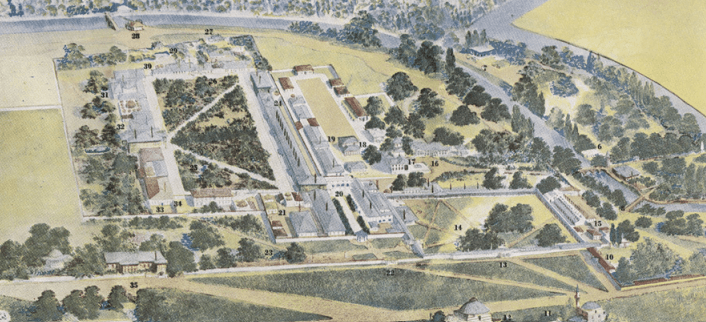
The palace was organized around the Cihannümâ Kasrı. To the south of this structure were the apartments of Sultans Mehmed IV Mustafa II and Ahmed III; beyond these were designated quarters for the Valide Sultan, haseki sultans, princes and concubines. To the west of the Cihannümâ Kasrı stood the Arz Odası with the Babüssaâde (Akağalar Kapısı) located in front of it. The palace also contained numerous other elements including the Matbah-ı Âmire kitchen the Kum Kasrı Hamamı the Adalet Kasrı the Alay and Av köşkleri the İftar Köşkü the Bülbül Kasrı the Tavuk Ormanı bridges fountains and various service buildings.
The Cihannümâ Kasrı stood out with its seven-story structure; the large hall on its top floor served as the place where the sultan received the sacred banner before embarking on a campaign. The Kum Kasrı Hamamı derived its name from its location in an area dominated by yellowish soil. The Adalet Kasrı was commissioned by Kanûnî Sultan Süleyman from the architect Mimar Sinan and functioned as the meeting place of the Ottoman Divan.

Sarây-ı Cedîd-i Âmire Bird’s-Eye View Drawing (Dergipark)
Even after the conquest of Istanbul the Edirne Sarayı continued to attract the interest of Ottoman sultans. Particularly during the reign of Mehmed IV the sultan’s prolonged stays in Edirne made the palace one of the key political and administrative centers. Natural disasters and neglect from the 18th century onward initiated a process of decay. The earthquake of 1752 and the major fire of 1776 caused severe damage to the palace.
In the 19th century partial repairs were carried out during the reign of Mahmud II. However in 1829 the Russian army that occupied Edirne used the palace as a military headquarters and caused extensive destruction. During the Ottoman-Russian War of 1877–1878 the palace was used as an arsenal and on the decision of Governor Cemil Paşa and Marshal Ahmed Eyüb Paşa it was blown up; after three days of fires the palace was largely destroyed. Subsequently the remaining intact building stones were reused in other structures in the city and some tiles and objects were gifted to foreign state officials.
The main structures surviving from the palace today include the ruins of the Cihannümâ Kasrı the Babüssaâde Gate the Matbah-ı Âmire the Kum Kasrı Hamamı the Adalet Kasrı the Fatih Bridge the Su Maksemi the Şehabeddin Paşa and Kanûnî Bridges the Namazgâhlı Çeşme and the Av Köşkü. Some of these structures have undergone restoration while others have survived in a ruined state. It has been determined that the palace originally comprised nearly 100 buildings including 117 rooms 21 divanhânes 18 baths 8 mosques 17 gates 13 barracks 4 cellars 5 kitchens 17 kasır and 6 bridges.

The Kum Meydanı in Edirne Sarayı (Dergipark)

Cihannümâ Kasrı (Dergipark)
The Tavuk Ormanı within the palace grounds is a region notable both as a hunting area and for its rich natural plant diversity. The Av Köşkü commissioned by Mehmed IV is located within this forest though only a small portion remains standing today. The Tavuk Ormanı hosts numerous herbaceous and bulbous plant species shrubs and monumental trees.
Aside from initial cleaning and surveying efforts initiated in 1956 under the leadership of the Turkish Historical Society no comprehensive excavation or conservation work was undertaken at Edirne Sarayı for many years. With the establishment of the Edirne Sarayı Koruma ve Geliştirme Vakfı in 1999 excavation and restoration activities resumed; between 2009 and 2022 archaeological excavations surveys restitution and restoration projects were carried out. The restoration of the Matbah-ı Âmire was completed and planning work was conducted for the Cihannümâ Kasrı and Adalet Kasrı.

View of the Matbah-ı Âmire After Restoration (Dergipark)
Over time parts of the palace grounds have come under different ownerships; some areas have been used as agricultural land while others have passed into public institution ownership. Additionally the Kırkpınar Wrestling which is inscribed on UNESCO’s Intangible Cultural Heritage List takes place in the Hasbahçesi area of Edirne Sarayı and this has contributed to problems such as the use of the palace grounds for parking and accommodation purposes.
Edirne Sarayı is a cultural heritage site of great significance in terms of Ottoman architecture and palace life. Due to natural disasters and human-caused destruction only a limited portion survives today. As of 2022 with support from the Presidency of National Palaces efforts are being renewed to preserve the palace through archaeological and architectural studies for future generations. Saray-ı Cedîd-i Âmire continues to stand as one of the principal structures reflecting the political military and cultural presence of the Ottomans in Edirne.
Edirne İl Kültür ve Turizm Müdürlüğü. “Edirne Sarayı'nın Kalbi: Cihannüma Kasrı Ayağa Kaldırılıyor.” Edirne Valiliği İl Kültür ve Turizm Müdürlüğü Resmî Web Sitesi. Accessed July 4, 2025. https://edirne.ktb.gov.tr/TR-217154/edirne-sarayi39nin-kalbi-cihannuma-kasri-ayaga-kaldiril-.html
Ministry of Culture and Tourism. "Saray-ı Cedid (Yeni Saray)." *Kültür Portalı*. Accessed July 4, 2025. https://kulturportali.gov.tr/turkiye/edirne/gezilecekyer/saray-i-cedid-yeni-saray
Ministry of Treasury and Finance of the Republic of Turkey. "Edirne Sarayları." *Edirne Defterdarlığı Resmî Web Sitesi*. Accessed July 4, 2025. https://edirne.gib.gov.tr/kultur/saraylar.html
Özer, Mustafa. “Edirne Sarayı (Sarây-ı Cedîd-i Âmire)’nin Mevcut Durumu, Sorunları ve Makûs Talihi Hakkında Bazı Tespitler.” *Millî Saraylar* 24 (2023): 4–35. Accessed July 4, 2025. https://dergipark.org.tr/tr/download/article-file/3095836

Location | Edirne | ||||||||
|---|---|---|---|---|---|---|---|---|---|
Foundation Date | 1450 | ||||||||
Other Name(s) | Yeni Saray | ||||||||
Previous Palace | Sarây-ı Atîk (Eski Saray) | ||||||||
Period of Use | From the mid-15th century to the late 19th century | ||||||||
Prominent Structures | Tavuk Ormanı (Hasbahçe içinde) Fatih Köprüsü-Su Maksemi Av Köşkü-Bülbül Kasrı-İftar Köşkü Kum Kasrı ve Hamamı Matbah-ı Âmire (Saray Mutfağı) Adalet Kasrı Arz Odası Babüssaâde (Akağalar Kapısı) Cihannümâ Kasrı (Has Oda) | ||||||||
Important Event(s) | the arsenal during the 1877-78 Ottoman-Russian War the 1829 Russian occupation The 1752 earthquake and 1776 fire | ||||||||
Usage and Deterioration Process
Structures Surviving to the Present Day
Natural Features and Tavuk Ormanı
Conservation and Restoration Efforts
Current Issues and Ownership Status