


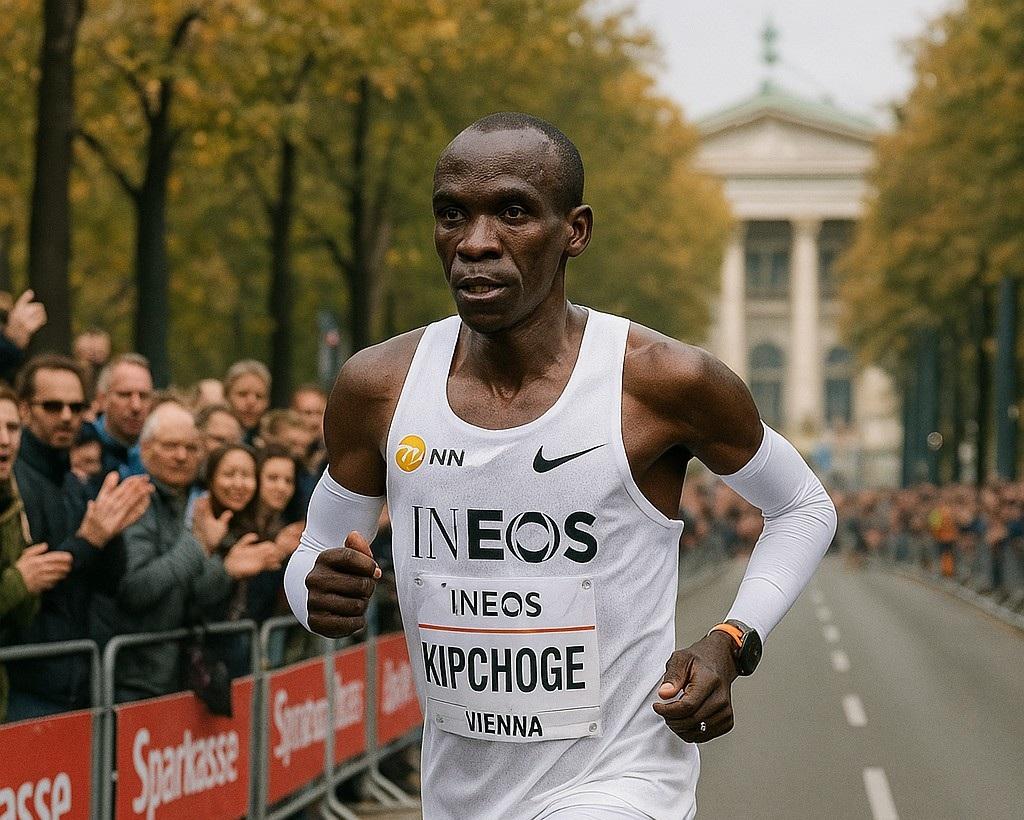
Eliud Kipchoge
Name(s) | Eliud Kipchoge | ||||||||
|---|---|---|---|---|---|---|---|---|---|
Doğum tarihi | 1984-10-05 | ||||||||
Place of Birth | Kapsabet, Kenya | ||||||||
Nationality | Kenyan | ||||||||
Profession(s) | Marathon Runner | ||||||||
Coach | Patrick Sang | ||||||||
Team(s) | NN Running Team | ||||||||
Marathon Personal Best | 2:01:39 | ||||||||
First Sub-2 Hour Marathon | 1:59:40 | ||||||||
Olympic Medals | 2 Gold (2016 Rio, 2020 Tokyo) | ||||||||
Eliud Kipchoge was born on 5 November 1984 in Kapsisiywa, a small village in Nandi County, located in Kenya’s Rift Valley region. His mother was a teacher and his father passed away when he was very young. As the youngest of five children, Kipchoge grew up in a disciplined environment. His daily routine of running several kilometers to and from school as a child demonstrated his early interest in running.
At the age of 16, he met Patrick Sang, who would play a pivotal role in his career. Sang, an athlete who won a silver medal at the 1992 Barcelona Olympics, became Kipchoge’s coach. Their relationship evolved into a long-term training partnership.
In 2003, at the age of 18, he won the gold medal in the 5000 metres at the World Athletics Championships in Paris. By defeating prominent athletes such as Hicham El Guerrouj and Kenenisa Bekele, he gained international recognition. He went on to win bronze at the 2004 Athens Olympics and silver at the 2008 Beijing Olympics. Although track racing showcased Kipchoge’s potential, another discipline better suited to his abilities had not yet been identified.
In 2013, he began his road racing career with a victory at the Hamburg Marathon, finishing in 2:05:30. Later that year, he placed second at the Berlin Marathon, a result that remains his only defeat in marathon competition. In 2014 he won the Rotterdam and Chicago Marathons, in 2015 he won the London and Berlin Marathons, and in 2016 he won the London Marathon. His gold medal in the marathon at the 2016 Rio Olympics marked a major achievement in his transition from track to road racing.
At the 2018 Berlin Marathon, Kipchoge broke the world record with a time of 2:01:39. This performance represented a significant improvement over previous records.
On 12 October 2019, during the INEOS 1:59 Challenge event in Vienna, Kipchoge completed the marathon distance in 1:59:40, becoming the first person ever to run a marathon in under two hours. Although the run did not meet official race regulations and thus was not ratified as a world record, it was widely regarded as a remarkable achievement in sports science and strategy.
Kipchoge’s phrase “No Human Is Limited” encapsulates this philosophy.
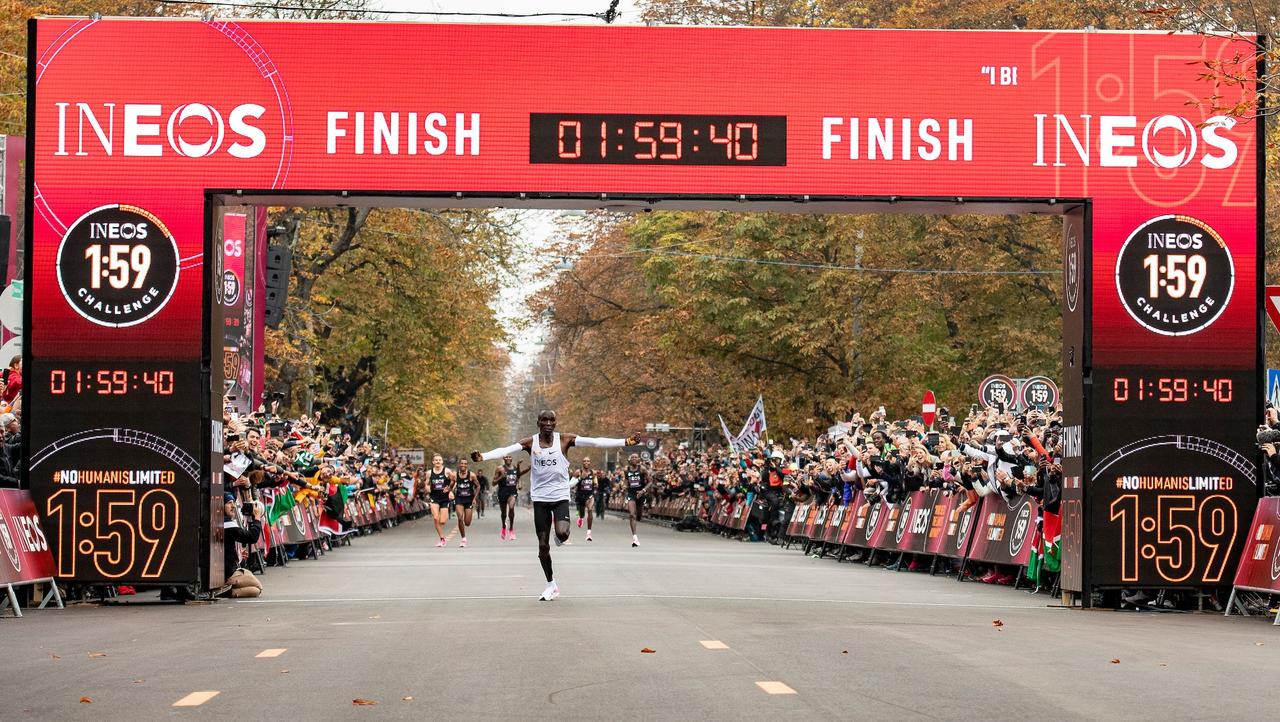
Eliud Kipchoge – Ineos 1:59 Challenge Marathon World Record (Source: Ineos)
Kipchoge’s training regimen is based on simplicity and consistency. He lives in modest conditions at the Kaptagat camp in Kenya. He performs his daily tasks himself and begins each day at 5 a.m., completing weekly runs totaling around 200 kilometres. This structure supports not only physical capacity but also mental resilience.
His nutrition plan is grounded in scientific principles. Elements such as carbohydrate intake, fluid balance and sleep patterns are meticulously planned as part of race preparation. This process is designed to adapt his body to race conditions.
At the 2020 Tokyo Olympics, he won his second consecutive gold medal in the marathon. At the 2024 Paris Olympics, he failed to finish the race and announced his retirement from Olympic competition. This decision is associated with his intention to step away from active competition. In the 2022 Berlin Marathon, he improved his own world record with a time of 2:01:09. In 2023, he endured a challenging race in Boston but returned to win in Berlin. He has announced his participation in the 2025 TCS Sydney Marathon.
In addition to his sporting achievements, Kipchoge is also known for his lifestyle, discipline and mental resilience.
Guinness World Records. "Eliud Kipchoge." Guinness World Records. Accessed April 23, 2025. https://kids.guinnessworldrecords.com/records/hall-of-fame/eliud-kipchoge.
INEOS 1:59 Challenge. "History is Made as Eliud Kipchoge Becomes First Human to Break the Two-Hour Marathon Barrier." INEOS159challenge.com. Accessed April 23, 2025. https://www.ineos159challenge.com/.
ISPO. "Eliud Kipchoge." ISPO Heroes. Accessed April 23, 2025. https://www.ispo.com/en/heroes/eliud-kipchoge.
Independent. "Eliud Kipchoge: Marathon Training and Lifestyle." The Independent. Accessed April 23, 2025. https://www.independent.co.uk/health-and-fitness/eliud-kipchoge-marathon-training-b2731787.html.
NN Running Team. "Eliud Kipchoge." NN Running Team. Accessed April 23, 2025. https://www.nnrunningteam.com/team/eliud-kipchoge/.
Olympics.com. "Eliud Kipchoge." Olympic.org. Accessed April 23, 2025. https://www.olympics.com/en/athletes/eliud-kipchoge.


Eliud Kipchoge
Name(s) | Eliud Kipchoge | ||||||||
|---|---|---|---|---|---|---|---|---|---|
Doğum tarihi | 1984-10-05 | ||||||||
Place of Birth | Kapsabet, Kenya | ||||||||
Nationality | Kenyan | ||||||||
Profession(s) | Marathon Runner | ||||||||
Coach | Patrick Sang | ||||||||
Team(s) | NN Running Team | ||||||||
Marathon Personal Best | 2:01:39 | ||||||||
First Sub-2 Hour Marathon | 1:59:40 | ||||||||
Olympic Medals | 2 Gold (2016 Rio, 2020 Tokyo) | ||||||||
Rise on the Track
Beginnings of the Marathon Career
2018 Berlin Marathon: World Record
INEOS 1:59 Challenge
Training Discipline and Lifestyle
Nutrition and Preparation
Olympics and Later Career