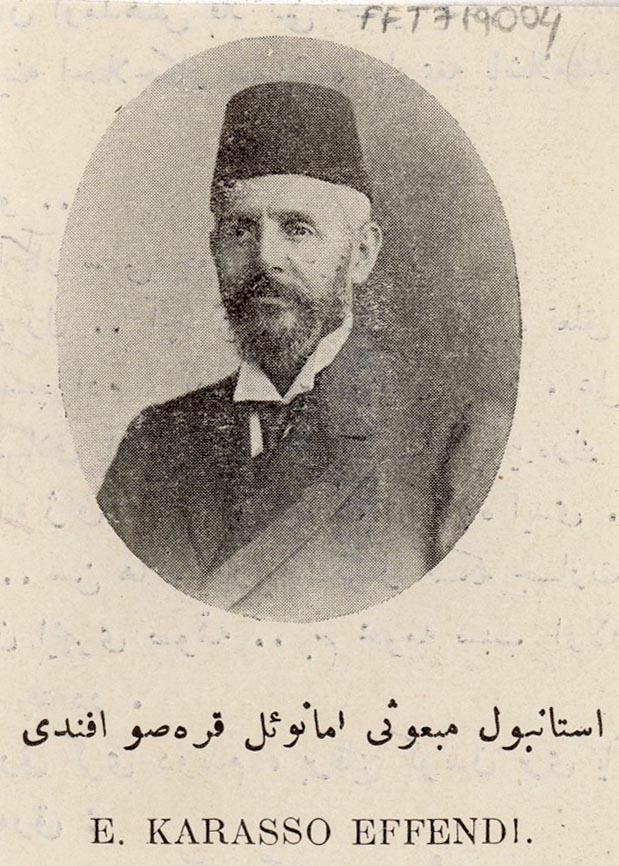

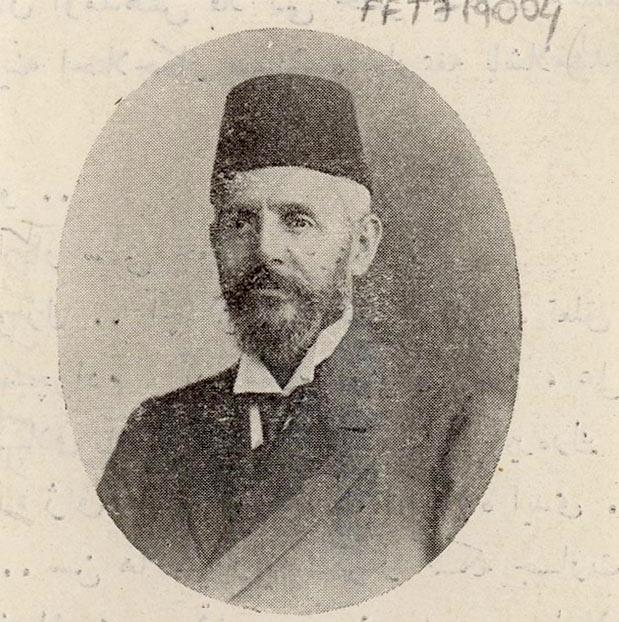

Emanuel Karasu (1862–1934) was an Ottoman jurist and politician born in Thessaloniki and a member of the İttihat ve Terakki Cemiyeti. He emerged as one of the prominent figures during the Second Constitutional Era, when the Ottoman state reestablished its constitutional order, leaving a significant mark in law, politics, and organizational activities.
Emanuel Karasu was raised in Thessaloniki, one of the Ottoman Empire’s major port and commercial cities, within a Sephardic Jewish family.【1】 The city’s multicultural and cosmopolitan character, where diverse ethnic and religious communities coexisted, provided a decisive foundation for Karasu’s intellectual and social development. This environment significantly influenced his orientation toward both law and politics.
Karasu began his professional life as a lawyer after receiving legal training, and his expertise in law played a decisive role in his later political activities. His interactions with various social groups within Thessaloniki’s pluralistic society laid the groundwork for his political evolution. At the beginning of the century, he took a decisive organizational step by playing a leading role in establishing the local branch of the Italian Grande Oriente Masonic lodge, known as Macedonia Risorta.【2】 Thanks to the confidentiality afforded by the capitulations, this lodge quickly transformed into a structure that included Young Turks among its members and became one of the key centers of the 1908 Young Turk Revolution.【3】
Following the 1908 Constitutional Revolution, Karasu acquired Ottoman citizenship and served as a member of the Meclis-i Mebusan, first representing Thessaloniki and later Istanbul. Due to his influential position within the İttihat ve Terakki Cemiyeti, he became one of the key figures during the Ottoman state’s transition from absolute monarchy to constitutional governance. A pivotal moment in his political career occurred after the 31 March Incident. Karasu was among the four-person delegation tasked with informing Sultan Abdülhamid II of the decision to depose him.【4】
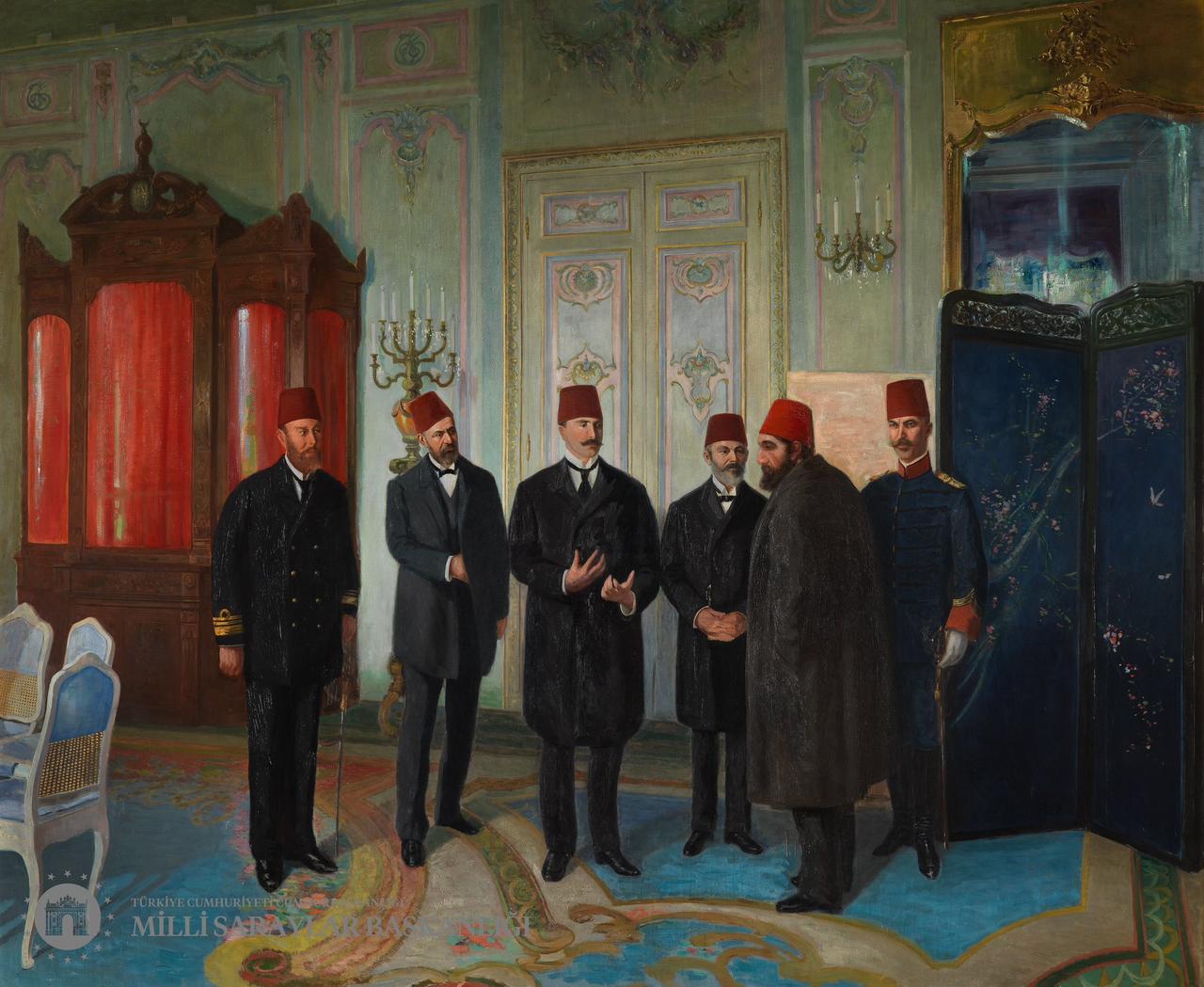
31 Mart Vakası'nın Ardından II. Abdülhamid'e Tahttan İndirildiğini Bildirmek Üzere Gönderilen Heyet, 1909. (T.C. Milli Saraylar Başkanlığı)
Nevertheless, Karasu’s relationship with the reign of Abdülhamid II was complex. It is known that he provided the Sultan with journals, and three of these have been identified as bearing Karasu’s seal.【5】 These documents covered topics such as publications inciting public unrest, anarchists attempting to secretly enter Istanbul, and individuals seeking to join dissident groups abroad.
Using his position within the İttihat ve Terakki Cemiyeti, Emanuel Karasu accumulated considerable wealth during the First World War; however, during this period his name also became associated with the dark side of the war economy.
As the war ended and most high-ranking Committee of Union and Progress members left the capital, Karasu chose to remain in Istanbul and faced multiple legal proceedings due to his wartime activities. During this time, he applied for Italian citizenship.【6】 This application initiated a prolonged bureaucratic process intersecting political influence, capital networks, and extraterritorial privileges. Karasu spent the final years of his life outside Ottoman territory and died in 1934.
Alkan, Necmettin. "Emanuel Karasu ve II. Abdülhamid." *Atatürk Üniversitesi Sosyal Bilimler Enstitüsü Dergisi* 11, no. 1 (2010): 179–195. Accessed May 2, 2026. https://dergipark.org.tr/en/pub/ataunisosbil/article/38046?issue_id=2821
Salt Araştırma. "İstanbul Mebusu Emanuel Karasu Efendi - E. Karasso Effendi." archives.saltresearch.org. Accessed May 2, 2026. https://www.archives.saltresearch.org/handle/123456789/17489
Öztan, Ramazan Hakkı. "Emanuel Karasu’nun İtalyan Olmasının Öyküsü: Osmanlı İmparatorluğu’nda Egemenliğin Sınırları, Tabiiyet Meseleleri ve bir Biyografi." *Osmanlı Araştırmaları* 63, no. 63 (2024): 309–340. Accessed May 2, 2026. https://osmanliarastirmalari.isam.org.tr/dergi/article/view/1103
[1]
Necmettin Alkan, “Emanuel Karasu ve II. Abdülhamid,” Atatürk Üniversitesi Sosyal Bilimler Enstitüsü Dergisi 11 (1): 179. https://izlik.org/JA38DM43SN
[2]
Ramazan Hakkı Öztan, "Emanuel Karasu’nun İtalyan Olmasının Öyküsü: Osmanlı İmparatorluğu’nda Egemenliğin Sınırları, Tabiiyet Meseleleri ve bir Biyografi." Osmanlı Araştırmaları 63, no. 63 (2024): 309. https://osmanliarastirmalari.isam.org.tr/dergi/article/view/1103
[3]
Ramazan Hakkı Öztan, "Emanuel Karasu’nun İtalyan Olmasının Öyküsü: Osmanlı İmparatorluğu’nda Egemenliğin Sınırları, Tabiiyet Meseleleri ve bir Biyografi," 315.
[4]
Necmettin Alkan, “Emanuel Karasu ve II. Abdülhamid,” 185.
[5]
Necmettin Alkan, “Emanuel Karasu ve II. Abdülhamid,” 190.
[6]
Ramazan Hakkı Öztan, "Emanuel Karasu’nun İtalyan Olmasının Öyküsü: Osmanlı İmparatorluğu’nda Egemenliğin Sınırları, Tabiiyet Meseleleri ve bir Biyografi," 322.
Family Background and Thessaloniki Environment
Education and Professional Career
Political Life
The First World War Years
Final Years and Transition to Italian Citizenship