

This article was automatically translated from the original Turkish version.
+2 More
Location | Enez-Edirne-Türkiye | ||||||||
|---|---|---|---|---|---|---|---|---|---|
Period(s) | 4th century AD | ||||||||
Structure(s) | Cut stone | ||||||||
Architectural Feature(s) | High walls military structures storehouses cisterns in the inner castle moats towers | ||||||||
Former Name(s) | Eneyaz (Greek Prince) | ||||||||
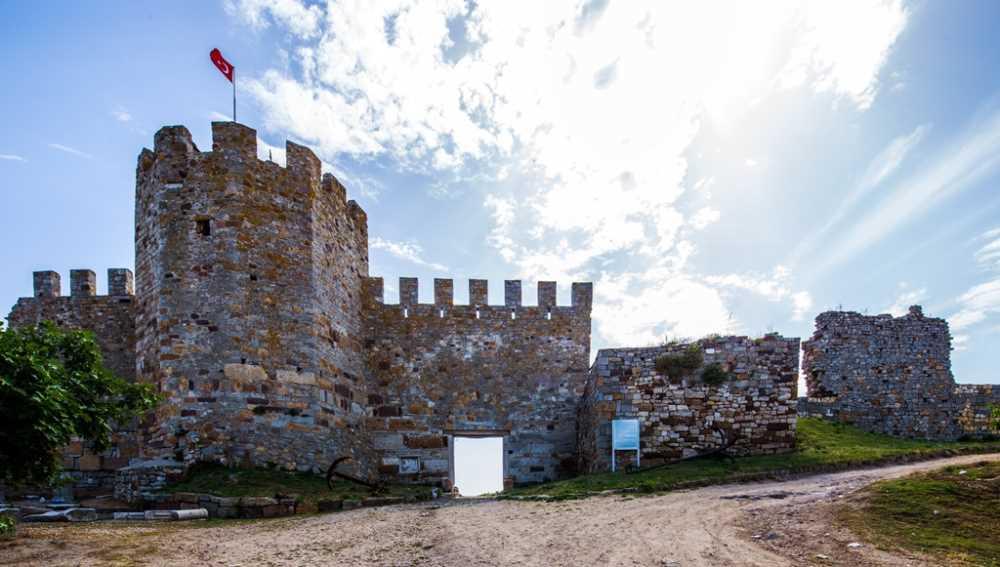
Enez Castle is a historical fortress located in the Enez district of Edirne province in the Thrace region of Türkiye. The ancient name of Enez, Ainos, has served as a settlement for numerous civilizations throughout history. The fortress is situated in a strategic location near the point where the Meriç River flows into the Aegean Sea.
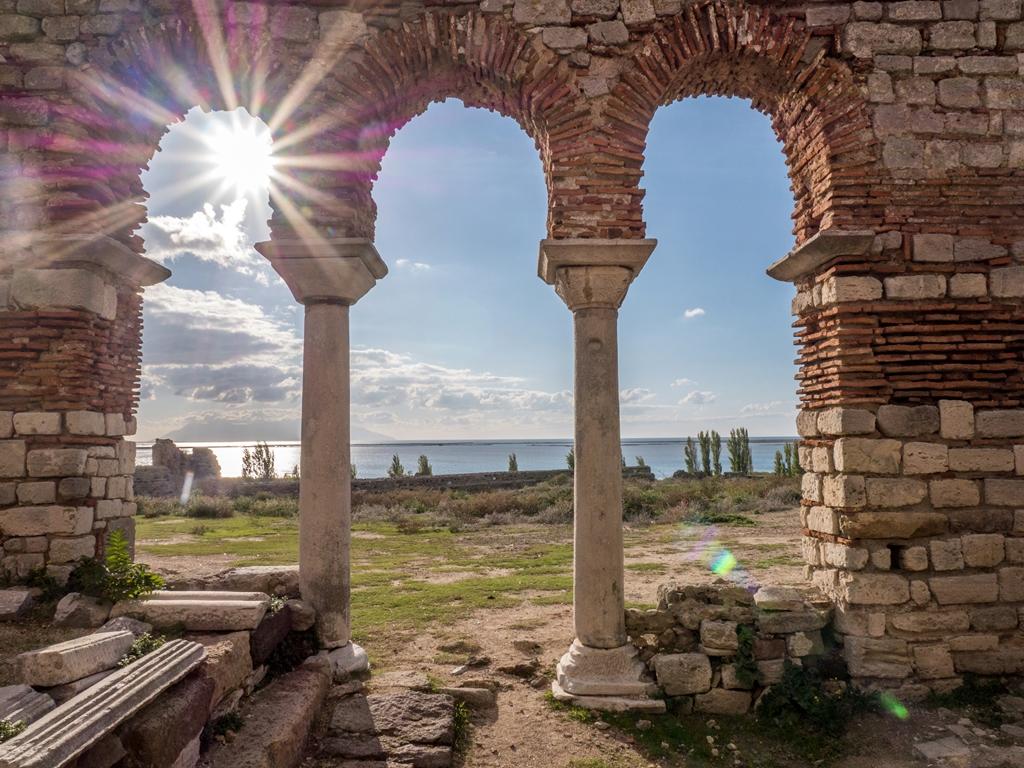
Edirne Enez Kalesi (Culture Portal)
The earliest foundations of Enez Kalesi date back to antiquity. It was constructed as a defensive structure for the city of Ainos, founded by Aeolian colonists in the 7th century BCE. During the Byzantine Empire, the fortress became an important border stronghold and changed hands multiple times during the Latin invasions and Ottoman conquests. After its capture by the Ottomans, the fortress was repaired especially in the 15th century and continued to be used for military purposes.
The fortress is built on a slope enclosed by walls. It was constructed using precisely cut stones and spolia materials. It consists of two sections: the inner citadel and the outer citadel. The walls are reinforced by towers placed at regular intervals. Ancient stone blocks and inscribed marble fragments from earlier periods were also incorporated into its construction. Within the fortress, various remains from the Byzantine and Ottoman periods can be found.
Today, Enez Kalesi has largely survived intact and is under protection by the Edirne Directorate of Culture and Tourism. The fortress and its surroundings have become an important stop for regional tourism due to their historical fabric and natural beauty. Additionally, the Enez Ayasofyası (Fatih Camii) located near the fortress is among the region’s notable historical structures.
Enez and its surroundings hold great archaeological importance as one of the oldest settlement areas in Thrace. Enez Kalesi encapsulates this layered history. Excavations conducted to date have uncovered artifacts from the Hellenistic, Roman, Byzantine and Ottoman periods within and around the fortress.
Edirne Valiliği. "Enez Kalesi." Edirne Valiliği Resmi Web Sitesi. Accessed August 2, 2025. http://www.edirne.gov.tr/enez-kalesi
Enez Belediyesi. "Enez Kalesi." Enez Belediyesi Resmi Web Sitesi. Accessed August 2, 2025.
Ministry of Culture and Tourism of the Republic of Türkiye. "Enez Kalesi." *Kültür Portalı*. Accessed August 2, 2025.

Location | Enez-Edirne-Türkiye | ||||||||
|---|---|---|---|---|---|---|---|---|---|
Period(s) | 4th century AD | ||||||||
Structure(s) | Cut stone | ||||||||
Architectural Feature(s) | High walls military structures storehouses cisterns in the inner castle moats towers | ||||||||
Former Name(s) | Eneyaz (Greek Prince) | ||||||||
History
Architectural Features
Current Condition
Archaeological and Cultural Significance