


This article was automatically translated from the original Turkish version.
+1 More
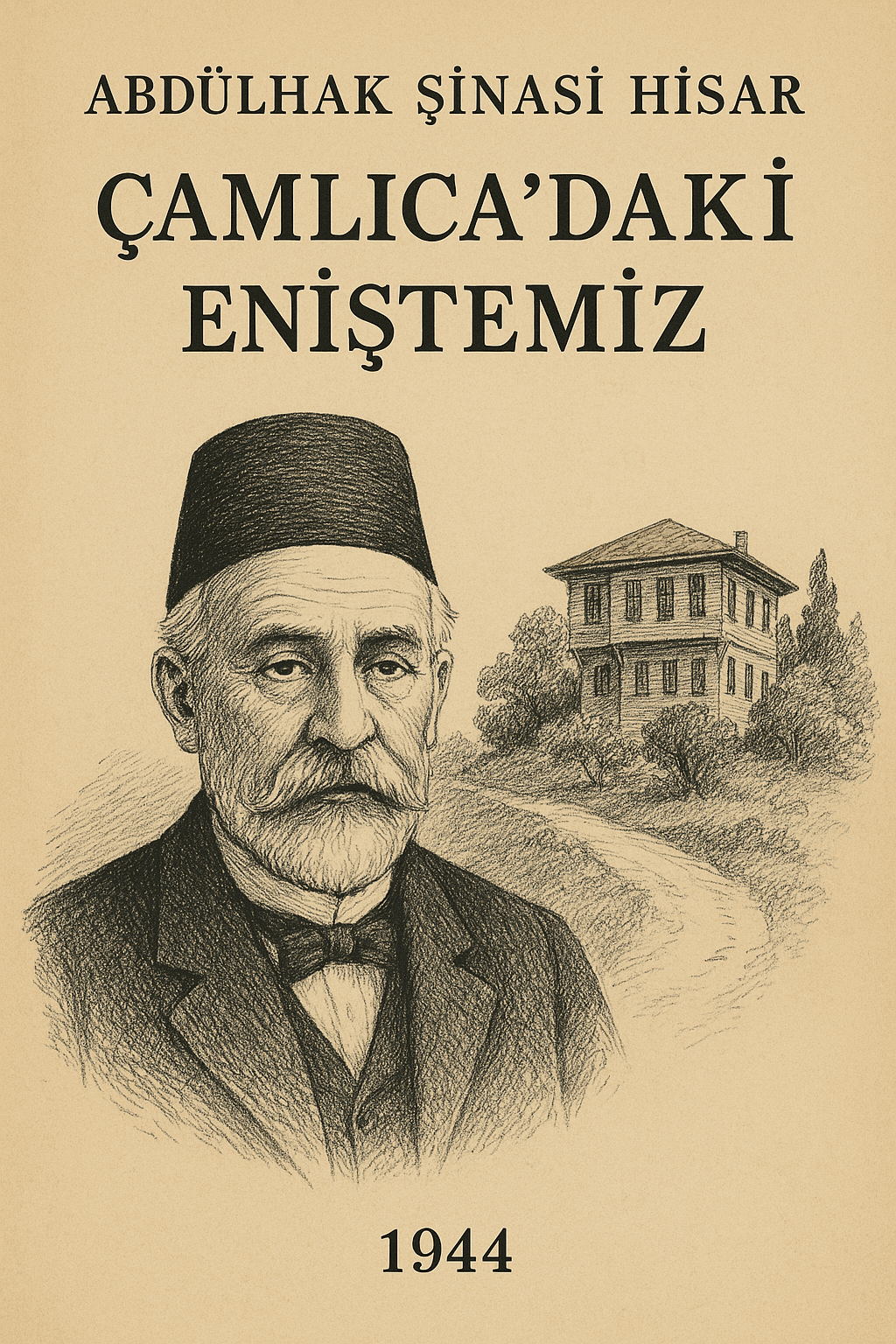
Eniştemiz (Book Cover Generated by Artificial Intelligence) in Çamlıca
Name(s) | Eniştemiz in Çamlıca | ||||||||
|---|---|---|---|---|---|---|---|---|---|
Author(s) | Abdülhak Şinasi Hisar | ||||||||
Type(s) | Novel / Memoir Novel (Autobiographical Fiction) | ||||||||
First Edition | 1944, Hilmi Kitabevi | ||||||||
Subsequent Editions | 2022 - Everest Yayınları 2005 - Yapı Kredi Yayınları 1996 - Bağlam Yayınları 1956 - Varlık Yayınları | ||||||||
Abdülhak Şinasi Hisar’s second novel, Çamlıca’daki Eniştemiz, is not a narrative shaped by conventional literary templates but rather a filtered account drawn from the author’s personal memories. At the center of this narrative is Hacı Vamık Efendi, the narrator’s uncle whom he describes as “mad.” The novel progresses not through traditional storytelling but through introspective analysis, psychological depiction, and vivid description.
As a genre, it blends elements of the memoir novel, the psychological portrait novel, and occasionally the humorous essay. Its structure does not rely on traditional plot organization but advances through a series of anecdotes and jokes.
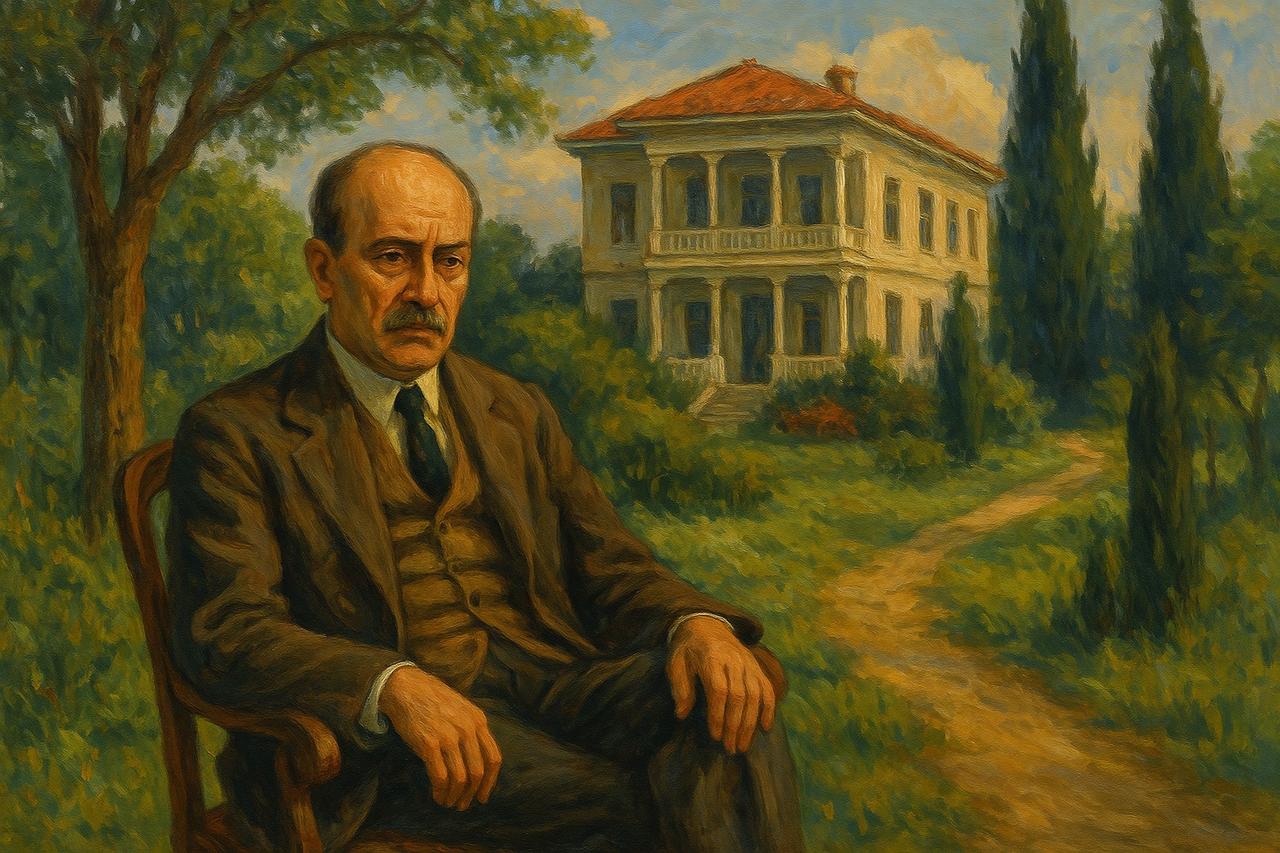
Hacı Vamık Efendi Generated by Artificial Intelligence
The novel centers on the life of Vamık Efendi, the uncle whom the author characterizes as “mad.” Hacı Vamık Efendi is both a poignant and humorous figure, defined by his inconsistent religiosity, excessive formalism, fear of germs, obsession with food, aversion to women, and peculiar behavior in his bureaucratic career.
Through this character, the novel presents a typology of a bygone era. The backdrop of the narrative is constituted by old Istanbul life, particularly the villas of Çamlıca, extended family structures, the culture of etiquette, and bureaucratic formalism. Among the central themes are:
Hacı Vamık Efendi, in Abdülhak Şinasi Hisar’s own words, is a “mad” yet endearing character. In reality, he is less truly insane than a person whose obsessions and neuroses render him incompatible with social norms. His speech, gestures, and opinions both entertain and exhaust those around him.
Psychoanalytic readings suggest that this character symbolizes the author’s own unconscious obsessions and may even constitute an autobiographical reflection. Hacı Vamık also represents the traditional Ottoman intellectual struggling to adapt to a changing world.
The novel is written in the first-person singular narrative. The narrator speaks with an ambivalent attitude oscillating between affection for his uncle, nostalgia, disappointment, and ironic critique. The author’s distinctive ornate, musical, and classical Turkish literary style remains prominent in this work.
Paragraphs are long; description, simile, repetition, and rhythmic sentences are defining features. At times, the novel adopts a fairy-tale-like narrative atmosphere.
Çamlıca, particularly the villa in Çamlıca, serves as the primary spatial setting of the novel. The interior of the house, its garden, the street, and even the neighborhood’s air are rendered as characters in their own right. The temporal setting corresponds to the author’s childhood and early youth, during the reigns of Sultan Abdülhamid II and the Second Constitutional Era. However, time is not presented chronologically but rather as a circular structure shaped by interwoven memories.
Çamlıca’daki Eniştemiz is among the earliest examples in Turkish literature where the genres of memoir and novel converge. With a Proustian approach, it explores collective memory through individual recollection and is regarded as one of Abdülhak Şinasi Hisar’s most characteristic works, especially in terms of language and style. Its literary value is further enhanced by its nuanced perspective, oscillating between humor and melancholy, individuality and society.
Hisar, Abdülhak Şinasi. Çamlıca’daki Eniştemiz. İstanbul: Everest Yayınları, 2022.
Uçman, Abdullah. "Geçmiş Zaman Peşinde Bir İstanbul Âşığı: Abdülhak Şinasi Hisar (1888–1963)." Türkiye Araştırmaları Literatür Dergisi 8, no. 16 (2010): 673–690.
Öztürkçü, İbrahim. "Psikanalitik Edebiyat Kuramı Çerçevesinde Çamlıca’daki Eniştemiz Romanı." FSM İlmî Araştırmalar İnsan ve Toplum Bilimleri Dergisi 24 (2024): 97–122.

Eniştemiz (Book Cover Generated by Artificial Intelligence) in Çamlıca
Name(s) | Eniştemiz in Çamlıca | ||||||||
|---|---|---|---|---|---|---|---|---|---|
Author(s) | Abdülhak Şinasi Hisar | ||||||||
Type(s) | Novel / Memoir Novel (Autobiographical Fiction) | ||||||||
First Edition | 1944, Hilmi Kitabevi | ||||||||
Subsequent Editions | 2022 - Everest Yayınları 2005 - Yapı Kredi Yayınları 1996 - Bağlam Yayınları 1956 - Varlık Yayınları | ||||||||
No Discussion Added Yet
Start discussion for "Eniştemiz (Book) in Çamlıca" article
Summary and Themes
Main Character: Hacı Vamık Efendi
Narrator and Style
Setting and Time
Literary Value and Significance