

This article was automatically translated from the original Turkish version.
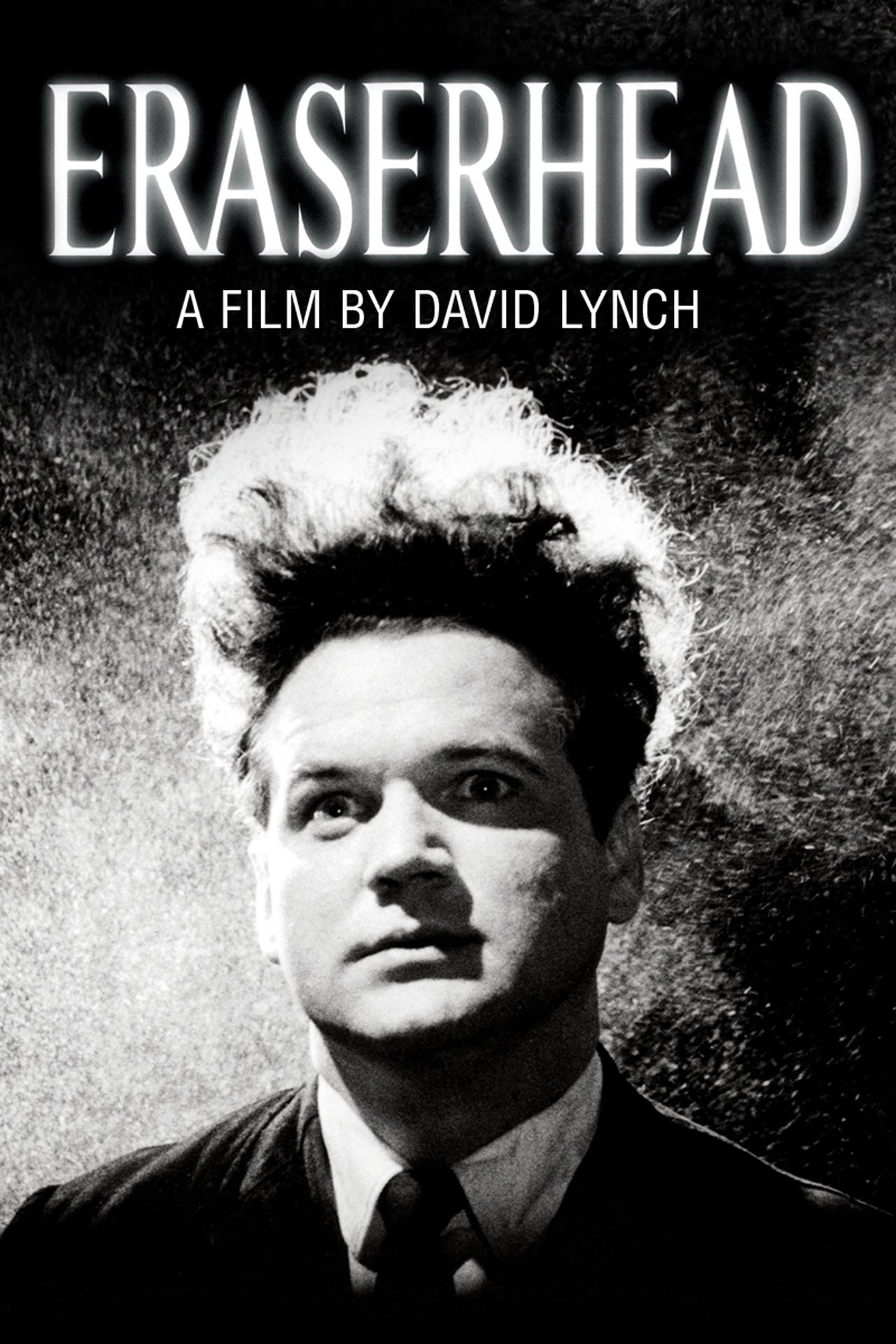
Original Title | Eraserhead | ||||||||
|---|---|---|---|---|---|---|---|---|---|
Production Year / Country | 1977 / USA | ||||||||
Type(s) | Experimental cinema Absurdist drama Psychological horror | ||||||||
Director – Screenplay | David Lynch | ||||||||
Duration | 90 minutes | ||||||||
Language(s) | English | ||||||||
Main Cast | Jack Nance (Henry Spencer), Charlotte Stewart (Mary X), Allen Joseph (Mr. X), Jeanne Bates (Mrs. X), Laurel Near (Woman in the Radiator), Judith Roberts (Beautiful Girl Across the Hall), Jack Fisk (Man on the Planet) | ||||||||
Notable Achievements | 1978 Avoriaz Antenne d'Or and Jury Mention, 1980 Valladolid Honorary Award, 2004 selection to the National Film Registry, continuous festival program presence at numerous festivals between 1977 and 2025 | ||||||||
Eraserhead is an experimental feature film directed by David Lynch, in which everyday life and dreamlike states of consciousness are intricately woven together against a backdrop of an industrial wasteland. The film navigates between psychological dread and uncanny mise-en-scène through deliberate visual and auditory choices that disrupt the continuity of reality. The black-and-white visual language intensifies light-and-shadow contrasts, transforming spaces into abstract shells. In the sound design, hums, metallic resonances, and ambient noise fulfill a dramatic musical function, heightening the sensory pressure of the scenes. Rather than following a single linear causality, the film progresses through association and repetition. Thus, the claustrophobia of modern urban life and the individual’s internal fragmentation become visible within the same composition. The result is a consistent yet hybrid cinematic language that transcends genre boundaries.
Produced under severe constraints, the film aims to generate high expressive power through minimal gestures. Sets, costumes, and props construct an “uncanny universe” of damp walls narrow corridors and industrial debris. The camera often operates with static or limited movement; this choice transforms the emptiness and silence within the frame into dramatic tools. The slowness of character movements and the length of gazes allow the viewer to settle into the scene and perceive its “breath.” The editing generates tension through accumulation rather than sudden climaxes; the rhythm is constructed through recurring visual and auditory motifs in each section. The film relies on a balance between formal economy and intellectual intensity.
The story follows Henry Spencer, a withdrawn worker, as he confronts an unexpected “baby” experience in a desolate neighborhood. The narrative engages with themes of family formation responsibility and bodily alienation through surreal imagery. Henry’s surroundings appear both as concrete dirty spaces and dreamlike realms evoking mental collapse. The figure of “The Woman in the Radiator” symbolizes impulses of escape and transcendence as a “stage” opening within a cramped room. Henry’s relationships with others are established through brief dialogues and prolonged gazes generating tension beyond words. The baby figure determines the tone of scenes through associations of fear and compassion. Events are not resolved through simple solutions but left suspended in a thick ambiguity sustained by successive image and sound repetitions.
Although the narrative timeline appears linear it is fractured by dream logic. Spaces contract or “open” in parallel with Henry’s psychology so that internal fluctuations find expression in the external world. Everyday details such as meal scenes door thresholds and stairwell voids acquire symbolic weight. Neighbors family members and coworkers intermittently intrude into the character’s enclosed inner universe. The final section progresses toward a dense uncanny and meditative conclusion marked by intensified visual and auditory motifs. This approach serves to design the film as an experience that refrains from definitive judgment yet leaves a lasting impression.
The cinematography employs a photographic approach that exploits the grainy texture of black-and-white film and fractures light through sharp corners. The framing personifies objects such as wall surfaces pipes and machine parts as characters that carry the psychological weight of the scenes. Lens choices and framing distances create an unsettling sense of proximity through frequent close-ups and surface details. The editing draws energy from the balance between breath intervals and abrupt cuts causing the viewer’s tension to rise and fall scene by scene. The soundscape is constructed not around a melodic theme but through ambient hums and mechanical resonances so that sound itself often replaces music. Slight asynchronies between sound and image reinforce the dreamlike perception. The technical ensemble transforms the limitations of a low budget into a creative advantage.
Location selection and production design establish an atmosphere resembling “perpetual night” through peeling plaster narrow attic spaces and enclosed corridors. Costumes are simple and functional preserving a timeless quality. Lighting uses unidirectional and harsh sources to carve facial contours and emphasize architectural recesses. Post-production scales rhythm and sound levels according to the psychological intent of each scene. Experimental effects are employed not for spectacle but to amplify atmospheric weight. This unity constructs the film’s language not merely through “image” but through the interrelation of “sound-space-time.”

Jack Nance as Henry Spencer (IMDb)
Jack Nance portrays the introverted protagonist Henry Spencer through subtle gestures dull gazes and restrained facial expressions. His performance avoids large emotional outbursts instead transforming tense silences and hesitant movements into dramatic elements. Nance’s outwardly calm yet internally volatile interpretation anchors the film’s uncanny tone. Henry’s physical posture and slow rhythm align with the suffocating atmosphere of the narrative. His moments of decision and startle reactions heighten the tension of each scene. This portrayal forms the film’s enduring “face” in memory.
Charlotte Stewart (Mary X) establishes a line of fragility and unease in the relationship; Mary’s restless gestures make domestic tension visible. Allen Joseph (Mr. X) and Jeanne Bates (Mrs. X) portray grotesque family figures who caricature the strange rituals of suburban life. Laurel Near (The Woman in the Radiator) elevates the themes of escape and purification to an imagistic plane through her brief performance. Judith Roberts (The Beautiful Girl Across the Hall) embodies the fluctuating line between desire and revulsion. Jack Fisk (The Man from Planet Earth) functions as an external gaze intruding upon the dream world through his figure seen in a dark isolated space. All supporting roles despite their short screen time complete the film’s uncanny fabric.
Critical readings locate the film’s power not in an explicable “story” but in an inexplicable “experience.” Particularly the dramatic function of the sound design and the plastic density of the black-and-white imagery form the backbone of the work. The claustrophobic compression of a single location materializes the character’s internal suffocation on screen. Concepts of alienation desire and dread are woven through symbolic objects and recurring rituals. Brief dialogues and prolonged silences render the accumulation of meaning beyond speech visible. This approach transcends genre boundaries and transforms the film into a lasting aesthetic experience.
Interpretations further emphasize how the “family-child-body” triangle functions as an uncanny allegory and how domestic space is transformed into a kind of mental labyrinth. The rooms of the house that become “stages” imply that everyday practices have turned into unsettling performances. The direction of light sources and the emphasis on surface textures thicken the photographic shell. This rigidity combined with the slowing of rhythm compels the viewer into patient observation. The refusal to offer a clear “resolution” keeps the interpretive field wide and alive. Thus the film positions itself as an “open text” open to diverse readings across different eras.
Since its premiere the film has been included in various festival programs across continental Europe and the United States sometimes in competition and other times receiving special mentions and honors. Its circulation has expanded over time forming a visibility trajectory from side sections of major festivals in the 1980s and 1990s to retrospectives in the 2000s and 2020s. Its selection in 2004 by the United States National Film Preservation Board for inclusion in the National Film Registry constitutes institutional recognition of its cultural and aesthetic endurance. Its dual win at the 1978 Avoriaz International Fantastic Film Festival — the Antenne d’Or and the Jury Special Mention — strengthened its early identity as “fantastic/uncanny” cinema. The 1980 Valladolid Honorary Award and recurring program appearances throughout the 1990s and 2000s at festivals such as Karlovy Vary Berlin Stockholm and AFI Fest along with continued selections in the 2010s and 2020s mark the film’s enduring circulation. In the 2020s venues such as Shanghai Las Palmas Timeless Warsaw and L’Étrange have updated its presentation for new generations.
1977 Chicago Film Festival (program); 1977 Deauville (program); 1978 Avoriaz – Antenne d’Or (Winner) and Jury Special Mention; 1980 Valladolid – Honorary Award; 1982 Fantasporto (program); 1985 Berlin (program); 1990 Fantasy Filmfest (program); 1993 Thessaloniki (program); 1995 Karlovy Vary (program); 2001 Gérardmer (program); 2003 Stockholm (program); 2004 National Film Registry – Selected; 2007 Lisbon & Estoril (program); 2010 AFI Fest and Film Festival Cologne (program); 2014 Lucca (program); 2017 Beijing Haifa Vilnius (program); 2019 !f Istanbul and Sydney (program); 2020 Guanajuato (program); 2024 L’Étrange (program); 2025 Shanghai Las Palmas Olhar de Cinema Jecheon Timeless Warsaw San Luis Obispo (program).
Eraserhead. Directed by David Lynch. Produced by American Film Institute. Libra Films, 1977
Güngör, Arif Can. “Sinema-Resim İlişkisi Bağlamında David Lynch ve ‘Silgikafa’ Filmi.” İstanbul Aydın Üniversitesi Güzel Sanatlar Fakültesi Dergisi 2, no. 4 (2016): 9–26. Accessed October 9, 2025. https://dergipark.org.tr/tr/download/article-file/358003
IMDb. "Eraserhead (1977)." Accessed October 9, 2025. https://www.imdb.com/title/tt0074486/
IMDb. "Eraserhead – Awards." Accessed October 9, 2025. https://www.imdb.com/title/tt0074486/awards/?ref_=tt_ov_at_op_awd
IMDb. "Eraserhead – Filming Locations." Accessed October 9, 2025. https://www.imdb.com/title/tt0074486/locations/?ref_=tt_ov_at_dt_flmg
IMDb. "Eraserhead – Plot Summary." Accessed October 9, 2025. https://www.imdb.com/title/tt0074486/plotsummary/?ref_=tt_ov_at_pl_pl
IMDb. “Eraserhead – Full Cast & Crew.” Accessed October 9, 2025. https://www.imdb.com/title/tt0074486/fullcredits/?ref_=tt_ov_at_pop_cst
IMDb. “Eraserhead – Release Info.” Accessed October 9, 2025. https://www.imdb.com/title/tt0074486/releaseinfo/?ref_=tt_ov_at_dt_rdat
Leigh, Danny. “David Lynch: Eraserhead.” The Guardian, March 22, 2017. Accessed October 9, 2025. https://www.theguardian.com/film/2017/mar/22/david-lynch-eraserhead
MUBI. "Eraserhead – Awards." Accessed October 9, 2025. https://mubi.com/tr/films/eraserhead/awards
MUBI. "Eraserhead." Accessed October 9, 2025. https://mubi.com/tr/tr/films/eraserhead
Serbes, Hüseyin. “Tüketim Kültürüne Karşı Kişisel Bir Deneyim: Eraserhead (1977).” Sineblog (Hacettepe Üniversitesi İletişim Fakültesi), 2019. Accessed October 9, 2025. https://www.academia.edu/40209185/T%C3%BCketim_k%C3%BClt%C3%BCr%C3%BCne_kar%C5%9F%C4%B1_ki%C5%9Fisel_bir_deneyim_Eraserhead_1977_
Sobczynski, Peter. “Defying Explanation: The Brilliance of David Lynch’s Eraserhead.” RogerEbert.com. Accessed October 9, 2025. https://www.rogerebert.com/streaming/defying-explanation-the-brilliance-of-david-lynchs-eraserhead

Original Title | Eraserhead | ||||||||
|---|---|---|---|---|---|---|---|---|---|
Production Year / Country | 1977 / USA | ||||||||
Type(s) | Experimental cinema Absurdist drama Psychological horror | ||||||||
Director – Screenplay | David Lynch | ||||||||
Duration | 90 minutes | ||||||||
Language(s) | English | ||||||||
Main Cast | Jack Nance (Henry Spencer), Charlotte Stewart (Mary X), Allen Joseph (Mr. X), Jeanne Bates (Mrs. X), Laurel Near (Woman in the Radiator), Judith Roberts (Beautiful Girl Across the Hall), Jack Fisk (Man on the Planet) | ||||||||
Notable Achievements | 1978 Avoriaz Antenne d'Or and Jury Mention, 1980 Valladolid Honorary Award, 2004 selection to the National Film Registry, continuous festival program presence at numerous festivals between 1977 and 2025 | ||||||||
Subject and Narrative Structure
Production and Technical Features
Cast and Characters
Critical Evaluation
Awards and Selections