This article was automatically translated from the original Turkish version.
Name(s) | Eravur Massacre | ||||||||
|---|---|---|---|---|---|---|---|---|---|
Date(s) | 11 August 1990 | ||||||||
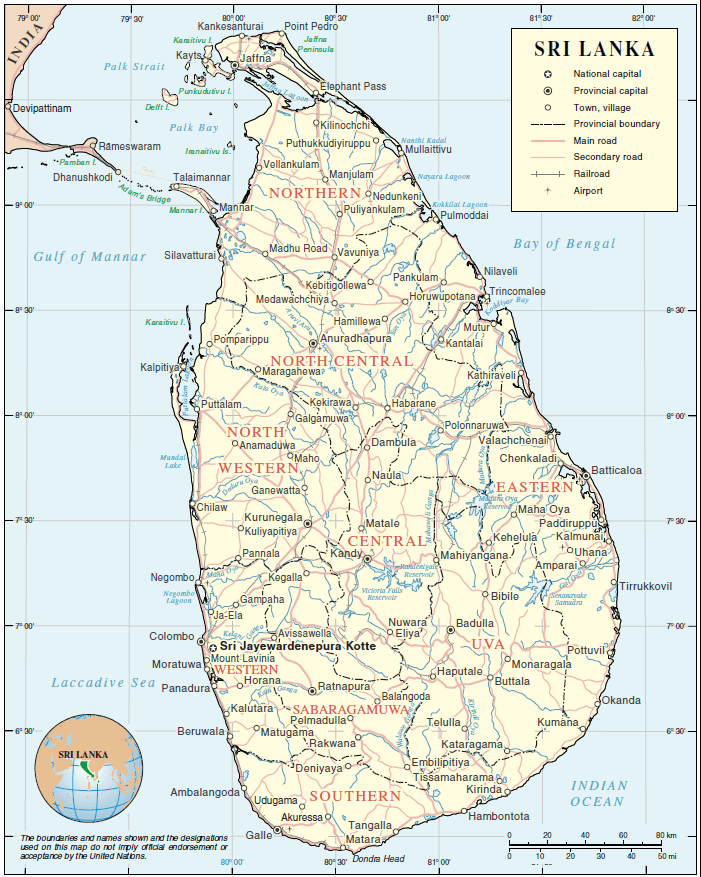
Place | Sri Lanka Eastern Province Batticaloa District Eravur town | ||||||||
Perpetrators | Liberation Tigers of Tamil Eelam (LTTE) | ||||||||
Target | Muslim civilian population | ||||||||
Number of Deaths | 50–200 | ||||||||
The Eravur Massacre is a mass killing that occurred on 11 August 1990 in the town of Eravur, located in the Batticaloa District of Sri Lanka’s Eastern Province. During the Sri Lankan civil war, in an area under the control of the Liberation Tigers of Tamil Eelam (LTTE), between 50 and 200【1】 Muslim civilians were killed, according to various sources. According to international media and human rights reports, the attack targeted mosques and civilian residential areas and emerged as part of a wave of violence triggered by the recent Kattankudi Massacre.
Video on the Eravur Massacre (Mohamed Manas)
The massacre is widely regarded as a reflection of escalating tensions between Sri Lanka’s Sinhalese, Tamil and Muslim communities, particularly the intensifying conflict between the LTTE and Muslim populations in the early 1990s. The events in Eravur not only shattered the sense of security among Muslim civilians in the region but also deepened the religious and ethnic dimensions of the conflict through racism and Islamophobia.
Sri Lanka is an island nation historically noted for its multi-religious and cosmopolitan character. According to the 2011 census, 70.2 percent of the population are Buddhist Sinhalese, 12.6 percent are Hindu Tamil, 9.7 percent are Muslim and 7.4 percent are Christian. Although the majority of the Muslim population speaks Tamil, they primarily define their ethnic identity through religious affiliation. This has positioned the Muslim community as a distinct group within Sri Lanka’s ethnic balance.
Although the country was long recognized for its culture of religious tolerance and coexistence, post-independence discriminatory policies, unequal development strategies and ethnically based politics have heightened tensions between communities. The first major wave of modern violence began in 1915 with attacks by Sinhalese groups against Muslim traders and recurred intermittently in subsequent decades. In the 1970s and 1980s, attacks targeting Muslims occurred in places such as Panadura, Galle, Puttalam, Kalutara, Gampola and Beruwela. From the late 1980s onward, tensions escalated particularly in the Eastern Province between Tamil armed groups and Muslim communities.
In the late 1980s and early 1990s, conflicts between the Liberation Tigers of Tamil Eelam (LTTE) and Muslim communities intensified dramatically. The LTTE forcibly expelled Muslim populations from certain areas and carried out mass killings. The year 1990 was one of the most intense periods of this violence, with large-scale attacks against Muslim civilians occurring in July and August in places such as Kattankudi and Eravur.
At the beginning of 1990, the Sri Lankan civil war entered a phase marked by intense fighting, especially in the eastern regions of the country. Following the collapse of a brief ceasefire with the government, the LTTE launched widespread attacks targeting both security forces and civilians. The Eastern Province, home to dense populations of both Tamils and Muslims, became a focal point of escalating tensions between the groups.
Tensions between the LTTE and Muslim communities had been deteriorating since the late 1980s. Allegations that Muslims in some areas were collaborating with state forces led the LTTE to view Muslim civilians as potential threats. Economic factors further fueled this tension; competition over control of trade routes, agricultural land and port areas deepened hostility.
In July 1990, the LTTE issued an ultimatum to Muslims in the Northern Province, demanding they leave the area within 48 hours. Thousands were forcibly displaced. This event triggered widespread fear among Muslim communities in the Eastern Province. In the following weeks, LTTE militants increased attacks on Muslim civilians. On 3 August 1990, an armed assault on two mosques in the town of Kattankudi in Batticaloa District killed over 100 people. This massacre brought security concerns among Muslim settlements in the region, including Eravur, to their highest level.
Just one week after the Kattankudi incident, LTTE presence intensified around Eravur. Local residents reported that militants were conducting reconnaissance in the area and had established armed checkpoints on village roads. These developments laid the groundwork for the attack on 11 August 1990 and suggested that the massacre had been systematically planned.
The Eravur Massacre occurred in the evening of 11 August 1990 in the town of Eravur, located in Sri Lanka’s Eastern Province. The attack began when LTTE militants targeted Muslim neighborhoods within the town. According to eyewitness accounts, the attackers first seized control of the town’s entry and exit routes to prevent civilians from fleeing. They then entered residential areas, setting fire to homes, shops and places of worship. Some sources report that civilians gathered inside or near mosques were also targeted.
Figures on the death toll vary across sources. Reports in the international press, including the Los Angeles Times, state that 119 Muslims were killed in Eravur during a nine-day wave of violence. Other reports suggest the number may have ranged between 50 and 200. The number of injured was never precisely determined, but dozens were reported to have suffered severe injuries. Numerous homes and businesses were destroyed during the attack, with some completely burned down.
Security forces either failed to intervene or responded with significant delay. Some witnesses claimed that military units in the area remained inactive during the attack. This inaction formed the basis of intense criticism directed at the government following the massacre. Immediately after the massacre, the local population organized mass funerals, which took place amid an atmosphere of mourning and protest against the government.
Shortly after the Eravur Massacre, assessments of the perpetrators were published in both local and international media. Most news reports and human rights documents present strong evidence that the attack was carried out by the Liberation Tigers of Tamil Eelam (LTTE). The intense presence of LTTE militants in the vicinity of Eravur just before the attack, the control of access roads and the similarity of the methods used to those employed in the LTTE’s previous operations support this claim.
The Sri Lankan government held the LTTE responsible for the massacre and stated that the attack was part of a systematic campaign of violence targeting the Muslim community following the Kattankudi Massacre. Government officials further asserted that the LTTE aimed to expel Muslims from the region to establish full control over the Eastern Province.
After the massacre, the LTTE either denied direct responsibility or avoided providing detailed responses. Some publications aligned with the LTTE suggested the attack was a “retaliation” or an incident occurring within the broader context of armed conflict. However, these claims have not been substantiated by sufficient evidence in reports from human rights organizations. Amnesty International and similar groups emphasized that the attack constituted a deliberate assault on civilians and a clear violation of international humanitarian law.
The security forces’ passivity during the attack intensified criticism of the government for failing to take adequate measures to prevent the massacre. This has fueled debates over whether the state fulfilled its obligation to protect civilians.
The Eravur Massacre left a deep trauma on Sri Lanka’s Muslim community. Immediately after the attack, many families fled the region, leading to increased displacement. The destruction of settlements disrupted local economic activity and triggered a prolonged security crisis. This contributed to a shift in the demographic balance of the Eastern Province.
Among local responses, calls from Muslim community representatives for enhanced security measures stood out. However, the majority of these demands were not met in the short term, leading to increased criticism of the government’s capacity and willingness to protect civilians.
Internationally, the massacre was condemned by human rights organizations. Amnesty International and similar groups stated that the attack was a deliberate assault on civilians and a clear violation of international humanitarian law. Several countries issued appeals to both the Sri Lankan government and the LTTE to end the conflict and protect civilians. International media coverage ensured the massacre resonated with global public opinion.
In the years following the massacre, the Muslim community in the region continued to live under prolonged conditions of insecurity and anxiety. The Eravur Massacre is not only remembered as part of the violent wave of summer 1990 but also as a symbolic indicator in historical narratives of the sharpening ethnic and religious dimensions of the Sri Lankan civil war.
Aliff, S. M. “Post-War Conflict in Sri Lanka: Violence against Sri Lankan Muslims and Buddhist Hegemony.” *International Letters of Social and Humanistic Sciences* 59 (2015): 109–125. Accessed August 8, 2025. https://d-nb.info/1191070174/34.
International Crisis Group. *Sri Lanka’s Muslims: Caught in the Crossfire*. Asia Report N°134. Brussels/Colombo: International Crisis Group, 2007. Accessed August 8, 2025. https://www.crisisgroup.org/sites/default/files/134-sri-lanka-s-muslims-caught-in-the-crossfire.pdf.
Mohamed Manas. "விடுதலை புலிகளால் ஏறாவூர் முஸ்லிம்கள் படுகொலை | Massacre of Eravur Muslims by LTTE - 11.08.1990." YouTube. Accessed August 8, 2025. https://www.youtube.com/watch?v=nA9K5NvAMro.
Mohammad Agus Yusoff, Nordin Hussin, and Athambawa Sarjoon. “Positioning Muslims in Ethnic Relations, Ethnic Conflict and Peace Process in Sri Lanka.” *Asian Social Science* 10, no. 10 (2014): 199–214. Accessed August 8, 2025. https://www.researchgate.net/publication/272692863_Positioning_Muslims_in_Ethnic_Relations_Ethnic_Conflict_and_Peace_Process_in_Sri_Lanka.
“119 Sri Lanka Muslims Die in Attacks by Separatists: Ethnic feud: Tamil gunmen rampage through five fishing villages. At least 450 people have been killed on the island in the last nine days.” Los Angeles Times, 1990. Accessed August 8, 2025. https://www.latimes.com/archives/la-xpm-1990-08-13-mn-459-story.html.
“Rebels Blamed for Massacre of 119 Sri Lankan Moslems.” The Washington Post, 1990. Accessed August 8, 2025. https://www.washingtonpost.com/archive/politics/1990/08/13/rebels-blamed-for-massacre-of-119-sri-lankan-moslems/089dd2f9-ff33-4213-91c8-5cf885e6f792/.
[1]
Genel kabul ve resmi veriler 121 kişinin vefat ettiği yönündedir. Lakin hükümete olan güvensizlik farklı kaynaklarda farklı sayılar verilmesine yol açmıştır.

Name(s) | Eravur Massacre | ||||||||
|---|---|---|---|---|---|---|---|---|---|
Date(s) | 11 August 1990 | ||||||||
Place | Sri Lanka Eastern Province Batticaloa District Eravur town | ||||||||
Perpetrators | Liberation Tigers of Tamil Eelam (LTTE) | ||||||||
Target | Muslim civilian population | ||||||||
Number of Deaths | 50–200 | ||||||||
Historical Background
Path to the Massacre
The Massacre
Perpetrators and Accountability Claims
National and International Reactions