

This article was automatically translated from the original Turkish version.
+1 More
Type of Geographical Indication | Place of Origin | ||||||||
|---|---|---|---|---|---|---|---|---|---|
Province(s) | Konya | ||||||||
Registration Number | 657 | ||||||||
Registration Date | 25.01.2021 | ||||||||
Product / Product Group(s) | Processed and unprocessed fruits vegetables and mushrooms | ||||||||
Applicant/Registrant(s) | Konya Ereğli Municipality | ||||||||
Ereğli Long Squash is a geographical indication registered as a name of origin under Law No. 6769 on Industrial Property. This product, registered on behalf of the Ereğli Municipality of Konya, belongs to the squash group and must bear its designation and name of origin emblem on the product itself or its packaging. Cultivation of this squash variety began in the region for the first time in 1955.
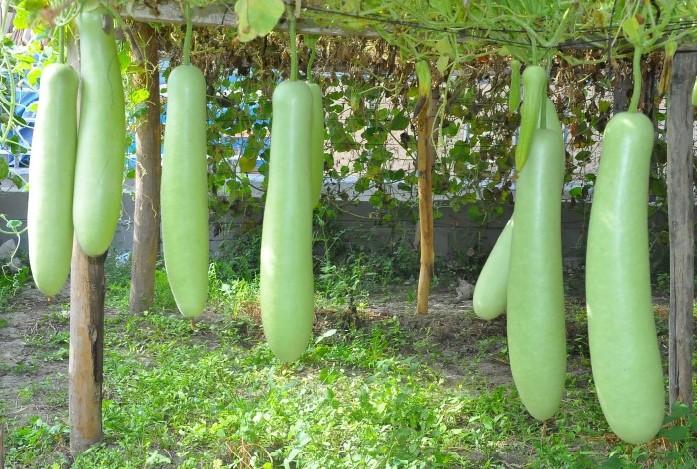
The Ereğli Long Squash is recognized by its distinct size and form characteristics. Its fruits are light green in color, with weights reaching 3 to 9 kilograms and diameters of 30 to 40 centimeters. Its defining feature is that during harvest, the fruits extend from 50 to 60 centimeters in length up to 1 to 1.5 meters.
The squash has a slightly rounded base while the end opposite the stem is pointed. The seeds are brown in tone and large in size; one thousand seeds weigh between 200 and 400 grams. For seed production in the following season, seeds are selected from the brightest, fullest, and firmest fruits after harvest and dried.
The distinguishing qualities of the product derive largely from the ecological structure of its geographical boundary. The soils of Ereğli are moderately deep, with a pH level between 7 and 8 and high water retention capacity. Additionally, the use of water from the İvriz Dam, which has low salinity and sodium adsorption ratios, is a key factor directly influencing the yield and quality of the squash, particularly during its intensive growth phase requiring frequent irrigation.
The Ereğli Long Squash is a low-calorie food source. One hundred grams of raw, unpeeled squash contains an average of 15 to 17 calories. It also contains 2 to 4 grams of carbohydrates, 0.1 to 2 grams of protein, and dietary fiber. In terms of vitamins, it provides 175 to 225 IU of vitamin A, 15 to 18 mg of vitamin C, and 25 to 35 mcg of folate, enhancing its nutritional value.
The production stages of the Ereğli Long Squash are based on regional traditional agricultural practices:
Soil and Fertilization: The soil is tilled once or twice before planting and irrigated. Sowing begins when soil temperature reaches 10 to 12 °C. Fertilization is supported by farmyard manure applied weeks before planting and basal fertilizer applied on the planting day.
Planting and Support: Planting is carried out during the first two weeks of March. Seeds are sown at a depth of 4 to 5 centimeters and spaced approximately 45 to 55 centimeters apart. As the plants grow, they are tied to trellis-like structures to maximize yield.
Irrigation: Irrigation may be avoided until the first fruits appear, provided ecological conditions are favorable. However, during dry periods and after fruit set, frequent irrigation using water from the İvriz Dam is essential to promote rapid growth.
Harvesting and Storage: The ripening period coincides with the end of June and mid-July. Harvesting is done manually or with garden shears, leaving the stem attached to the fruit. Due to its firmness and durability, the product can be stored at room temperature. General agricultural practices are sufficient for disease control.
A monitoring authority has been established to verify compliance with the standards protected under the geographical indication. This authority consists of at least three members, including one expert representative each from the Ereğli Municipality, the Ereğli District Directorate of Agriculture and Forestry, and the Ereğli Chamber of Agriculture, coordinated by the Ereğli Municipality.
Monitoring is conducted annually on a regular basis, but additional inspections may be carried out in response to complaints or as deemed necessary.
The primary focus of monitoring is to ensure that cultivation methods, seed and fruit characteristics, and the correct use of the name of origin emblem conform to the specifications of the geographical indication.
Turk Patent and Trademark Office. "Ereğli Uzun Kabağı Sicil Belgesi." *Coğrafi İşaretler Portalı.* Accessed October 23, 2025. https://ci.turkpatent.gov.tr/Files/GeographicalSigns/10467f87-70e2-4e79-8ba2-e32664f5ff0b.pdf
Türk Patent ve Marka Kurumu. "Ereğli Uzun Kabağı." Coğrafi İşaretler Portalı. Accessed October 23, 2025. https://ci.turkpatent.gov.tr/cografi-isaretler/detay/38454

Type of Geographical Indication | Place of Origin | ||||||||
|---|---|---|---|---|---|---|---|---|---|
Province(s) | Konya | ||||||||
Registration Number | 657 | ||||||||
Registration Date | 25.01.2021 | ||||||||
Product / Product Group(s) | Processed and unprocessed fruits vegetables and mushrooms | ||||||||
Applicant/Registrant(s) | Konya Ereğli Municipality | ||||||||
Morphological Characteristics and Distinguishing Features
Nutritional Profile
Cultivation and Harvesting Methodology
Monitoring and Oversight