


This article was automatically translated from the original Turkish version.
In architecture, ergonomics is a design approach grounded in human-environment interaction, aiming to create healthy, safe, and comfortable living and working spaces that align with human physical, psychological, and social needs. Within the framework of architecture’s fundamental objective—human-centered design—ergonomics seeks to enable users to move physically comfortably within built environments, perform activities efficiently in functional spaces, and experience psychologically secure and tranquil atmospheres.
In this context, architectural ergonomics encompasses shaping the built environment to fully accommodate users by considering the human body’s anatomical structure, physiological capacity, mobility, and sensory perception levels. In all design decisions—from door widths and stair heights to furniture design and spatial organization—human-space compatibility is achieved by taking into account different age groups, levels of physical ability, and cultural needs.
Architectural design is not merely a process of generating functionality and aesthetics; it is also an effort to create environments that facilitate and enhance human life. Therefore, ergonomic design approaches are indispensable elements across all areas of architecture, including spatial organization, interior design, circulation planning, and the dimensional specification of building elements.
Ergonomics is an interdisciplinary field concerned with organizing environmental conditions to support human health, safety, and comfort in accordance with human anatomical structure, anthropometric measurements, physiological capacity, and psychological needs. Ergonomics in architecture ensures that the built environment is designed to be accessible, healthy, safe, and comfortable for all user groups. To this end, the design process must integrate the needs of different age groups, genders, levels of physical ability, and cultural characteristics.
Since architectural design directly shapes human life and creates the spaces in which daily activities occur, applying ergonomic principles is critically important. Producing solutions that meet the physical and psychological needs of users in all types of buildings—from residential units to public spaces, educational facilities to healthcare institutions—is a direct factor influencing quality of life.
Architectural ergonomics aims not only to ensure spatial compatibility through physical dimensions but also to align spaces with psycho-social needs and perceptual experiences. Designing functional and easily accessible spatial arrangements, providing barrier-free access for individuals with mobility limitations, and creating safe environments where users can comfortably carry out daily activities are among the core application areas of architectural ergonomics.
In this context, proper spatial organization requires defining distinctions between private and public areas according to user needs, while balancing functionality with aesthetic requirements. In contemporary architecture, developing design approaches sensitive to the needs of elderly individuals, children, and users with disabilities necessitates the consideration of ergonomic criteria across numerous domains—from door widths and corridor clearances to ramp and elevator solutions and furniture design.
Incorporating ergonomics into the architectural design process not only enhances individual comfort but also ensures that spaces are durable and user-friendly. This is directly linked to sustainable design principles. Today, ergonomic approaches are evaluated alongside universal design and inclusive design principles, aiming to create built environments that all individuals can access and use equally and freely.
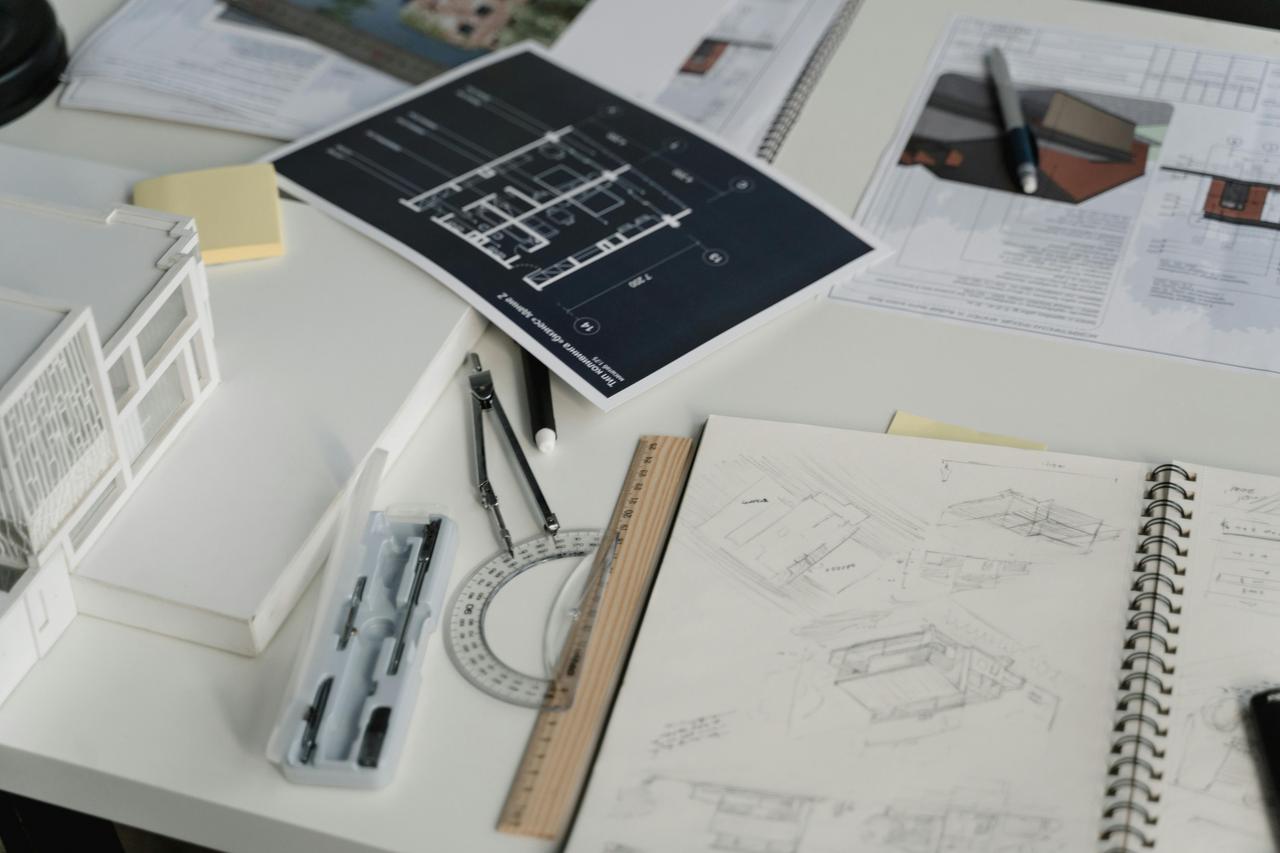
Ergonomics in Architecture (Pexels)
The concept of ergonomics emerged in response to the hazardous working conditions created by rapid industrialization during the Industrial Revolution, with the goal of improving labor conditions. Initially conceived as a field focused solely on workplace adjustments, ergonomics evolved over time to become an essential component of architectural design, driven by the broader aim of enhancing quality of life and regulating human-environment interactions. Particularly from the second half of the 20th century onward, the rise of human-centered design thinking led to the recognition of architectural ergonomics as an indispensable criterion in building and spatial design.
Alongside technological advancements and the diversification of user needs, ergonomics is no longer limited to ensuring physical comfort; it now offers a comprehensive design approach that also addresses psychological and social requirements. Today, this perspective integrates with universal design and inclusive design frameworks to generate equitable, accessible, and sustainable solutions encompassing all user groups. This process encourages the adoption of new standards that enable the creation of human-centered spaces and ensure that diverse user groups experience environments under equal conditions.
Ergonomic design principles, when integrated with universal design, aim to enable all individuals—regardless of age, gender, or physical ability—to use the built environment equally, freely, and safely. Therefore, architectural design processes must develop solutions that respond not only to an average user profile but also to the diverse needs of different age groups and ability levels.
In spaces designed specifically for elderly and disabled individuals, environmental arrangements must prioritize enhancing quality of life and supporting independent mobility by accounting for their physical and sensory limitations. For elderly users, non-slip flooring materials, wide and unobstructed passageways, and adequate levels of natural and artificial lighting should be provided. Handrails and support elements, along with seating and resting areas, must be designed for easy access. Additionally, the use of contrasting colors and audio-visual guidance systems can help elderly individuals perceive their surroundings more safely and comfortably, especially in cases of visual or auditory perception loss.
For people with disabilities, eliminating physical barriers in the built environment and providing solutions compliant with accessibility standards is essential. Spaces must be made independently usable through adaptations such as ramps, elevators, low-slope walkways, and wide door openings for individuals using wheelchairs or assistive devices. For visually impaired users, tactile guidance paths, surface texture variations, and Braille signage should be provided. For hearing-impaired individuals, visual alerts and audio-visual information systems must be implemented.
Children, due to their unique needs and developmental characteristics, must also be specifically addressed within the context of universal design and ergonomics. Spaces designed for children should incorporate furniture and fittings scaled to their size and motor skills, enhance safety measures, and be organized to support curiosity and physical activity. In preschool and school buildings, play areas, and residential surroundings, sharp corners should be avoided, and safe flooring materials should be selected to prevent falls and accidents. Furthermore, color, texture, and form choices should be made to support children’s cognitive and emotional development, ensuring that spaces are stimulating and encourage learning.
This holistic approach at the intersection of ergonomic and universal design not only meets the needs of specific user groups but also promotes equal and active social participation for all individuals, thereby ensuring that the built environment is organized inclusively and fairly. In this context, the integration of ergonomics and universal design constitutes a vital design strategy for creating human-centered and sustainable spaces in architecture.
Today, architectural ergonomics has transformed into a more inclusive and human-centered approach, shaped by factors such as sustainability, technological advancement, and social diversity. The growing understanding that the built environment must be not only aesthetic and functional but also healthy, safe, accessible, and environmentally friendly has elevated the importance of ergonomic design. Environmental factors such as sustainable material use, natural lighting, and energy efficiency are now integrated with ergonomics to deliver solutions that enhance user comfort. Thanks to digital design tools and simulation software, building performance metrics—including acoustics, accessibility, and user comfort—can be analyzed during the design phase, enabling the creation of higher-quality spaces. Emerging technologies are expanding the use of intelligent systems that support the independent mobility of elderly and disabled individuals, while also enabling the creation of safe, accessible, and development-supportive environments for children. All these developments have transformed ergonomics from a mere comfort tool into an inseparable component of the broader goals of social equity and the creation of a sustainable living environment.
Accessed November 26, 2025.
Accessed November 26, 2025.
Akaydın, Özlem Eren, and Canbay Türkyılmaz, Çiğdem. "İşlevsel Dönüşüme Uğramış Yapılarda Ergonomi Kavramı; Üsküdar Nevmekan Örnek İncelemesi." Mühendislik Bilimleri ve Tasarım Dergisi 6, Özel Sayı: Ergonomi2017 (2017): 279. Accessed May 15, 2025.
Doğan, Cem. "Hareketli Mekân Tasarımındaki Ergonomik Faktörlerin Deprem Bölgesi Konutlarına Uygulanması." Mimarlık ve Yaşam Dergisi 5, no. 2 (2020): 615-626. Accessed May 15, 2025.
Hatırnaz, Aslı Akyıldız. "Ergonomi Çerçevesinde Eşitlikçi Mekan Üretim Yaklaşımı Olarak 'Evrensel Tasarım' Kavramı." Ergonomi 2, no. 3 (2019): 178-193. Accessed May 15, 2025.
Kalınkara, Velittin. "Yaşlanan Kentler: Kentsel Alanda Aktif Yaşlanmayı Destekleyecek Kapsayıcı Tasarım ve Ergonomi." Toplum ve Demokrasi 11, no. 24 (July-December 2017): 229-248. Accessed May 15, 2025.
Kuru, Rüya, and Canbay Türkyılmaz, Çiğdem. "Kütüphane Yapılarının Mekansal Organizasyonunun Ergonomik Açıdan Değerlendirilmesi: Bahçeşehir Üniversitesi Kütüphane Binası Örneği." Ergonomi 2, no. 3 (2019): 153-166. Accessed May 15, 2025.
Yararel, Bilge. "Ofis Tasarımında Ergonomik ve Antropometrik Etkenler." Mimarlık ve Yaşam Dergisi 4, no. 1 (2019): 141-153. Accessed May 15, 2025.
Zorlu, Tülay. "Yaşlılar İçin Konutta İç Mekân Tasarımı ve Ergonomi." Yaşlı Sorunları Araştırma Dergisi 10, no. 2 (2017): 40-53. Accessed May 15, 2025.

No Discussion Added Yet
Start discussion for "Ergonomics in Architecture" article
Definition and Scope
Historical Development
Core Ergonomic Design Principles
The Relationship Between Ergonomics and Universal Design
Contemporary Approaches