This article was automatically translated from the original Turkish version.
+1 More
Geographical Location(s) | Ermenek - Karaman / Türkiye | ||||||||
|---|---|---|---|---|---|---|---|---|---|
Geographical Sign Type | Mahreç Sign | ||||||||
Registration Number | 1223 | ||||||||
Registration Date | 14 September 2022 | ||||||||
Type(s) | Traditional Turkish dessert | ||||||||
Main Materials | Grape molasses (%43–48), Tahini (%52–56), Çöven water (at least %1) | ||||||||
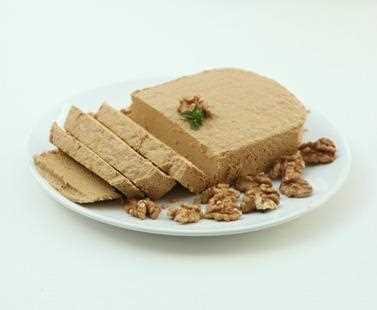
Ermenek Helvası is a unique sweet variety produced in the Ermenek district of Karaman province, Türkiye, using traditional methods and officially registered as a geographical indication on 14 September 2022. Made from natural ingredients such as tahini, grape molasses and çöven water, this helva is an important product that reflects the local palate through both its production technique and cultural background.
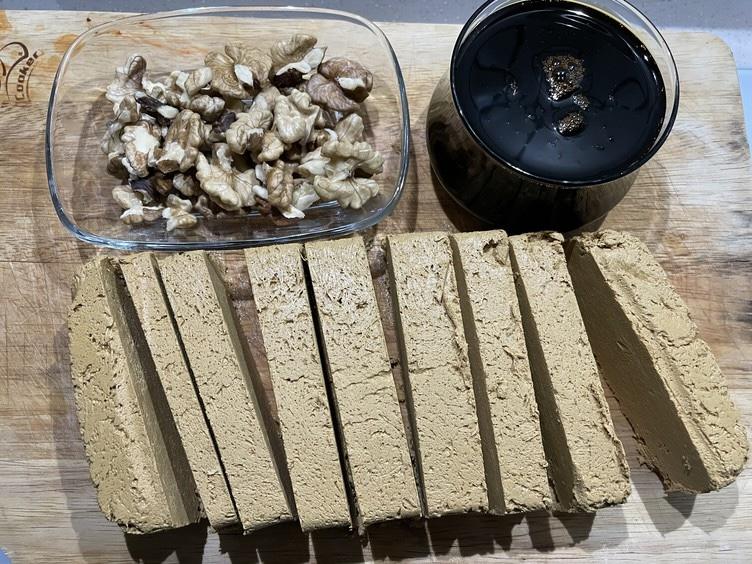
Ermenek Helvası (Anadolu Agency)
The production of Ermenek Helvası has continued for many years in the Ermenek district, shaped by skills and knowledge passed down from generation to generation. Historically, this helva served as a staple food providing energy to people working in vineyards, gardens and fields especially during winter months. Today, it has acquired the status of a traditional dessert served at weddings, holidays and special occasions. Production is carried out by a few small producers in the district; this model is based on women’s labor and contributes to the local economy.
As stated in the registration document, Ermenek Helvası has a light brown color, dense consistency and a matte appearance. The product contains 52–56 percent tahini, 43–48 percent grape molasses and at least 1 percent çöven water. No sugar is used. The helva is cooked for approximately 2.5 hours in stainless steel steam-equipped vats while being continuously stirred, followed by manual mixing and shaping. Filling occurs at a temperature between 40–50 °C and the product has a shelf life of up to 18 months when packaged in airtight containers.
The key stages in the production of Ermenek Helvası are as follows:
Ermenek Helvası was registered as a geographical indication on 7 June 2021 following an application by the Ermenek Municipality and placed under protection as of 14 September 2022 (Registration No: 1223). Production is permitted only within the boundaries of the Ermenek district of Karaman province and exclusively using the specified traditional methods. Inspections are conducted at least once a year under the coordination of the Ermenek Municipality.
Anadolu Ajansı. “Coğrafi İşaretli Ermenek Helvasını Üç Kuşaktır Gelecek Nesillere Aktarıyorlar.” Anadolu Ajansı. Accessed June 28, 2025. https://www.aa.com.tr/tr/yasam/cografi-isaretli-ermenek-helvasini-uc-kusaktir-gelecek-nesillere-aktariyorlar/2743188.
T.C. Ministry of Culture and Tourism. "Ermenek Helvası - Karaman." Türkiye Kültür Portalı. Accessed June 28, 2025. https://www.kulturportali.gov.tr/turkiye/karaman/neyenir/ermenek-helvasi.
Turkish Patent and Trademark Office. "Ermenek Helvası – Coğrafi İşaret Tescil Belgesi." *Coğrafi İşaretler Portalı.* Accessed June 28, 2025.
Türk Patent ve Marka Kurumu. "Ermenek Helvası." *Coğrafi İşaretler Portalı.* Accessed June 28, 2025. .

Geographical Location(s) | Ermenek - Karaman / Türkiye | ||||||||
|---|---|---|---|---|---|---|---|---|---|
Geographical Sign Type | Mahreç Sign | ||||||||
Registration Number | 1223 | ||||||||
Registration Date | 14 September 2022 | ||||||||
Type(s) | Traditional Turkish dessert | ||||||||
Main Materials | Grape molasses (%43–48), Tahini (%52–56), Çöven water (at least %1) | ||||||||
Origin and Traditional Context
Physical Characteristics and Composition
Production Process
Geographical Indication and Protection