This article was automatically translated from the original Turkish version.
+1 More
Type of Geographical İndication | Origin Name | ||||||||
|---|---|---|---|---|---|---|---|---|---|
Application Date | 23.03.2021 | ||||||||
Registration Number | 1220 | ||||||||
Registration Date | 12.09.2022 | ||||||||
Product / Product Group(s) | Spices/flavorings sauces and salt for food | ||||||||
Province(s) | Erzurum | ||||||||
Applicant/Registrant(s) | Erzurum Chamber of Commerce | ||||||||
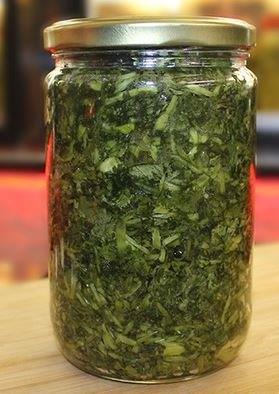
Erzurum Aşotu is derived from the coriander plant, known by its Latin name Coriandrum sativum L., and belongs to the Apiaceae (parsley) family. This plant, referred to as “aşotu” within its geographic region, is a characteristic element of Erzurum’s culinary culture. Its leaves are used as a seasoning in dishes, soups, and salads; they are commonly preserved by salting but can also be consumed fresh.
Erzurum Aşotu is an annual, herbaceous, and hairless plant that can grow 30–80 cm tall. Its leaves are compound and mostly trifoliate. The lower leaves are petiolate, while the middle leaves are sessile. These green leaves resemble parsley. The seed portions of the plant are located underground.
Its leaves contain over 160 mg/100 g of ascorbic acid (vitamin C) and over 12 mg/100 g of carotene (vitamin A). The seeds contain approximately 30% protein by weight. The commercial value of Erzurum Aşotu is based on its volatile oil components: it contains 0.3–1.6% volatile oil. The main component of this oil is linalool (60–80%). Other components include geraniol (3–5%), geranyl acetate (1–5%), borneol (1–5%), α-pinene, bornyl acetate, citronellol, and camphor.
Aşotu cultivation is carried out in dry, calcareous soils with low rainfall. Seeds sown in March–April mature within 90 days and are harvested during summer. The plant has low water requirements and requires irrigation every 3–4 days.
The preservation process involves salting:
Erzurum Aşotu has been officially registered under Law No. 6769 on Industrial Property as a geographical indication product, meaning it may only be produced within the boundaries of Erzurum Province. The packaging of the registered product must display the term “Erzurum Aşotu” together with its designated logo. In cases where packaging is not feasible, these identifying elements must be clearly displayed within the business premises.
Oversight procedures are conducted under the coordination of the Erzurum Chamber of Commerce and by specialized experts. This three-member oversight body includes one expert from the Erzurum Directorate of Agriculture and Forestry and one from the Department of Gastronomy and Culinary Arts at Atatürk University Faculty of Tourism. Inspections are carried out at least once annually, with additional inspections conducted as needed or upon complaint.
During inspections, the suitability of components used in the production process, as well as the accuracy of the labeling, logo, and geographical indication emblem on the packaging, are carefully examined. Where necessary, the volatile oil content of the plant is also verified through laboratory analysis. The registering institution holds full legal responsibility for safeguarding the geographical indication rights of the product.
Turk Patent and Trademark Office. "Erzurum Aşotu Coğrafi İşaret Detayı." Accessed July 6, 2025. https://ci.turkpatent.gov.tr/cografi-isaretler/detay/3742.

Type of Geographical İndication | Origin Name | ||||||||
|---|---|---|---|---|---|---|---|---|---|
Application Date | 23.03.2021 | ||||||||
Registration Number | 1220 | ||||||||
Registration Date | 12.09.2022 | ||||||||
Product / Product Group(s) | Spices/flavorings sauces and salt for food | ||||||||
Province(s) | Erzurum | ||||||||
Applicant/Registrant(s) | Erzurum Chamber of Commerce | ||||||||
Cultivation and Production Method
Geographical Indication and Oversight