


This article was automatically translated from the original Turkish version.
+2 More
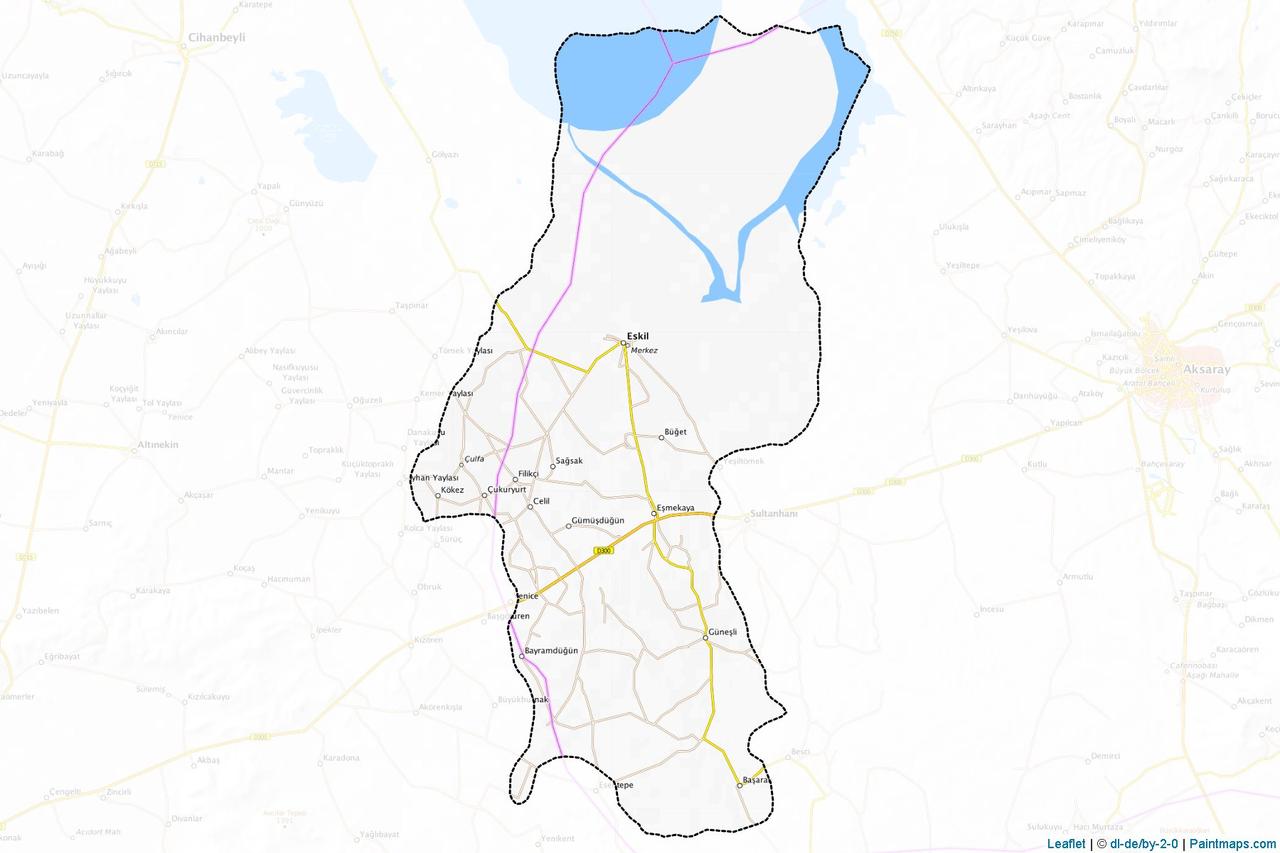
Eskil
Province(s) | Aksaray | ||||||||
|---|---|---|---|---|---|---|---|---|---|
Geographic Region | Central Anatolia | ||||||||
Population | 27.205 | ||||||||
District Governor | Fuat Yurddaş | ||||||||
Mayor(s) | Mustafa Zavlak | ||||||||
Eskil is a district in the Central Anatolia Region of Türkiye, subordinate to Aksaray. Located approximately 67 kilometers from the city center of Aksaray, Eskil lies in the western part of the province. To the north lies Cihanbeyli district of Konya, to the east Aksaray Central District, to the south Gülağaç, and to the west the province of Konya. Eskil stands out due to its extensive plain structure, arable land, and location along the eastern shore of Tuz Gölü, making it one of the central agricultural hubs of the region.
The history of settlement in Eskil dates back to antiquity. Archaeological investigations have revealed that the earliest settlements in the area extend to the Neolithic period. Known to have been inhabited during the Roman and Byzantine eras, Eskil also served as a settlement center during the Seljuk and Ottoman periods. The name of the district appears in 16th-century Ottoman records. In 1990, following Aksaray’s elevation to provincial status, Eskil attained district status.
Eskil is situated on a vast, flat plain. The majority of the district’s land is suitable for agriculture. While flat terrain dominates the landscape, some gently undulating areas are found in the southeast. Positioned on the eastern shore of Tuz Gölü, the district also encompasses a natural habitat adjacent to the lake. The elevation of the district is approximately 950 meters.
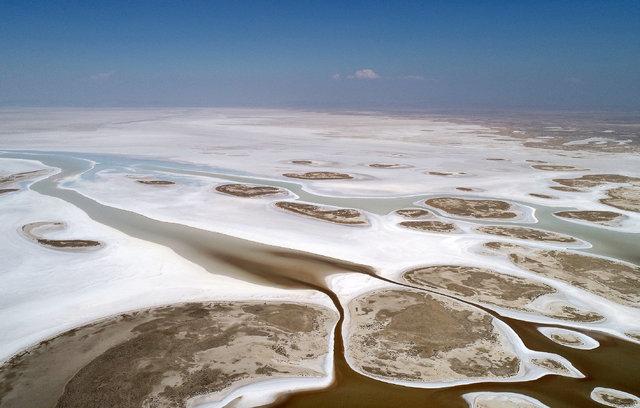
Aksaray, Eskil – View of Tuz Gölü (Eskil Municipality)
Eskil experiences a continental climate. Summers are hot and dry, while winters are cold and occasionally snowy. Precipitation typically occurs during spring and autumn. The natural vegetation consists of steppe; there are no natural forested areas.
According to 2024 data from the Turkish Statistical Institute, the total population of Eskil is 27,205. The proportion of residents living in the district center is higher than in rural areas. The district comprises a total of 28 neighborhoods. In recent years, population growth has been observed, particularly due to agricultural investments.
The economy of Eskil is largely based on agriculture and animal husbandry. The district’s extensive and fertile plains produce wheat, barley, alfalfa, and silage corn. In recent years, greenhouse farming has also increased. Livestock farming includes both large and small ruminants. Agricultural production forms the backbone of the district’s economy.
Due to its location within the Tuz Gölü basin, salt production was historically an important source of livelihood in the district; today, it continues only on a limited scale under the framework of environmental protection priorities.
Tuz Gölü, located to the west of the district and largely encompassed within its boundaries, holds significance both for its natural character and its salt production. Additionally, the mounds within the district demonstrate that the region has been inhabited since prehistoric times.
The Ulu Cami in the district center is one of the notable religious and cultural structures, distinguished by its architecture and historical fabric.
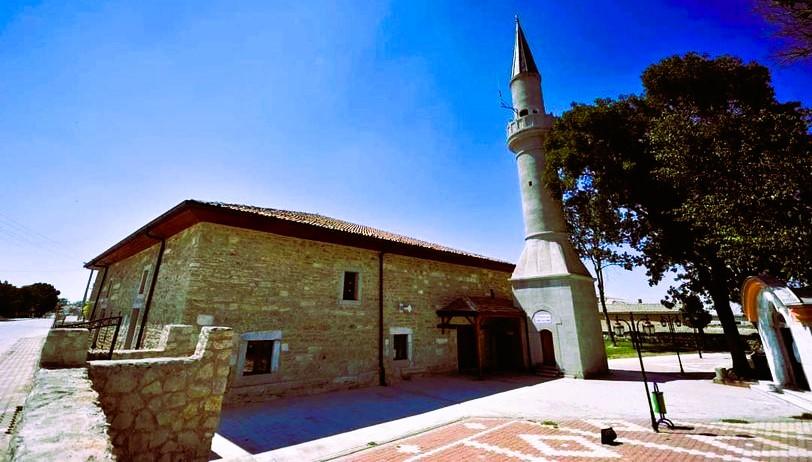
Aksaray, Eskil – Ulu Cami (Eskil Municipality)
Among the local dishes, meat-based meals, bulgur, and pastries are particularly prominent. Traditional products such as homemade tomato paste, pickles, and erişte, prepared using traditional methods, are also widely consumed in the district.
Aksaray Valiliği. “Eskil İlçesi.” Aksaray Governorship Official Website. Accessed May 22, 2025. https://www.aksaray.gov.tr/eskil
Eskil Belediyesi. "Eskil Hakkında." Eskil Municipality Official Website. Accessed May 22, 2025. https://www.eskil.bel.tr/icerik/eskil-hakkinda
Eskil Belediyesi. “Ecdat Yadigarı Eskil Ulu Cami Yeniden Hayat Buluyor.” Eskil Municipality Official Website. Accessed May 22, 2025. https://eskil.bel.tr/ecdat-yadigari-eskil-ulu-cami-yeniden-hayat-buluyor/
Eskil Belediyesi. “Eskil Tuz Gölü.” Eskil Municipality Official Website. Accessed May 22, 2025. https://eskil.bel.tr/eskil-tuzgolu-2/
Eskil Kaymakamlığı Governorship. "Tarihçe." Eskil District Governorship Official Website. Accessed May 22, 2025. https://www.eskil.gov.tr/tarihce
Turkey Statistical Institute (TÜİK). (2025). “Adrese Dayalı Nüfus Kayıt Sistemi Sonuçları, 2024”. Accessed May 22, 2025. https://data.tuik.gov.tr/Bulten/DownloadIstatistikselTablo?p=mrUHYGTWyI7m1gItx3gEMDRQQ0yKBoK%2FY4%2F7PGKKmePr6h55u6PVE825fke17fBi

Eskil
Province(s) | Aksaray | ||||||||
|---|---|---|---|---|---|---|---|---|---|
Geographic Region | Central Anatolia | ||||||||
Population | 27.205 | ||||||||
District Governor | Fuat Yurddaş | ||||||||
Mayor(s) | Mustafa Zavlak | ||||||||
History
Geography and Climate
Population and Demographic Structure
Economy
Tourism, Culture and Cuisine