This article was automatically translated from the original Turkish version.
+1 More
Registration Number | 26 | ||||||||
|---|---|---|---|---|---|---|---|---|---|
Application Date | 27.10.1997 | ||||||||
Application Number | C 97/02 | ||||||||
Publication Date | 07.01.1999 | ||||||||
Type(s) | Origin | ||||||||
Identity of the Applicant | Eskişehir Chamber of Industry | ||||||||
Address of the Applicant | Organized Industrial Zone 26110 ESKİŞEHİR | ||||||||
Geographical Boundary | Eskişehir provincial boundaries | ||||||||
Product to be Used | Lüle stone | ||||||||
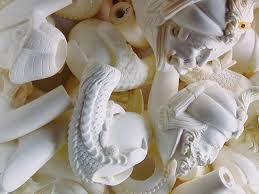
Eskişehir lüle taşı, bilimsel adı sepiolit olan, beyaz ya da nadiren kurşuni renkte, hafif ve gözenekli yapısıyla tanınan doğal bir mineraldir. Eskişehir ve çevresinde çıkarılan bu taş, yüksek su ve nikotin emme kapasitesi, ateşe dayanıklılığı ve işlenebilirliği ile öne çıkar. Fiziksel özellikleri arasında düşük sertlik (Mohs 2–2,5), kırılgan olmayan yapısı ve ısıya karşı yalnızca renk değiştirme özelliği yer alır. Genellikle pipo, biblo, takı, tespih ve süs eşyası üretiminde kullanılır.
Eskişehir lüle taşı is defined by several unique physical and technical characteristics:
Due to these properties, it is used for various purposes in different industrial and craft fields.
Eskişehir lüle taşı is classified into seven distinct types based on size, weight, color, surface imperfections, pore structure, and vein patterns. This classification requires expert evaluation. The types and their applications are as follows:
After extraction from the mine, Eskişehir lüle taşı undergoes a series of procedures to transform it into a semi-finished state suitable for further crafting. The goal of these processes is to achieve the optimal softness and shapeability required for working. The stages are as follows:
After processing is complete, the stones are sorted according to type and category. They are wrapped in cotton or pelür paper and placed in special crates. During this stage, the stones are continuously inspected, and defective pieces are returned to the previous processing stage.
The production and related processes of Eskişehir lüle taşı are monitored in accordance with Article 20 of the Decree-Law No. 555 on the Protection of Geographical Indications. Inspections are carried out by the Eskişehir Chamber of Industry. Under the decisions of the relevant professional committee, inspections are conducted by the Chamber’s certified experts or, when necessary, by external specialists. Inspection covers all stages of production, including raw material, semi-finished and finished products.
Turkish Patent and Trademark Office. "Eskişehir Lüle Taşı Tescil Belgesi (PDF)." Accessed July 20, 2025. https://ci.turkpatent.gov.tr/Files/GeographicalSigns/26.pdf.
Turkish Patent and Trademark Office. "Eskişehir Lüle Taşı." Accessed July 20, 2025. https://ci.turkpatent.gov.tr/cografi-isaretler/detay/37890.

Registration Number | 26 | ||||||||
|---|---|---|---|---|---|---|---|---|---|
Application Date | 27.10.1997 | ||||||||
Application Number | C 97/02 | ||||||||
Publication Date | 07.01.1999 | ||||||||
Type(s) | Origin | ||||||||
Identity of the Applicant | Eskişehir Chamber of Industry | ||||||||
Address of the Applicant | Organized Industrial Zone 26110 ESKİŞEHİR | ||||||||
Geographical Boundary | Eskişehir provincial boundaries | ||||||||
Product to be Used | Lüle stone | ||||||||
No Discussion Added Yet
Start discussion for "Eskişehir Lüle Stone" article
Physical and Technical Properties
Classification by Type
Processing into Semi-Finished Form
Classification and Packaging
Inspection Procedures