


This article was automatically translated from the original Turkish version.
+2 More
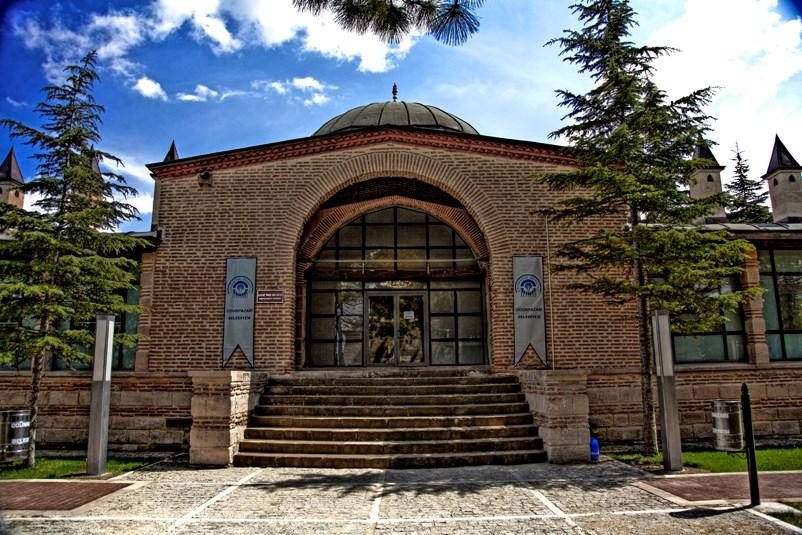
Eskişehir Lületaşı Museum
Establishment Year | 2008 | ||||||||
|---|---|---|---|---|---|---|---|---|---|
Location | Odunpazarı Eskişehir | ||||||||
Museum Type | Thematic – Mineralogy / Craft Museum | ||||||||
Eskişehir Lületaşı Museum is a thematic museum established to introduce, preserve, and transmit lületaşı, a natural mineral unique to Türkiye. Opened to the public in 2008 by the Odunpazarı Municipality, the museum aims to showcase the artistic, cultural, and economic dimensions of lületaşı extracted exclusively in Eskişehir. In this regard, it holds the distinction of being the first and only museum in the world dedicated to lületaşı.
Lületaşı, chemically known as sepiolite, is a porous, white, soft, and lightweight mineral composed of magnesium and silicon. Due to its soft structure, it is exceptionally easy to work with and hardens upon exposure to air. Its heat resistance and moisture-absorbing properties make it particularly preferred for pipe manufacturing. Lületaşı is mined only in Eskişehir and its surrounding areas, from underground mines at depths of 20 to 130 metres. Nearly all of the world’s reserves of lületaşı are located in Eskişehir.

Eskişehir Lületaşı Museum (Odun Pazarı Municipality)
The museum operates in a restored two-storey mansion, an example of traditional Ottoman-Turkish residential architecture located in the Odunpazarı district of Eskişehir. The Odunpazarı region serves as a cultural hub reflecting Eskişehir’s heritage and hosts numerous museums and art spaces. Situated within this historic fabric, the Lületaşı Museum presents art, craftsmanship, and natural heritage in a unified setting.
Eskişehir’s cultural identity, closely associated with lületaşı, has evolved over the 20th century through artisanal production by local craftsmen. In 2008, the Odunpazarı Municipality established the Lületaşı Museum to document and exhibit this legacy. The museum’s founding was supported by contributions from Eskişehir-based lületaşı masters, collectors, and art historians.
The museum displays approximately 400 handcrafted lületaşı objects produced from the 1970s to the present. The collection includes:
Each object is accompanied by informational panels detailing its date of creation, the artisan who made it, its thematic content, and the techniques employed.

Eskişehir Lületaşı Museum (Odun Pazarı Municipality)
Lületaşı products undergo a completely handcrafted production process. After extraction, the raw mineral is dried, then carved, shaped, and polished. Artisans develop designs based on traditional motifs as well as contemporary aesthetic sensibilities. The museum informs visitors about this process through visual panels and video presentations.
Lületaşı is one of Eskişehir’s symbolic values and holds importance both for its cultural heritage and local economy. The museum seeks to raise awareness regarding the preservation of this craft and its transmission to future generations. It also serves as a supporting platform for ongoing efforts to have lületaşı craftsmanship inscribed on UNESCO’s Intangible Cultural Heritage List.
The museum periodically hosts exhibition openings, lületaşı carving workshops, and discussions with local masters. Guided tours are also offered for primary and secondary school students.
GeziRe. "Lületaşı Müzesi." *gezire.com*. Accessed May 22, 2025. https://www.gezire.com/luletasi-muzesi/
Müzeler Türkiye. "Eskişehir Lületaşı Müzesi." *muzeler.org*. Accessed May 22, 2025. https://muzeler.org/eskisehir-luletasi-muzesi--938928
Odunpazarı Belediyesi. “Lületaşı Müzesi.” *odunpazari.bel.tr*. Accessed May 22, 2025. https://odunpazari.bel.tr/projeler/kultur-sanat-ve-turizm-projeleri/luletasi-muzesi

Eskişehir Lületaşı Museum
Establishment Year | 2008 | ||||||||
|---|---|---|---|---|---|---|---|---|---|
Location | Odunpazarı Eskişehir | ||||||||
Museum Type | Thematic – Mineralogy / Craft Museum | ||||||||
No Discussion Added Yet
Start discussion for "Eskişehir Lületaşı Museum" article
Definition and Characteristics of Lületaşı
Location and Structure of the Museum
History and Establishment Process
Collection and Exhibited Works
Artisanal Tradition and Production Process
Cultural and Economic Significance
Education and Activities