


This article was automatically translated from the original Turkish version.
Name(s) | EtherCAT | ||||||||
|---|---|---|---|---|---|---|---|---|---|
Standard | IEC 61158 | ||||||||
Initial Developer | Beckhoff Automation | ||||||||
Data Rate | 100 Mbps (full duplex) | ||||||||
Release Year | 2003-01-01 | ||||||||
EtherCAT (Ethernet for Control Automation Technology) is a real-time Ethernet-based fieldbus protocol developed to meet the requirements of high speed, low latency, and precise synchronization in industrial automation systems. This protocol complies with the IEC 61158 standard and is widely used in motion control, data acquisition systems, and factory automation.
EtherCAT was developed in 2003 by the German company Beckhoff Automation and was established as an open standard in 2004 under the EtherCAT Technology Group (ETG). Today it is supported by more than 6000 member organizations worldwide.
EtherCAT uses the physical and data link layers of Ethernet but operates solely at Layer 2 by bypassing higher layers such as IP, TCP, and UDP. This enables significantly shorter cycle times and lower jitter.
EtherCAT is configured with a single master and multiple slaves. Only the master device creates and transmits frames. The frame passes sequentially through all slave devices in the network. Each slave reads or writes its own data and forwards the frame to the next device. The data returns to the master at the end of the network.
As the data frame passes through the slave devices, each device processes the data directly from the frame. This provides high bandwidth and low latency compared to conventional Ethernet protocols.
EtherCAT frames are identified by a special EtherType field (0x88A4) embedded within the Ethernet header. Each frame contains one or more “datagrams.” These datagrams include information such as target address, command type (read/write), and operational data.
EtherCAT ensures that all devices in the network operate with microsecond-level synchronization using the “Distributed Clocks” mechanism. This feature is critical for multi-axis motion control applications.
EtherCAT can be configured in various topologies such as line, ring, star, or tree. This flexibility makes EtherCAT more adaptable and resilient to interruptions compared to conventional Ethernet networks. It also supports advanced topology features such as Hot Swap and redundancy.
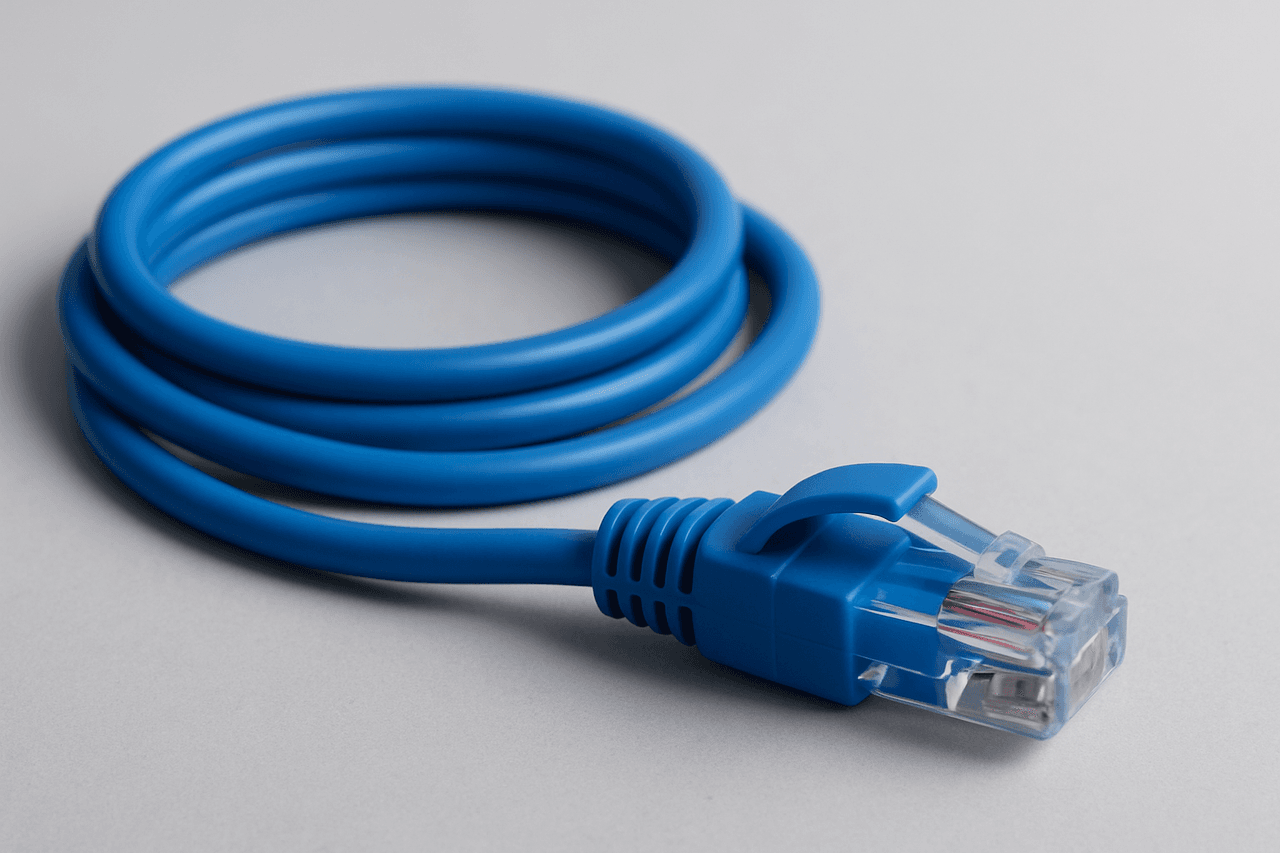
EtherCAT operates with standard Ethernet hardware and cabling (e.g., CAT5, RJ45) and achieves full-duplex data transmission at 100 Mbps. Low-voltage differential signaling (LVDS) and fiber optic options are also available.
EtherCAT uses cyclic redundancy check (CRC) and working counters on each slave device to ensure data integrity. This allows easy identification of fault sources in the network. It also includes pre-warning systems to detect potential frame corruption.
Acontis Technologies. "EtherCAT İletişim Protokolü Nedir? EtherCAT Nasıl Çalışır?" Accessed June 18, 2025. https://www.acontis.com/en/what-is-ethercat-communication-protocol.html.
Beckhoff Automation. "EtherCAT – I/O Products." Accessed June 18, 2025. https://www.beckhoff.com/en-en/products/i-o/ethercat/?pk_campaign=AdWords-AdWordsSearch-EtherCatEN&pk_kwd=ethercat&gad_source=1.

Name(s) | EtherCAT | ||||||||
|---|---|---|---|---|---|---|---|---|---|
Standard | IEC 61158 | ||||||||
Initial Developer | Beckhoff Automation | ||||||||
Data Rate | 100 Mbps (full duplex) | ||||||||
Release Year | 2003-01-01 | ||||||||
History
Technical Architecture and Operation
Protocol Layers
Master-Slave Architecture
On-the-Fly Processing
Frame Structure
Synchronization
Topology
Physical Layer and Hardware
Error Detection and Security
Application Areas