


This article was automatically translated from the original Turkish version.
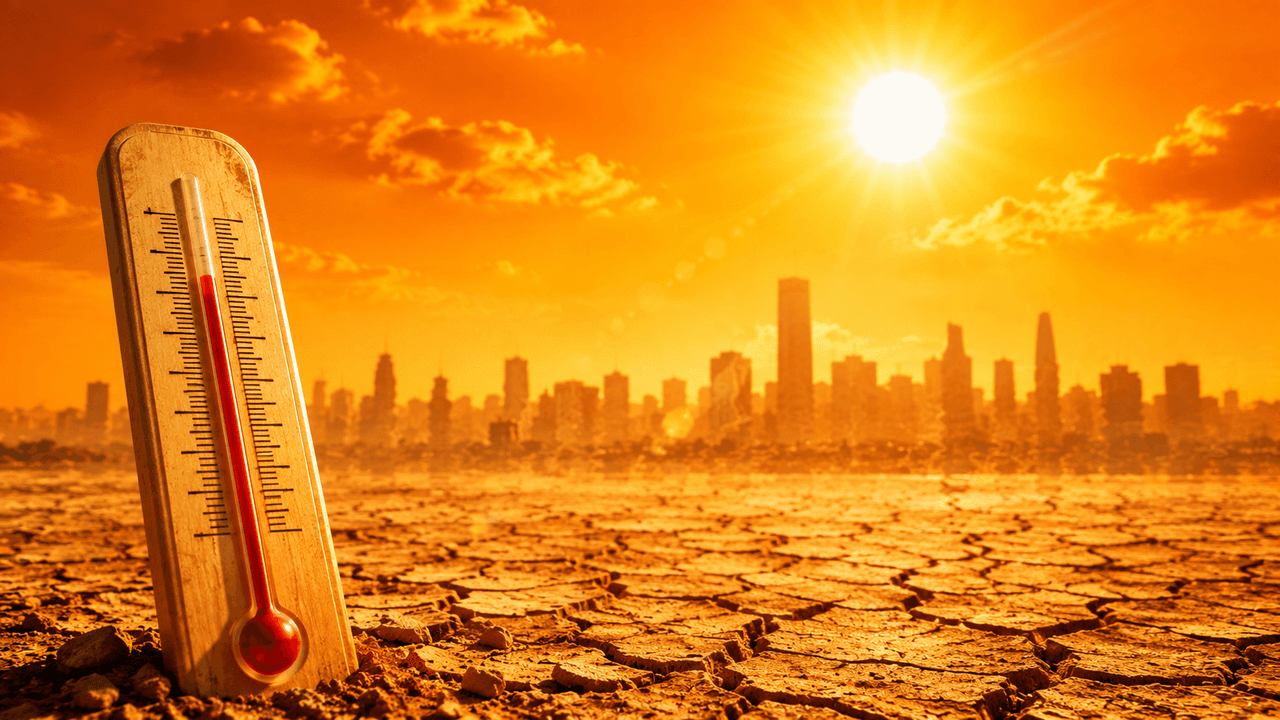
(Generated with Artificial Intelligence)
Eyyam-ı Bahur
Other Names | Eyyâm-ı Buhûr Ehem Buhur Harman Sıcakları Ağustos Sıcakları Çöl Sıcakları | ||||||||
|---|---|---|---|---|---|---|---|---|---|
Approximate Time | Late July–Early August | ||||||||
Dates According to the Folk Calendar | 1–8 August 30 July–8 August 31 July–7 August 15 July–15 August | ||||||||
Eyyâm-ı bâhûr is a term from the folk calendar used to denote the hottest part of the summer season. It is generally associated with the period of extreme heat between the last days of July and the first days of August. This concept is not the name of an official meteorological event that begins on a fixed date and recurs annually with the same duration and intensity, but rather a seasonal period defined by the public through long-term observation and experience. In different regions of Türkiye, this period is also known as eyyâm-ı buhûr, ehem buhur, harman sıcakları, ağustos sıcakları, and çöl sıcakları.【1】 In Arabic, “eyyâm” means “days,” and 【2】 “bâhûr” means “extreme heat.” 【3】 Thus, “eyyâm-ı bâhûr” translates to “very hot days.”
There is no single universally accepted start and end date for eyyâm-ı bâhûr across all regions. Depending on various calendars, this period may be dated as 1–8 August, 30 July–8 August, 15 July–15 August, 【4】 31 July–7 August. In the folk calendar of Western Anatolia, which divides the year into eight periods, the beginning of the period is commonly recognized as 7 August.【5】 These variations arise because folk calendars are shaped by local climatic conditions and regional experience. Another reason eyyâm-ı bahur cannot be fixed to precise dates is that temperatures do not rise uniformly on the same days or with the same intensity each year. Therefore, the dates of eyyâm-ı bahur are not defined by fixed meteorological boundaries but represent approximate time intervals during which high temperatures have historically occurred with greatest frequency.
Eyyam-ı bahur is one element of folk calendars, which are formed through long-term observation of natural phenomena. Folk calendars vary according to the climate, economic activities, beliefs, and historical experiences of the communities in which they are used.
For example, in the Uzunköprü folk calendar, the year is divided into two parts: 186 days of Hızır days and 179 days of Kasım days.【7】 In the widespread folk calendar understanding in Türkiye, the second half of the year is called Hızır days. The Hızır days span from 6 May to 7 November. Eyyam-ı bahur falls within the Hızır days, which encompass the hot season.【8】
Like other significant days in the folk calendar, eyyam-ı bahur is associated with various beliefs. In some regions, it is believed that touching trees or animals during these days may cause them to wither or die. It is also commonly held that plowing the land during this period could harm or even kill draft animals.【9】
The World Meteorological Organization defines a heatwave as “a period of several days and nights during which the temperature is unusually high relative to local climatic conditions.” Thresholds for classifying an event as a heatwave are determined according to regional climate patterns.【10】 Eyyam-ı bahur, however, is not a scientifically defined classification based on temperature thresholds but a traditional name given to the period of the year generally considered the hottest. A heatwave does not necessarily occur during every eyyam-ı bahur period, nor are heatwaves confined only to the dates traditionally associated with eyyam-ı bahur.
In Western languages, the dog days (dog days) are a concept similar to eyyam-ı bahur, as they denote the hottest part of summer. The dog days have no official meteorological or climatological definition. In the United States, this period is generally understood as the four- to six-week span from mid-July to early September, while in Western Europe it is typically associated with approximately 3 July to 11 August. Although some believe the term originates from dogs falling ill in the heat, the American Meteorological Society states that the name derives from the star Sirius, also known as the “Dog Star.”【11】
August heat and threshing heat are regional terms in Türkiye directly linked to eyyam-ı bahur. While these terms are sometimes used interchangeably with eyyam-ı bahur, in the Uzunköprü folk calendar, eyyam-ı bahur narrowly refers to the period between 1 and 8 August, whereas August heat encompasses a broader period of high temperatures from 15 July to 15 August.【12】
"Bâhur." *Kubbealtı Lugatı.* Accessed August 1, 2026.https://lugatim.com/s/B%C3%82HUR
"Eyyam." *Kubbealtı Lugatı.* Accessed August 1, 2026.https://lugatim.com/s/eyyam
Anadolu Ajansı. "Türkiye eyyam-ı bahur sıcaklarının etkisi altına giriyor." Accessed August 1, 2026.https://www.aa.com.tr/tr/gundem/turkiye-eyyam-i-bahur-sicaklarinin-etkisi-altina-giriyor/4015564
Bizbirlik, Alpay. "Eyyâm-ı Bâhûr (ﺍﻳّﺎﻡ ﺑﺎﺣﻮﺭ)." *Ansiklopedik Türk Tarih Sözlüğü.* Türk Tarih Kurumu, 2026. Accessed August 1, 2026.https://sozluk.ttk.gov.tr/detay/2393/Eyy%C3%A2m-%C4%B1-B%C3%A2h%C3%BBr-%28%EF%BA%8D%EF%BB%B3%D9%91%EF%BA%8E%EF%BB%A1-%EF%BA%91%EF%BA%8E%EF%BA%A3%EF%BB%AE%EF%BA%AD%29
Glossary of Meteorology. "Dog Days." American Meteorological Society. Accessed August 1, 2026.https://glossary.ametsoc.org/wiki/dog-days/
Koç, Talat, and Nazan Keskin. "Uzunköprü'de Halk Takvimi ve Sıcaklık İlişkisi." *Balıkesir Üniversitesi Sosyal Bilimler Enstitüsü Dergisi* 4, no. 5 (2001): 1–15. Accessed August 1, 2026.https://dergipark.org.tr/tr/pub/baunsobed/article/652122
World Meteorological Organization. "WMO has no immediate plans to name heatwaves." Accessed August 1, 2026.https://wmo.int/media/news/wmo-has-no-immediate-plans-name-heatwaves
[1]
Alpay Bizbirlik, "Eyyâm-ı Bâhûr (ﺍﻳّﺎﻡ ﺑﺎﺣﻮﺭ)," Ansiklopedik Türk Tarih Sözlüğü, Türk Tarih Kurumu 2026, Erişim Tarihi: 1 Ağustos 2026. https://sozluk.ttk.gov.tr/detay/2393/Eyy%C3%A2m-%C4%B1-B%C3%A2h%C3%BBr-%28%EF%BA%8D%EF%BB%B3%D9%91%EF%BA%8E%EF%BB%A1-%EF%BA%91%EF%BA%8E%EF%BA%A3%EF%BB%AE%EF%BA%AD%29
[2]
"Eyyam," Kubbealtı Lugatı, Erişim Tarihi: 1 Ağustos 2026. https://lugatim.com/s/eyyam
[3]
"Bâhur," Kubbealtı Lugatı, Erişim Tarihi: 1 Ağustos 2026. https://lugatim.com/s/B%C3%82HUR
[4]
Alpay Bizbirlik, a.e.
[5]
Anadolu Ajansı, "Türkiye eyyam-ı bahur sıcaklarının etkisi altına giriyor," Anadolu Ajansı, Erişim Tarihi: 1 Ağustos 2026. https://www.aa.com.tr/tr/gundem/turkiye-eyyam-i-bahur-sicaklarinin-etkisi-altina-giriyor/4015564
[7]
Talat Koç and Nazan Keskin, "Uzunköprü'de Halk Takvimi ve Sıcaklık İlişkisi," *Balıkesir Üniversitesi Sosyal Bilimler Enstitüsü Dergisi* 4, no. 5 (2001): p. 4. Accessed August 1, 2026.
[8]
Alpay Bizbirlik, a.e.
[9]
Alpay Bizbirlik, a.e.
[10]
World Meteorological Organization, "WMO has no immediate plans to name heatwaves," Erişim Tarihi: 1 Ağustos 2026. https://wmo.int/media/news/wmo-has-no-immediate-plans-name-heatwaves
[11]
Glossary of Meteorology, "Dog Days," American Meteorological Society, Erişim Tarihi: 1 Ağustos 2026. https://glossary.ametsoc.org/wiki/dog-days/
[12]
Talat Koç ve Nazan Keskin, a.e., s. 12.

(Generated with Artificial Intelligence)
Eyyam-ı Bahur
Other Names | Eyyâm-ı Buhûr Ehem Buhur Harman Sıcakları Ağustos Sıcakları Çöl Sıcakları | ||||||||
|---|---|---|---|---|---|---|---|---|---|
Approximate Time | Late July–Early August | ||||||||
Dates According to the Folk Calendar | 1–8 August 30 July–8 August 31 July–7 August 15 July–15 August | ||||||||
Dates
Place in the Folk Calendar
Folk Beliefs Related to Eyyam-ı Bahur
Difference from a Heatwave
Similar Concepts and Phenomena
Dog Days
August Heat and Threshing Heat